Precision medicine and data
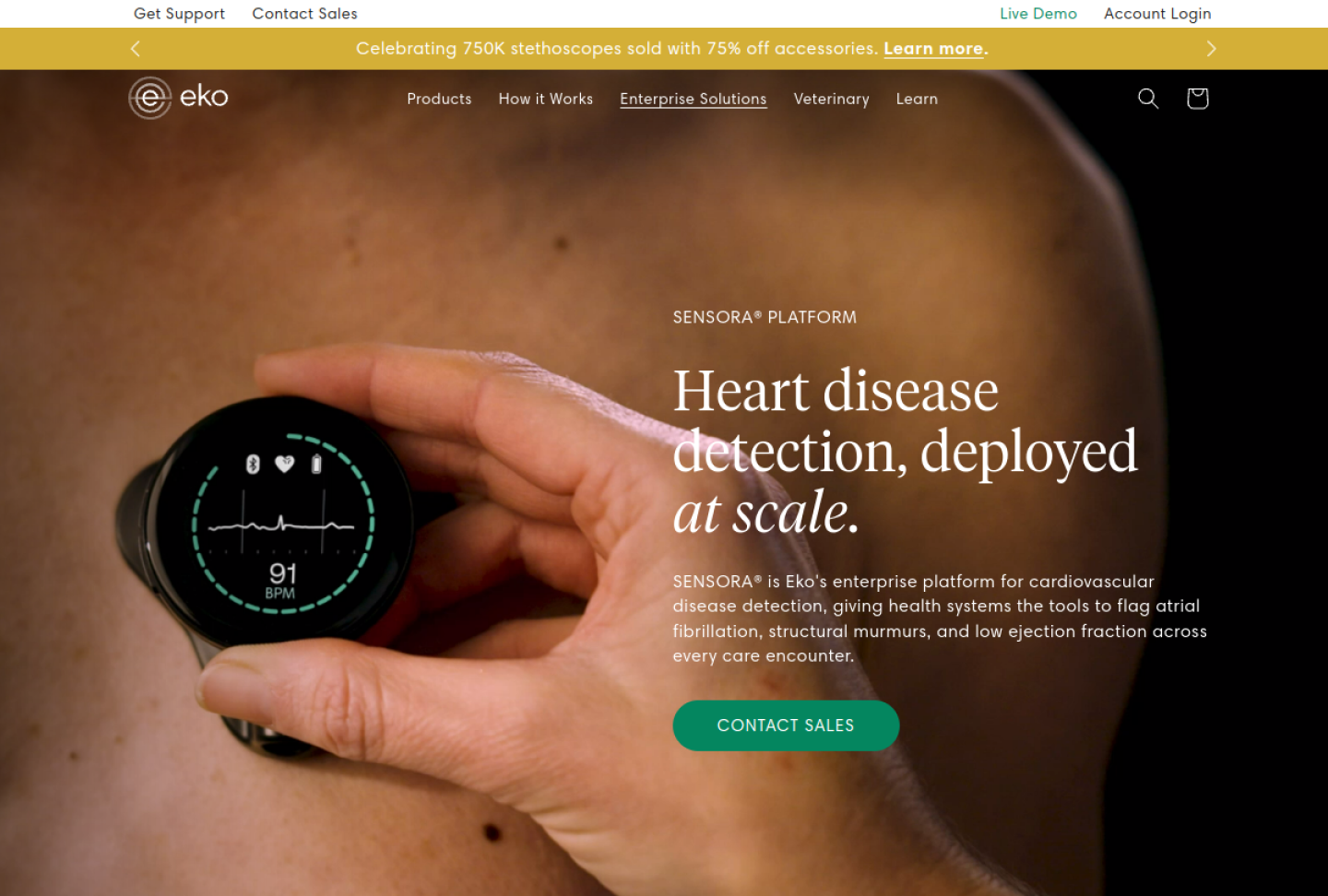
Eko Health SENSORA
FDA-cleared cardiovascular detection platform that pairs Eko digital stethoscopes with AI-supported ECG and heart-sound analysis for supervised point-of-care screening.
Last updated: June 14, 2026
Back to directoryCardiovascular AI platform using standard 12-lead ECGs to surface signals such as low ejection fraction, pulmonary hypertension, and cardiac amyloidosis for clinician follow-up.
Health systems evaluating FDA-cleared cardiac detection support that can fit existing ECG, EHR, and cardiology referral workflows.
Compare within workflow: Precision medicine and data · comparison shortlist · source index
| Status | FDA-cleared cardiovascular machine-learning notification software for specific ECG-AI algorithms; each algorithm has its own intended-use boundary. |
|---|---|
| Review route | 510(k), including K232699 for the Low Ejection Fraction AI-ECG Algorithm and K252360 for the ECG-AI Pulmonary Hypertension 12-Lead algorithm. |
| Intended use | Uses standard resting 12-lead ECG data to aid earlier detection or screening for defined cardiac conditions, including LVEF less than or equal to 40% in adults at risk for heart failure and elevated mean pulmonary arterial pressure in adults presenting with dyspnea. |
| Verification note | Confirm the deployed algorithm, compatible ECG source, eligible adult population, paced-rhythm and monitoring exclusions, EMR or ECG-management integration, clinician review, referral pathway, and whether a negative result should still trigger evaluation for high-risk patients. |
| Source | www.accessdata.fda.gov / cdrh_docs / pdf25 |
Product-specific review. These product-specific signals summarize what the cited sources imply before treating Anumana ECG-AI as safe for a local clinical, operational, or research workflow.
| Regulatory / FDA | Match each deployment to the exact cleared algorithm and intended use, including K232699 for low ejection fraction and K252360 for pulmonary hypertension; do not generalize clearance across future or investigational cardiac conditions. |
|---|---|
| Privacy | Review ECG, EHR, result-routing, audit-log, customer-support, and integration data flows; Anumana says the pulmonary hypertension algorithm runs within the health-system environment, but contract and architecture review still matter. |
| Evidence | Evaluate local performance by ECG source, patient mix, prevalence, care setting, downstream echo or referral pathway, false-positive burden, and whether published sensitivity and specificity match the intended workflow. |
| Workflow | Best governed as clinician-reviewed cardiac detection support with defined ECG-system integration, result display, referral criteria, cardiology escalation, monitoring, and patient communication rules. |
Anumana describes ECG-AI as a cardiology AI platform that applies FDA-cleared algorithms to standard 12-lead ECGs; FDA records list cleared Anumana ECG-AI algorithms for low ejection fraction and pulmonary hypertension, and Anumana's materials describe health-system workflow integration and U.S. commercial availability for ECG-AI.
Not for: Standalone diagnosis, therapy selection, use outside cleared indications, or deployment without cardiology, primary-care, ECG-system, and informatics governance.
Use these links to confirm current claims, terms, regulatory status, pricing, and deployment requirements.
FDA-cleared cardiovascular detection platform that pairs Eko digital stethoscopes with AI-supported ECG and heart-sound analysis for supervised point-of-care screening.
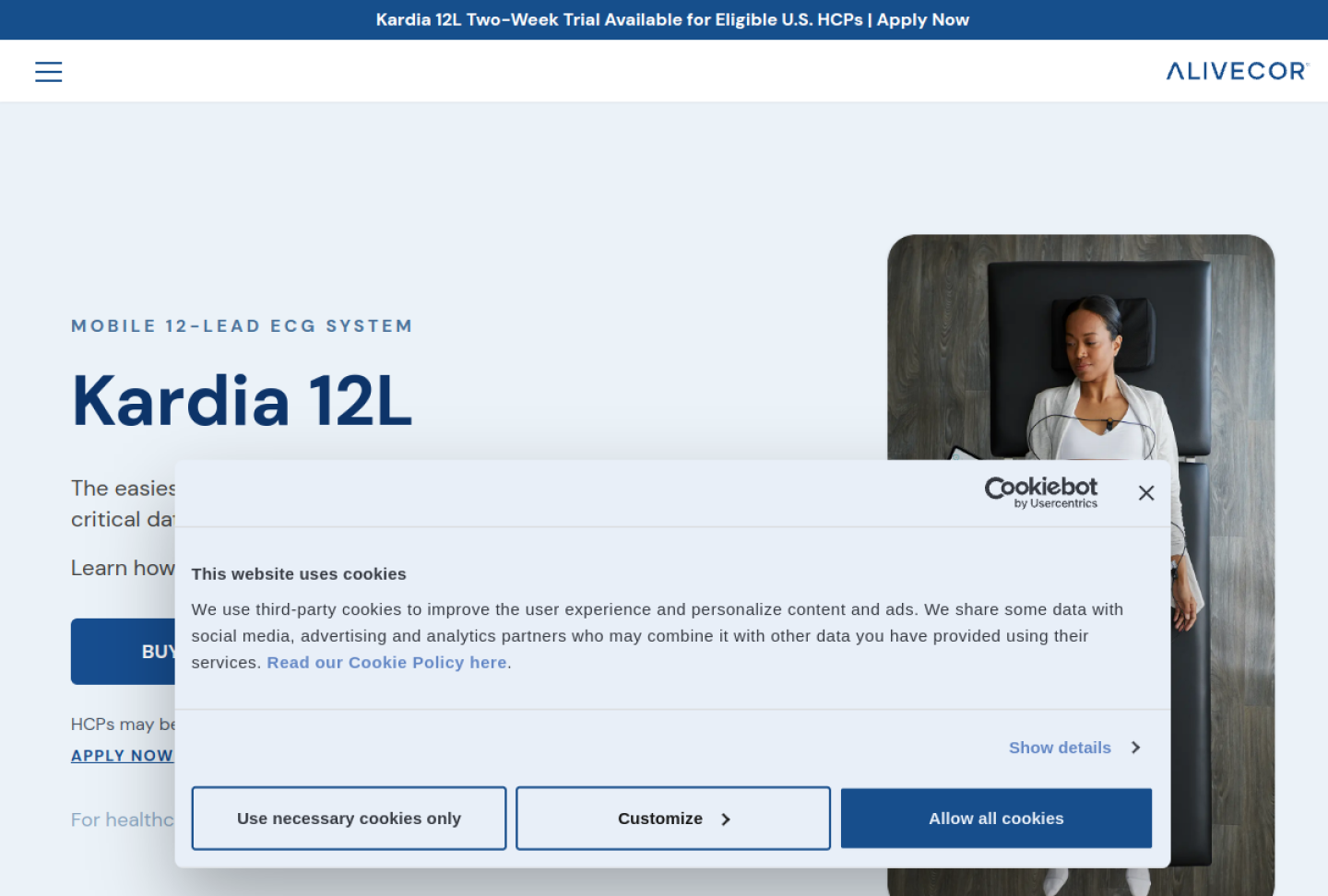
Portable AI-powered 12-lead ECG system that uses a reduced leadset and KAI 12L algorithms to support clinician-reviewed cardiac determinations.
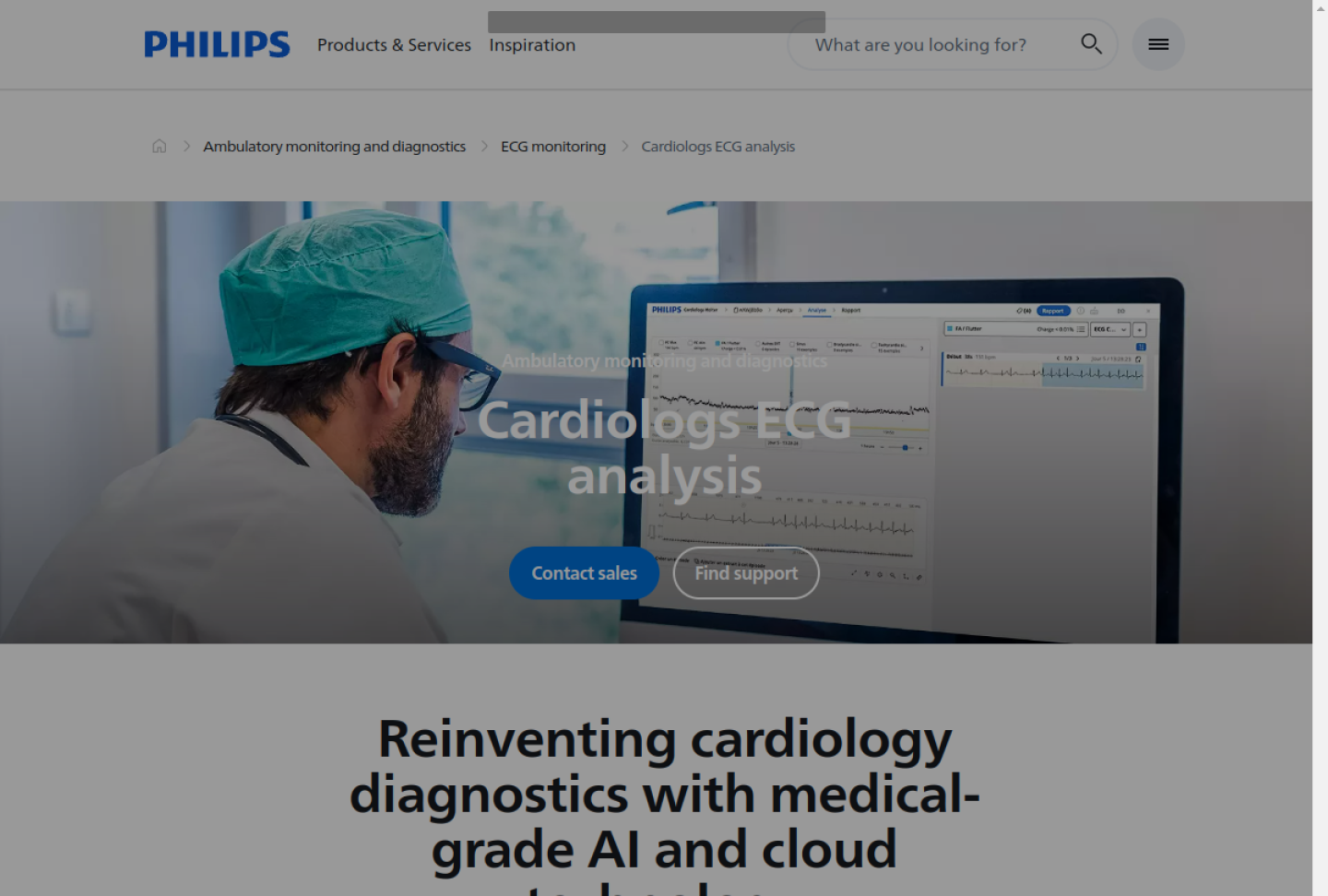
Cloud-based Philips Cardiologs platform that uses deep-learning ECG analysis to support qualified clinicians reviewing Holter and ambulatory ECG recordings.
AI-enabled precision medicine platform spanning molecular testing, multimodal data, clinical assistants, care pathways, imaging insights, and trial matching.