Clinical operations and revenue cycle
Nym
Autonomous medical coding engine that translates patient-chart documentation into billing codes with explainable audit trails.
Last updated: June 14, 2026
Back to directoryPrior authorization AI from Apixio/Datavant that uses historical administrative and decision data to support automated approvals and reviewer routing.
Payer teams trying to reduce manual prior authorization review volume while preserving policy controls, clinical-review queues, and auditability.
Compare within workflow: Clinical operations and revenue cycle · comparison shortlist · source index
Product-specific review. These product-specific signals summarize what the cited sources imply before treating Apicare AuthAdvisor as safe for a local clinical, operational, or research workflow.
| Regulatory / FDA | Treat as high-risk payer utilization-management decision support because it can affect access to care; verify current CMS, state, accreditation, medical-policy, appeal, and adverse-determination requirements before automating any decision path. |
|---|---|
| Privacy | Review BAA terms, Datavant/Apixio contracting entity, PHI and administrative-data feeds, historical decision-data use, model-training boundaries, role-based access, audit logs, retention, and subcontractors. |
| Evidence | Require local validation for auto-approval precision, reviewer workload, overturned decisions, appeal rates, service-line performance, subgroup impact, and whether thresholds drift after policy or network changes. |
| Workflow | Best governed as payer prior authorization routing and approval support with configurable thresholds, clinical reviewer oversight, policy-change controls, denial safeguards, appeal monitoring, and provider/member communication checks. |
Apixio materials describe Apicare AuthAdvisor as AI-powered prior authorization decision support that analyzes historical administrative and decision data, can approve requests in seconds, exposes user-controlled thresholds by procedure, and routes requests needing review; Datavant privacy materials describe HIPAA business-associate safeguards for PHI handled on behalf of healthcare customers, while CMS prior authorization rules frame payer obligations for interoperability, decision data, and process transparency.
Not for: Provider-side prior authorization submission, autonomous denial without clinical oversight, emergency-care triage, or use without policy, appeal, and bias monitoring.
Use these links to confirm current claims, terms, regulatory status, pricing, and deployment requirements.
Autonomous medical coding engine that translates patient-chart documentation into billing codes with explainable audit trails.
Clinical AI platform for hospital revenue integrity workflows from documentation to reimbursement.

AI-powered healthcare revenue cycle platform using agentic, generative, predictive, and automation capabilities across payment workflows.
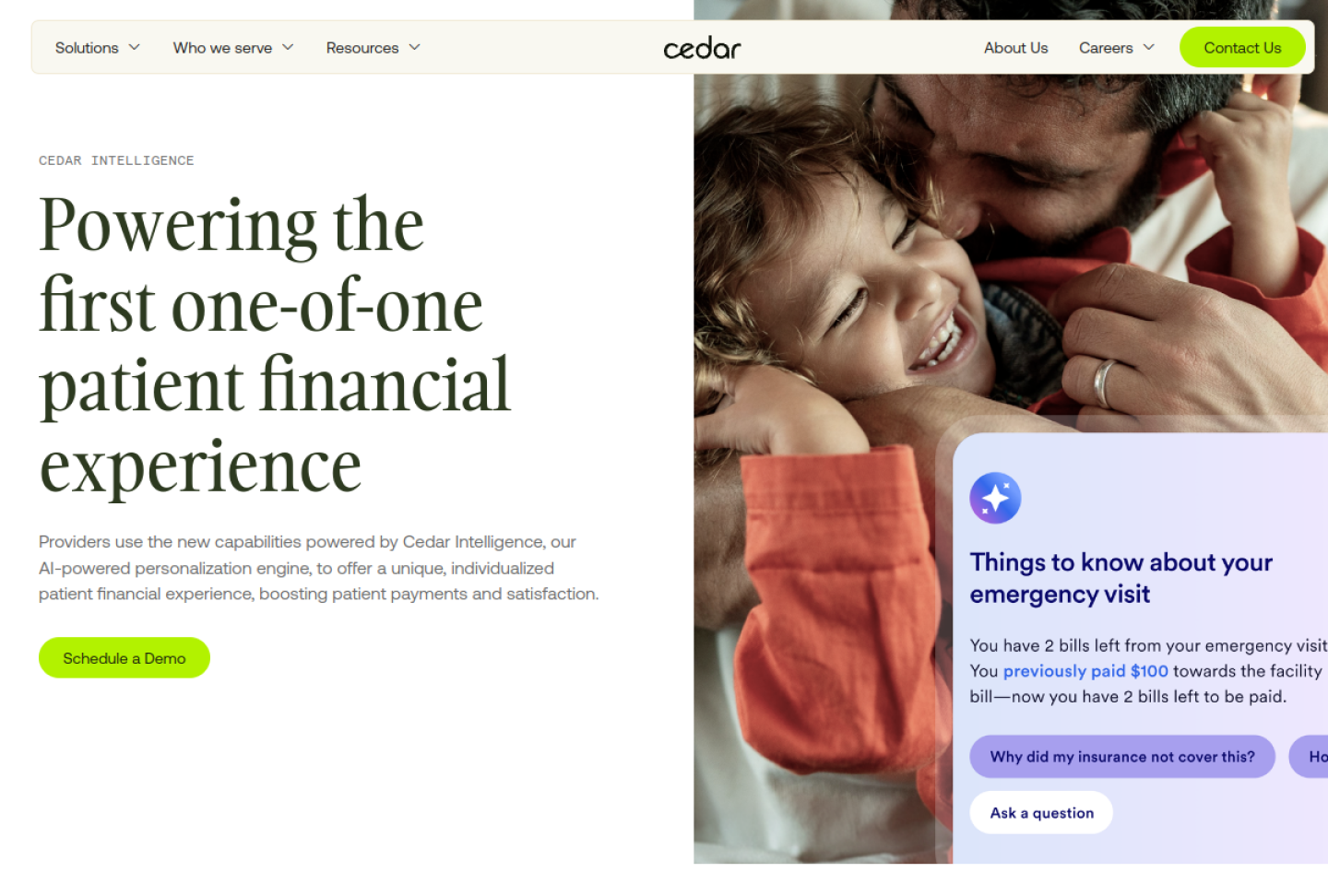
AI-powered patient financial engagement layer for personalized billing journeys, bill clarity, support workflows, and payment outreach.