Patient access, triage, and agents
Tucuvi
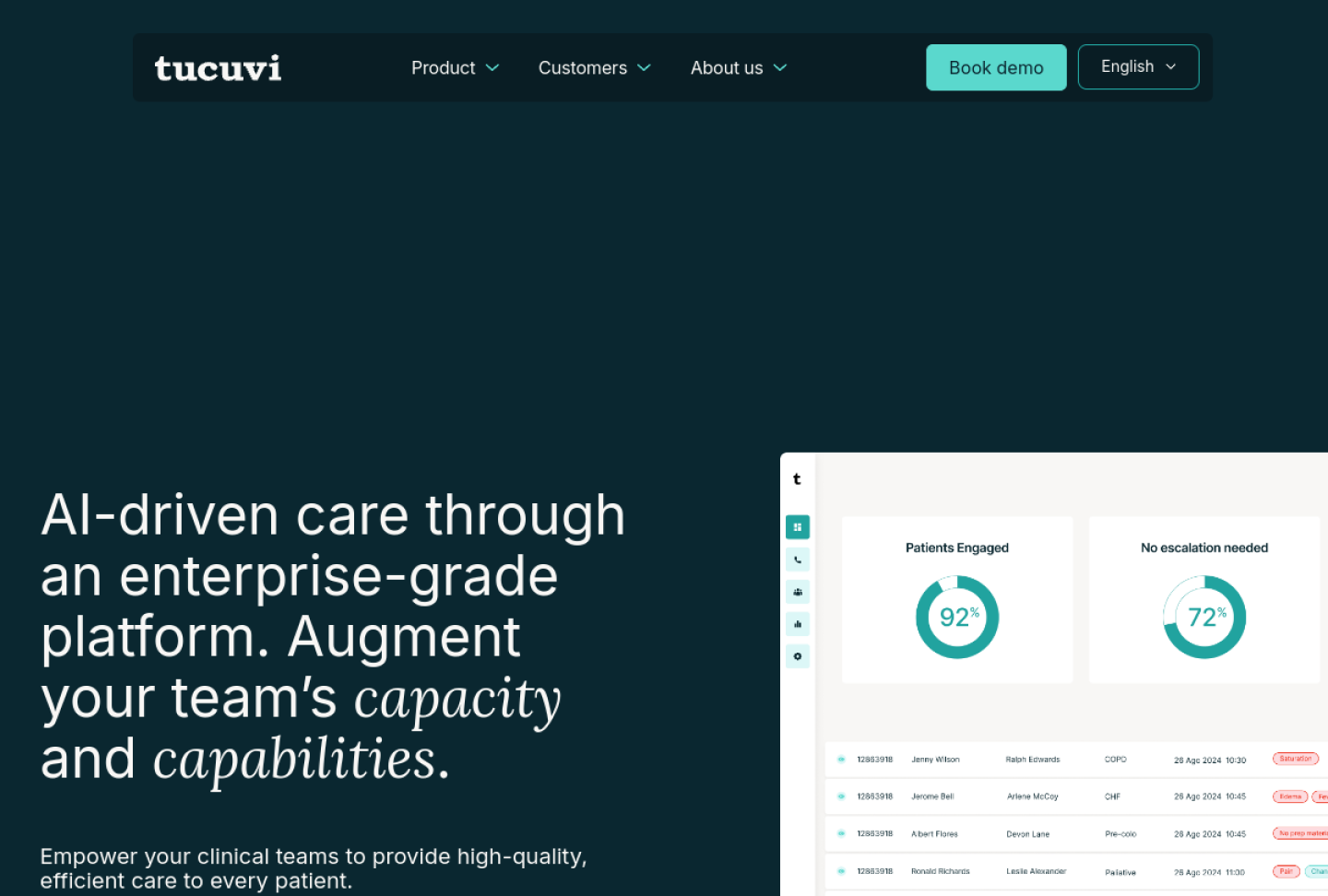
Clinical voice AI and patient-management platform using LOLA for outbound or inbound patient conversations, alert routing, and clinician dashboard workflows.
Last updated: June 4, 2026
Back to directoryHealthcare-focused generative AI agent platform with role-specific voice agents, patient access workflows, and inpatient nurse co-pilot positioning.
Organizations testing constrained patient engagement, access, post-discharge, remote-monitoring adherence, or inpatient nurse-support conversations with explicit human escalation.
Compare within workflow: Patient access, triage, and agents · comparison shortlist · source index
Product-specific review. These product-specific signals summarize what the cited sources imply before treating Hippocratic AI as safe for a local clinical, operational, or research workflow.
| Regulatory / FDA | Start by confirming whether the planned agent is access, follow-up, RPM adherence, inpatient nurse support, life-sciences, or clinical conversation support; reclassify if local configuration influences diagnosis, prescribing, triage, medication decisions, or care escalation. |
|---|---|
| Privacy | Do not infer deployment PHI terms from public website privacy language alone; verify the customer contract, BAA, call recording and transcript handling, de-identification, retention, model-improvement rights, support access, and subcontractors for the exact workflow. |
| Evidence | Treat vendor safety counts, benchmark claims, and de-identified call examples as directional; require local scripts, adversarial cases, escalation audits, patient-experience metrics, nurse-review results, equity checks, and post-launch incident review. |
| Workflow | Constrain each agent to named intents, approved scripts, handoff rules, emergency escalation, exclusions, monitoring dashboards, and accountable owners before exposing it to patients or inpatient teams. |
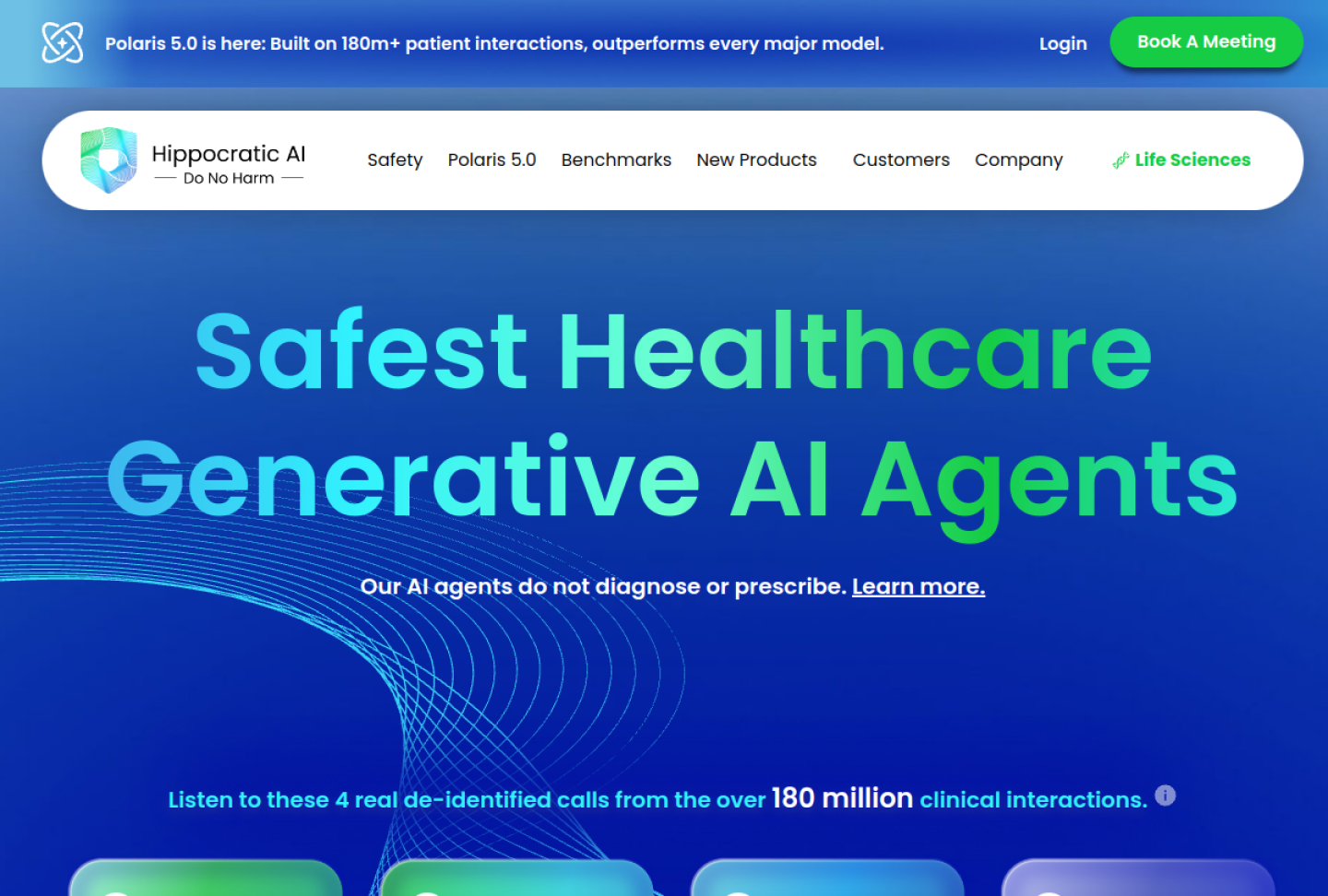
Hippocratic AI presents Polaris-powered healthcare voice agents, says its agents do not diagnose or prescribe, describes more than 1,000 role-specific agents across patient access and clinical operations, lists AI Front Door and Nurse Co-Pilot products, and states that safety testing includes licensed clinicians, output testing, and real-time escalation to human nurses.
Not for: Diagnosis, prescribing, emergency triage, mental health disorder handling, pediatric use under stated exclusions, or unsupervised clinical advice without strict guardrails.
Use these links to confirm current claims, terms, regulatory status, pricing, and deployment requirements.
Clinical voice AI and patient-management platform using LOLA for outbound or inbound patient conversations, alert routing, and clinician dashboard workflows.
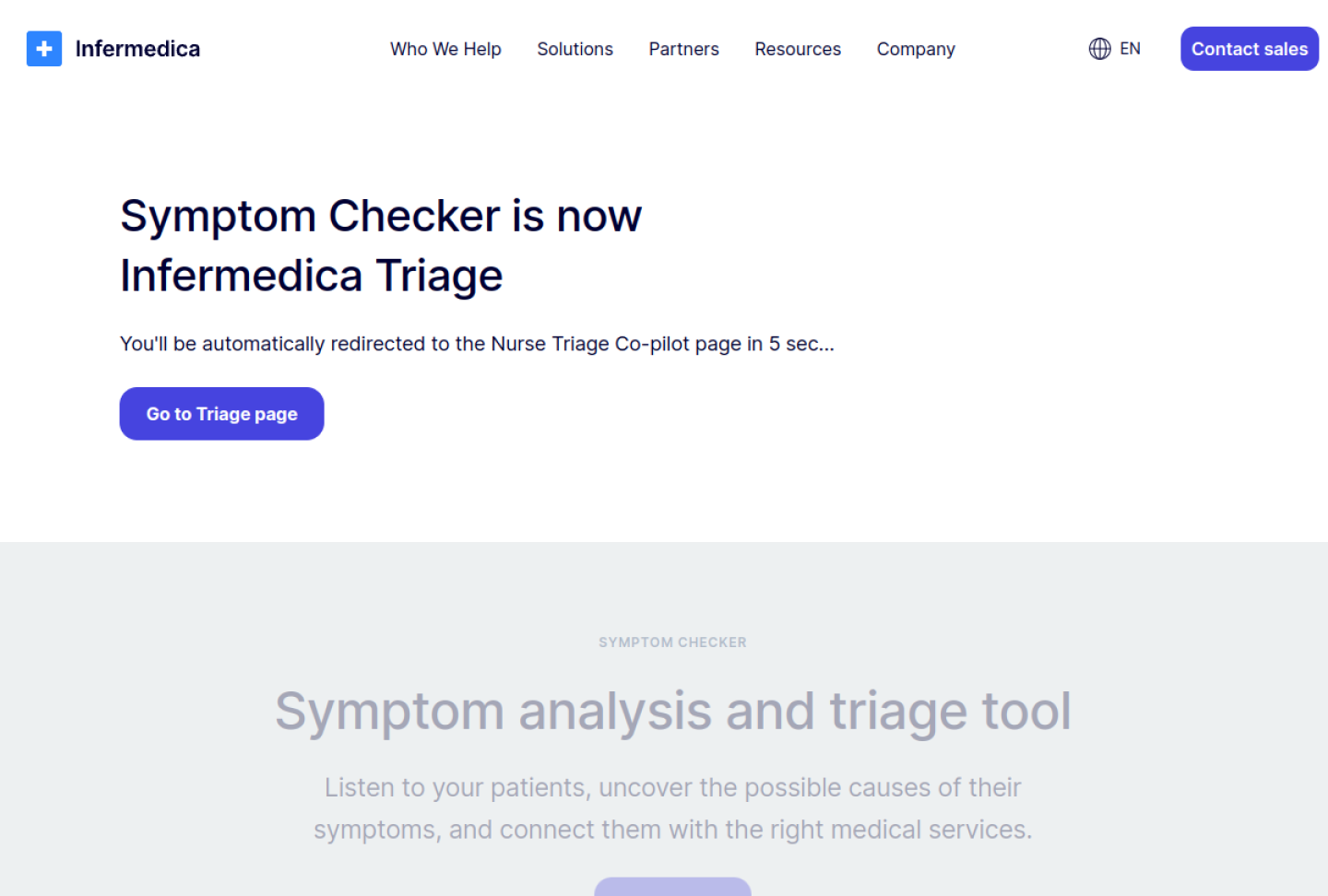
AI symptom analysis and triage platform that can be embedded into healthcare journeys.
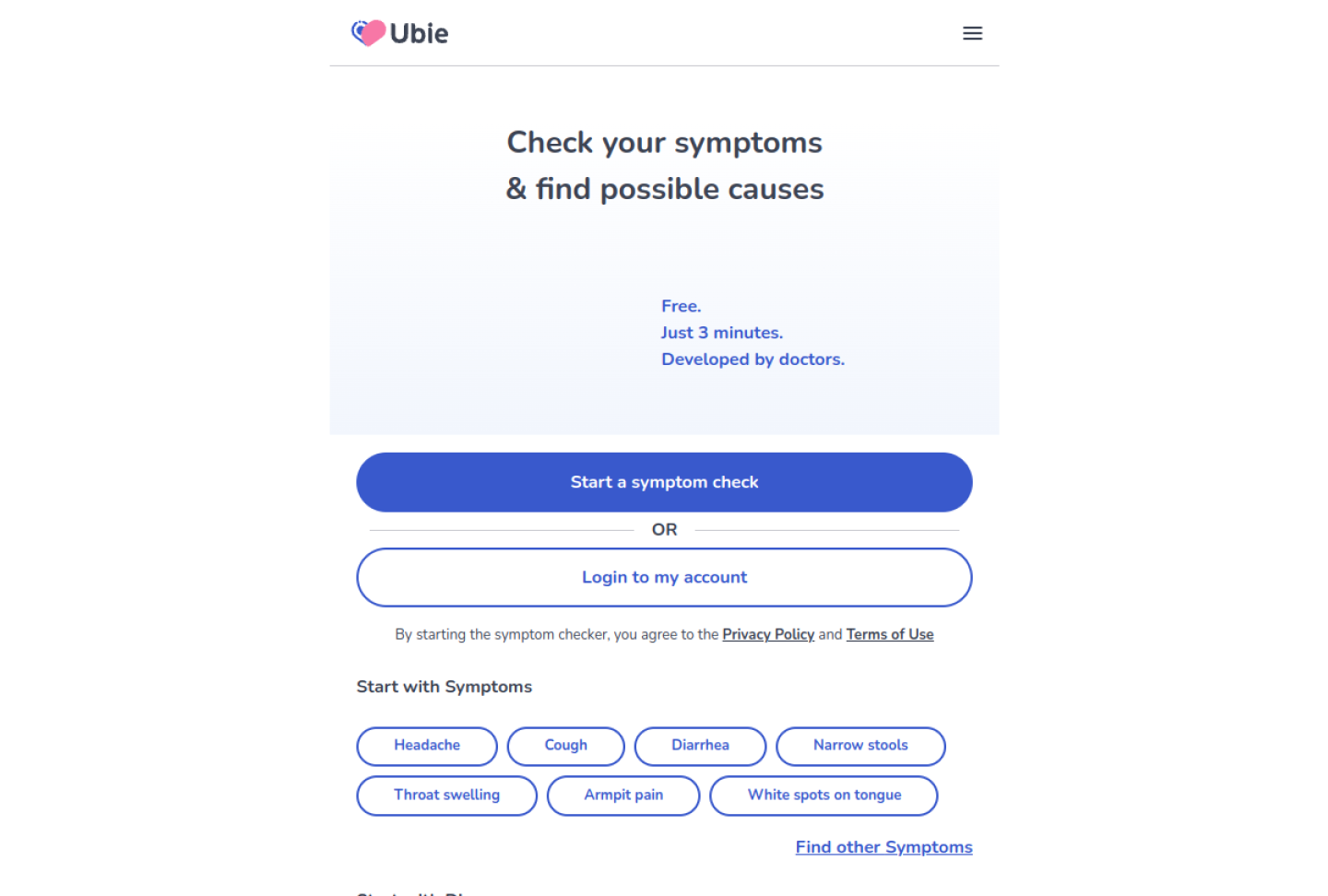
AI symptom checker and health assistant that asks adaptive questions and returns possible causes or next-step guidance.
Healthcare AI agent platform for automating routine patient access conversations across phone, SMS, web, and mobile channels.