
Clinical evidence and questions
OpenEvidence
Medical search and clinical decision-support AI that synthesizes peer-reviewed evidence for clinicians.
Last updated: June 14, 2026
Back to directoryEvidence-focused clinical Q&A tool from Trip Database that uses AI to answer clinical questions with links back to original evidence.

Clinicians and education teams that want a quick evidence-search companion with source links before reading full guidelines, reviews, or primary studies.
Compare within workflow: Clinical evidence and questions · comparison shortlist · source index
Product-specific review. These product-specific signals summarize what the cited sources imply before treating AskTrip as safe for a local clinical, operational, or research workflow.
| Regulatory / FDA | Treat as clinical evidence search and summarization unless configured or marketed for patient-specific diagnosis or treatment recommendations. Review local CDS, medical-device, and professional-use policies before point-of-care deployment. |
|---|---|
| Privacy | Verify whether real patient details may be entered, whether Trip offers institutional privacy terms, how prompts and answer history are stored, whether data is used for service improvement, and what deletion or export controls exist. |
| Evidence | Check every important answer against the cited guideline, review, or paper. Track citation relevance, source age, conflict handling, and whether the answer misses local guidelines or special populations. |
| Workflow | Best governed as a source-backed evidence lookup aid: users ask focused questions, read the linked sources, document the evidence used, and keep final clinical decisions with qualified clinicians. |
Trip Database describes AskTrip as an AI-powered tool for clinicians to explore high-quality evidence in response to clinical questions. Trip's main site says the database gives access to clinical articles, systematic reviews, and medical guidelines. Buyers should treat AskTrip as evidence navigation, not autonomous clinical advice, and verify source coverage, answer traceability, privacy, and current Pro limits before relying on it in workflow.
Not for: Patient-facing diagnosis, emergency triage, prescribing decisions, or local protocol changes without clinician review and direct confirmation against the cited source material.
Use these links to confirm current claims, terms, regulatory status, pricing, and deployment requirements.
Medical search and clinical decision-support AI that synthesizes peer-reviewed evidence for clinicians.
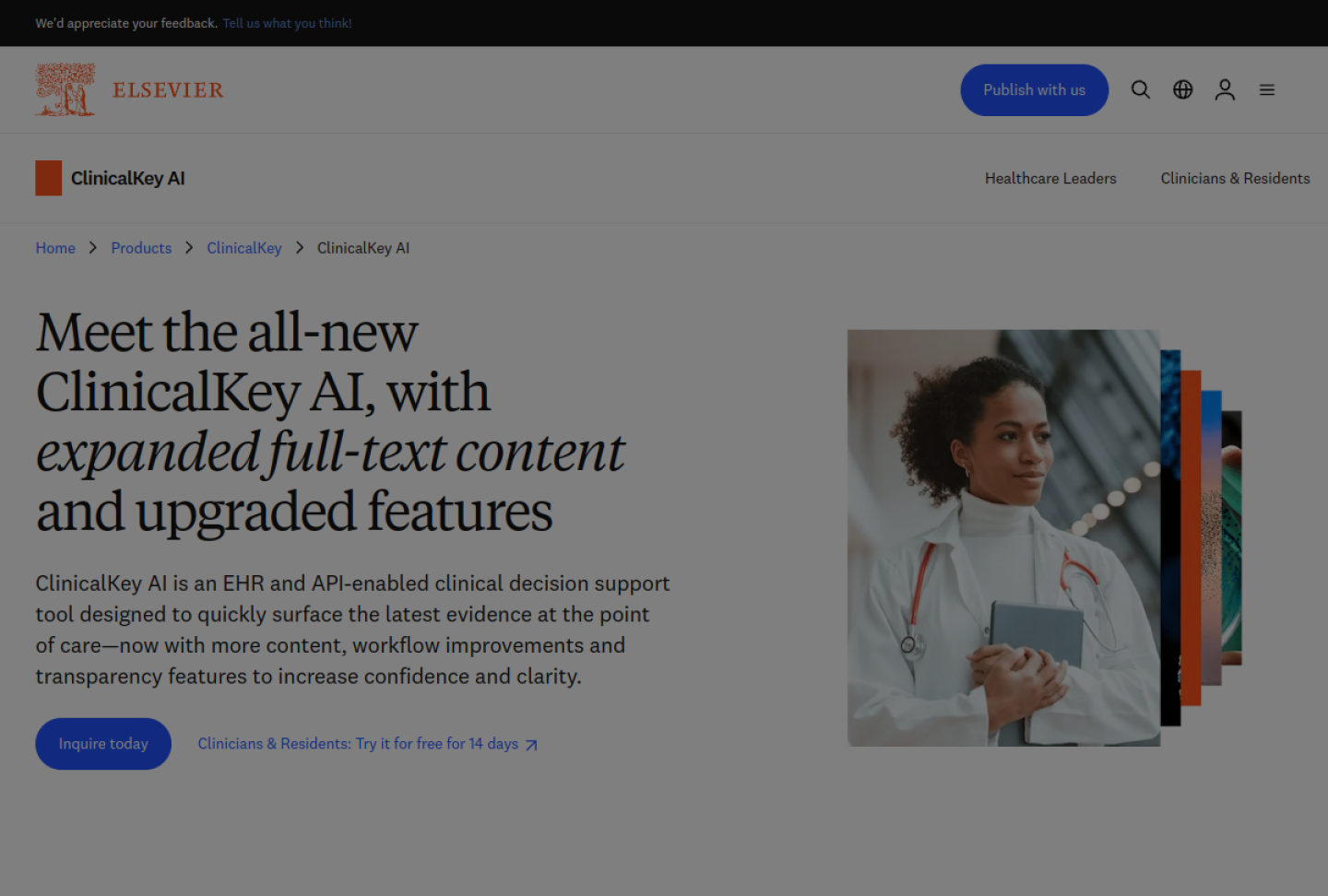
Elsevier clinical decision-support product that combines conversational search with evidence-based content and cited references.
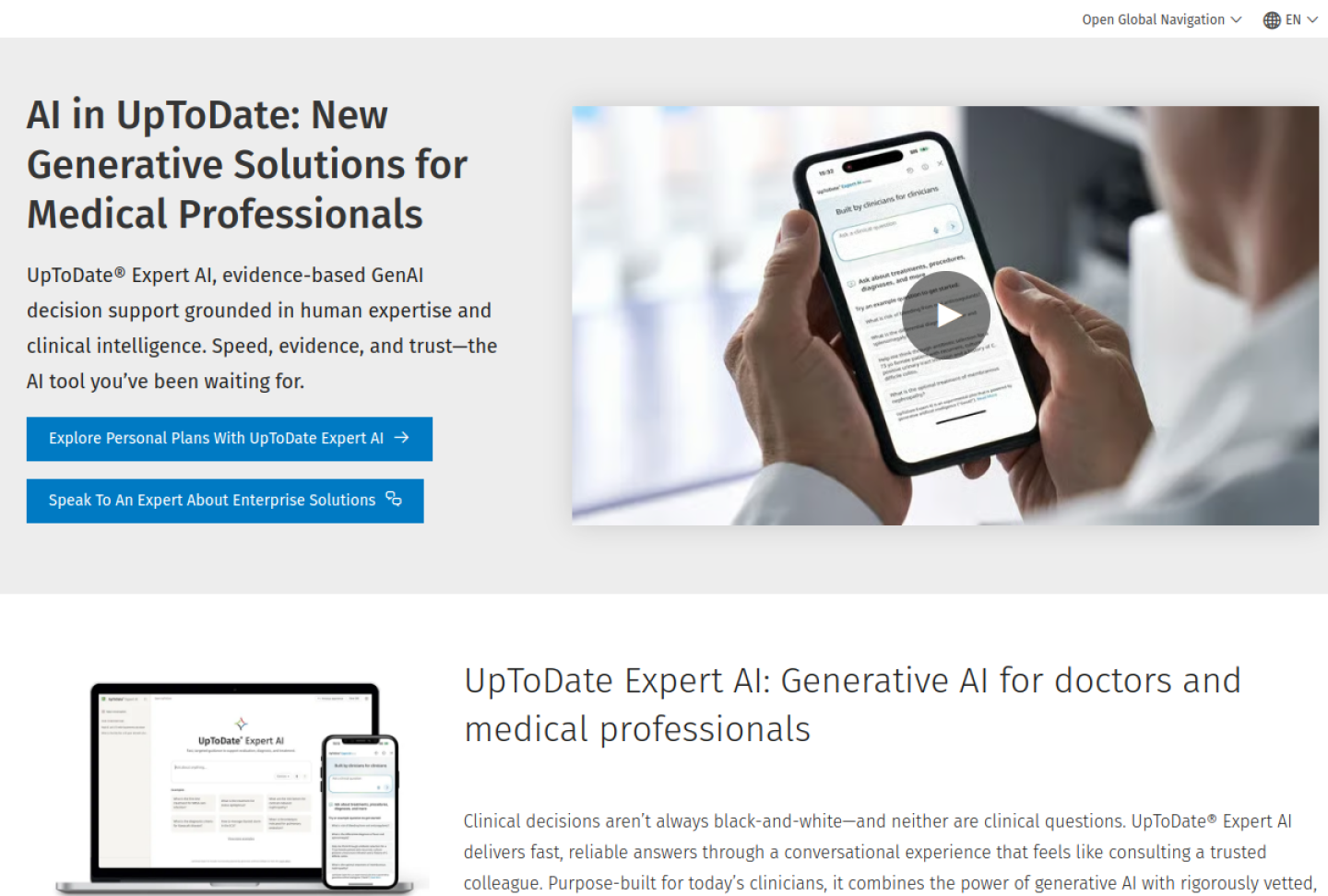
Generative AI clinical decision-support experience built on UpToDate content with traceable answers, assumptions, and source links.
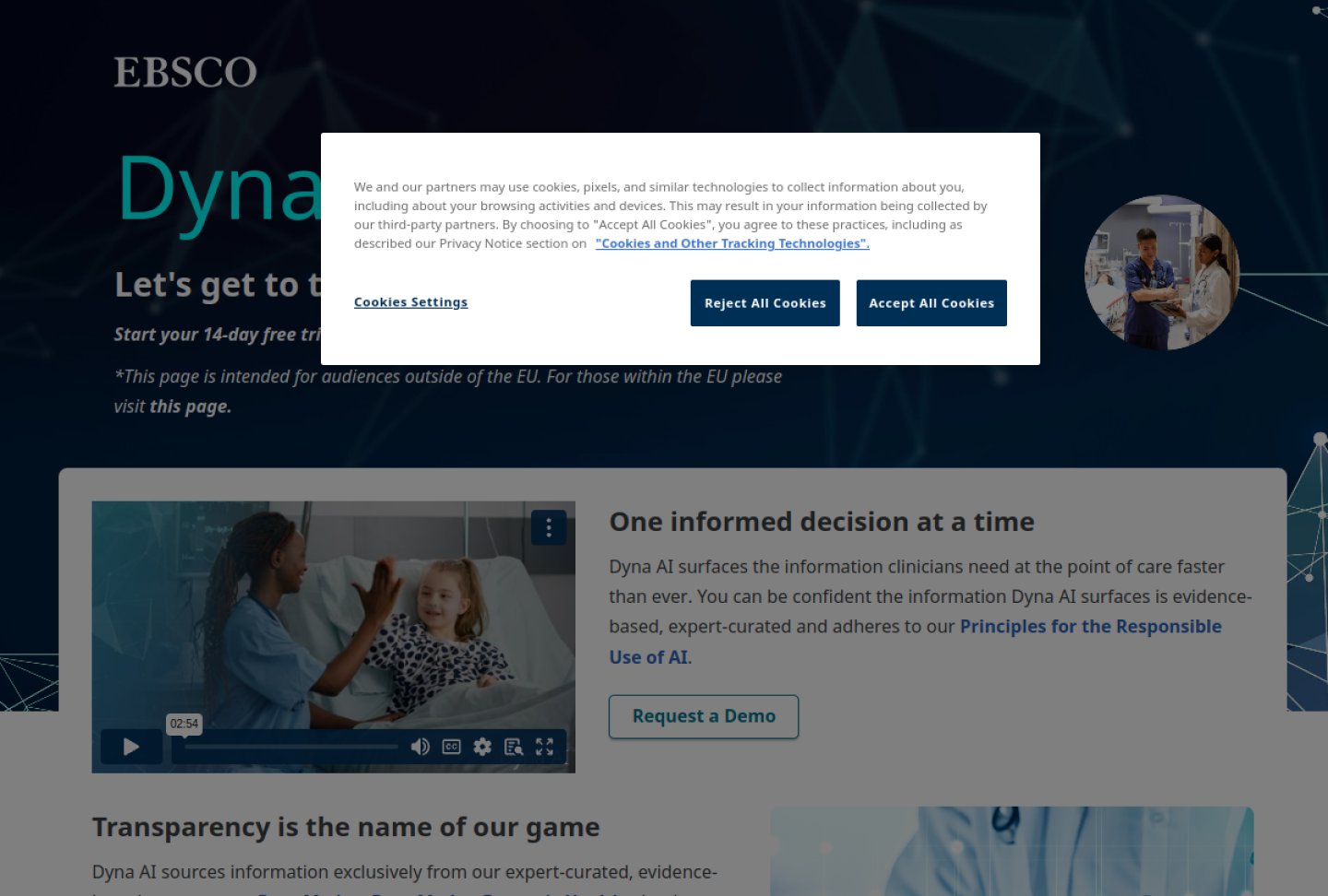
AI mode for EBSCO clinical decision-support products that retrieves answers from expert-curated DynaMed, DynaMedex, and Dynamic Health content.