Clinical evidence and questions
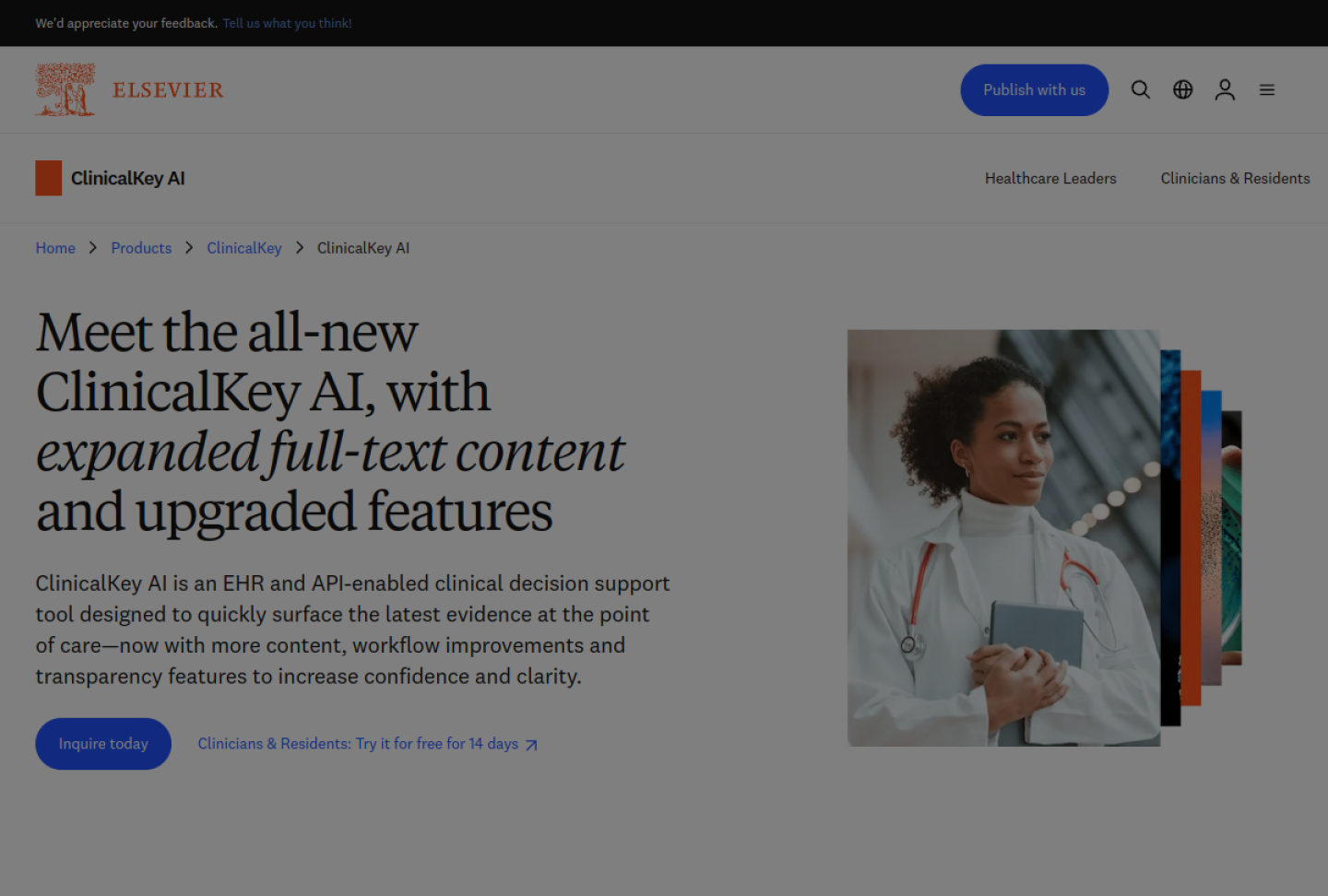
ClinicalKey AI
Elsevier clinical decision-support product that combines conversational search with evidence-based content and cited references.
Last updated: June 14, 2026
Back to directoryMedical search and clinical decision-support AI that synthesizes peer-reviewed evidence for clinicians.

Clinicians who need fast answers grounded in medical literature and source partnerships.
Compare within workflow: Clinical evidence and questions · comparison shortlist · source index
Product-specific review. These product-specific signals summarize what the cited sources imply before treating OpenEvidence as safe for a local clinical, operational, or research workflow.
| Regulatory / FDA | Treat as clinician-facing medical information and clinical reference support unless a deployment uses it for patient-specific clinical decision support that changes regulatory obligations. |
|---|---|
| Privacy | Check user eligibility, PHI-entry policy, HIPAA-aligned processing claims, retention, sponsorship or network-profile terms, and whether organization-level agreements are available. |
| Evidence | Verify every answer against the displayed citations and confirm which licensed journals, guidelines, or source partnerships are available for the clinical question. |
| Workflow | Best governed as fast evidence lookup for verified clinicians, with local rules for patient-specific prompts, citation review, and documentation of decisions made outside the tool. |
OpenEvidence describes itself as a medical information platform with JAMA and NEJM content agreements and clinician-focused evidence synthesis; its privacy materials describe HIPAA-aligned processing and state that AI models are not trained on PHI.
Not for: Unsupervised patient diagnosis, emergency triage, or use outside credential and regional availability limits.
Use these links to confirm current claims, terms, regulatory status, pricing, and deployment requirements.
Elsevier clinical decision-support product that combines conversational search with evidence-based content and cited references.
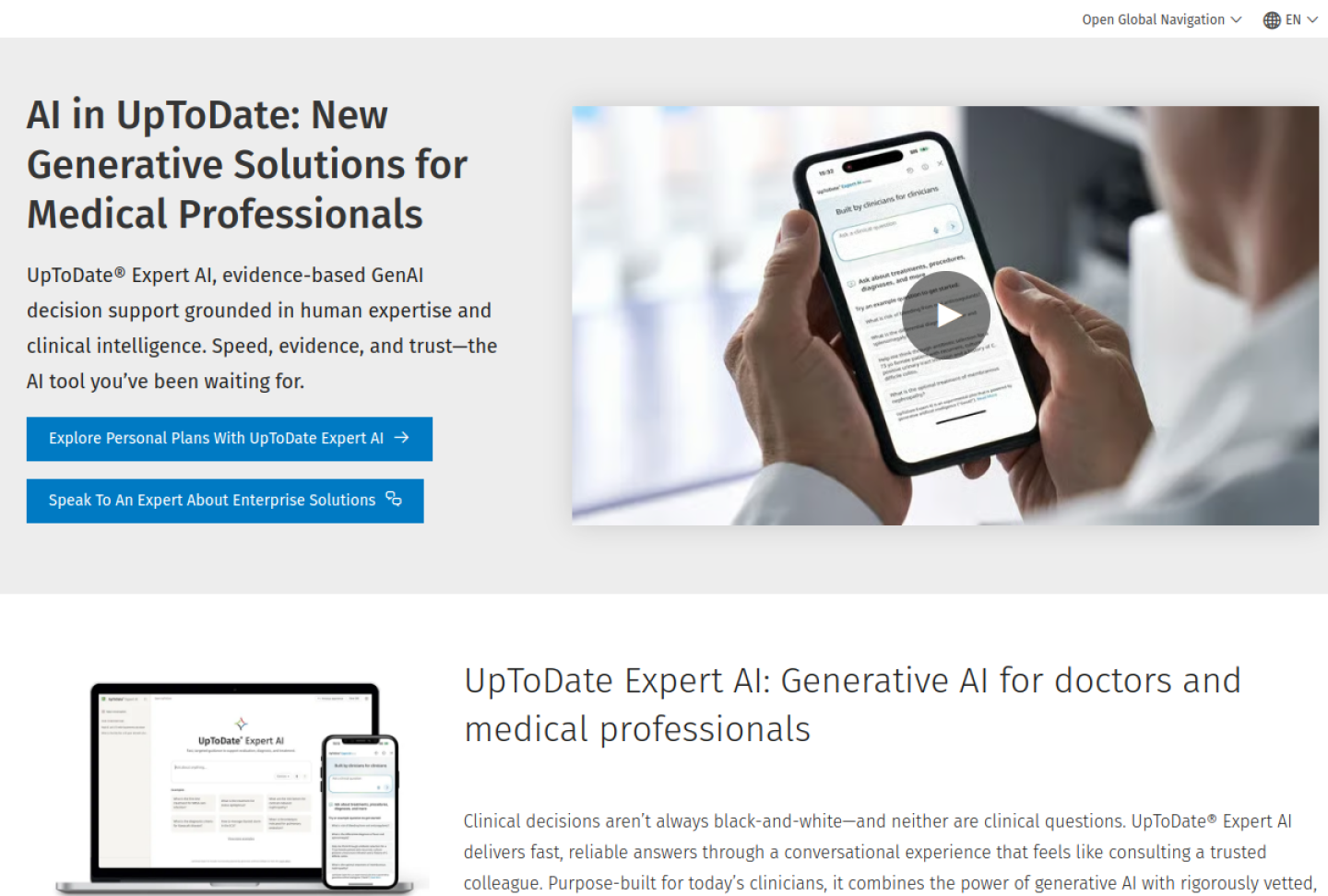
Generative AI clinical decision-support experience built on UpToDate content with traceable answers, assumptions, and source links.
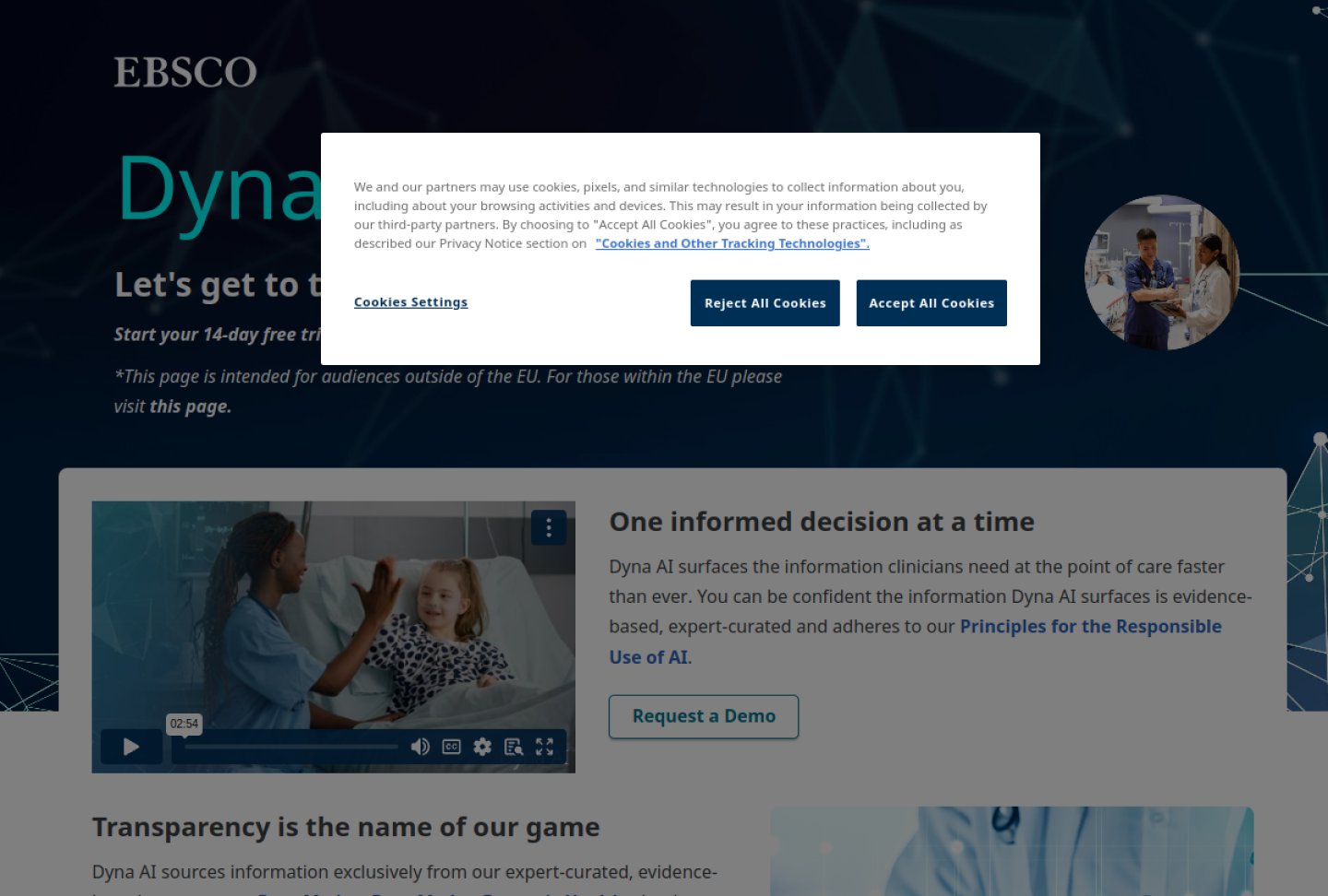
AI mode for EBSCO clinical decision-support products that retrieves answers from expert-curated DynaMed, DynaMedex, and Dynamic Health content.
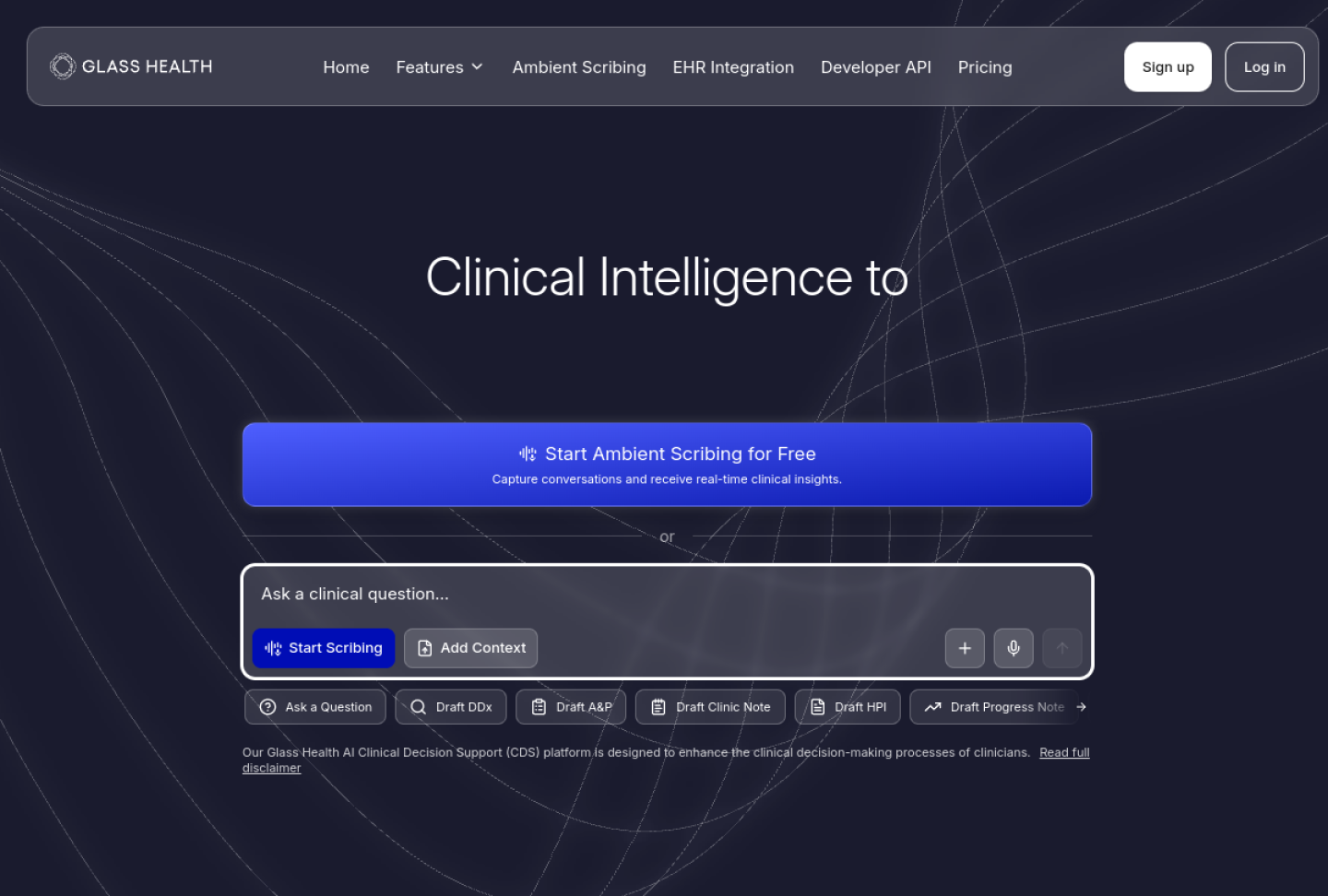
AI-powered clinical decision-support and ambient-scribing platform that drafts differentials, plans, notes, and cited clinical answers for clinician review.