Clinical evidence and questions
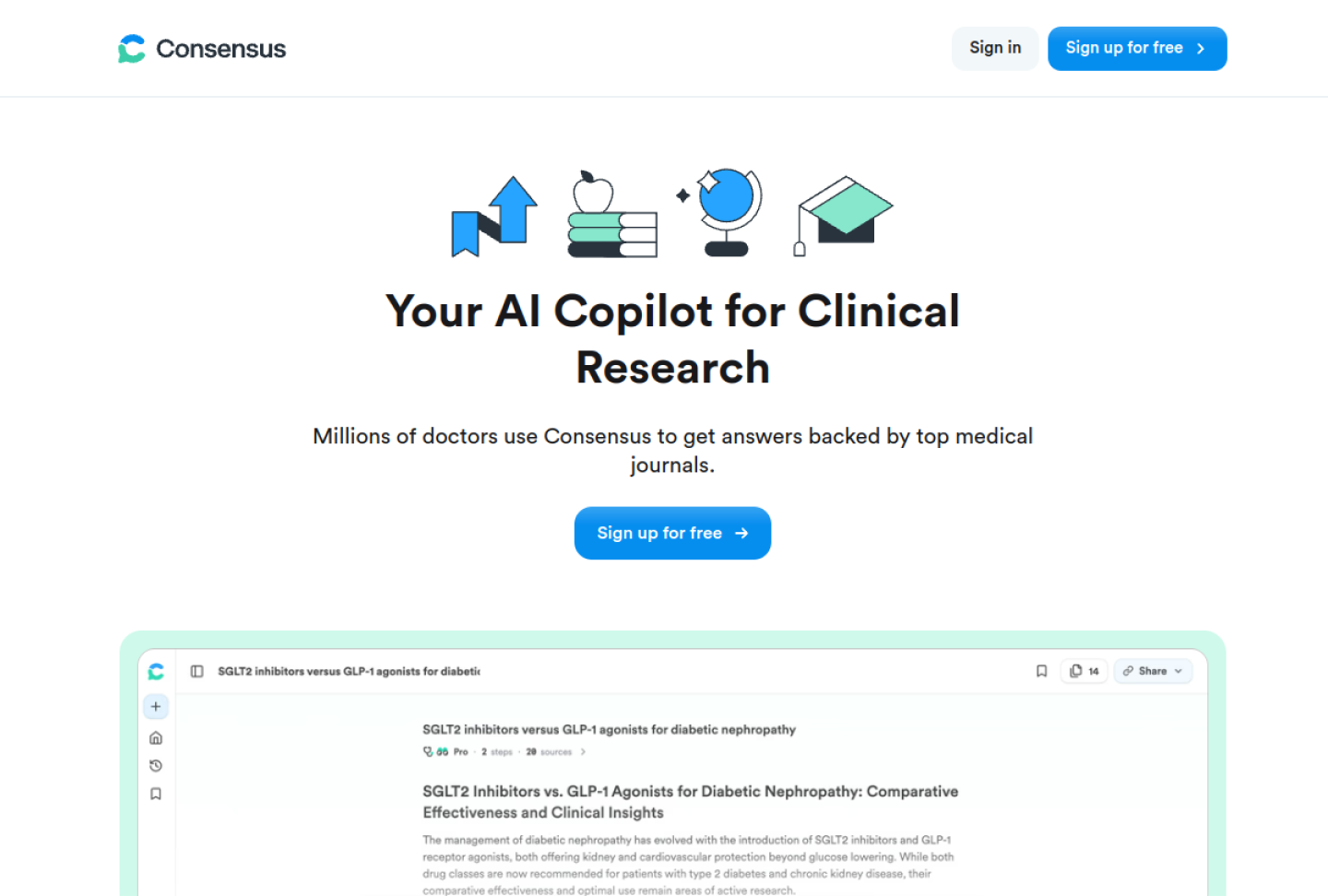
Consensus
Research assistant focused on finding and summarizing scientific evidence, including medical research.
Last updated: June 5, 2026
Back to directoryAI-powered clinical decision-support and ambient-scribing platform that drafts differentials, plans, notes, and cited clinical answers for clinician review.
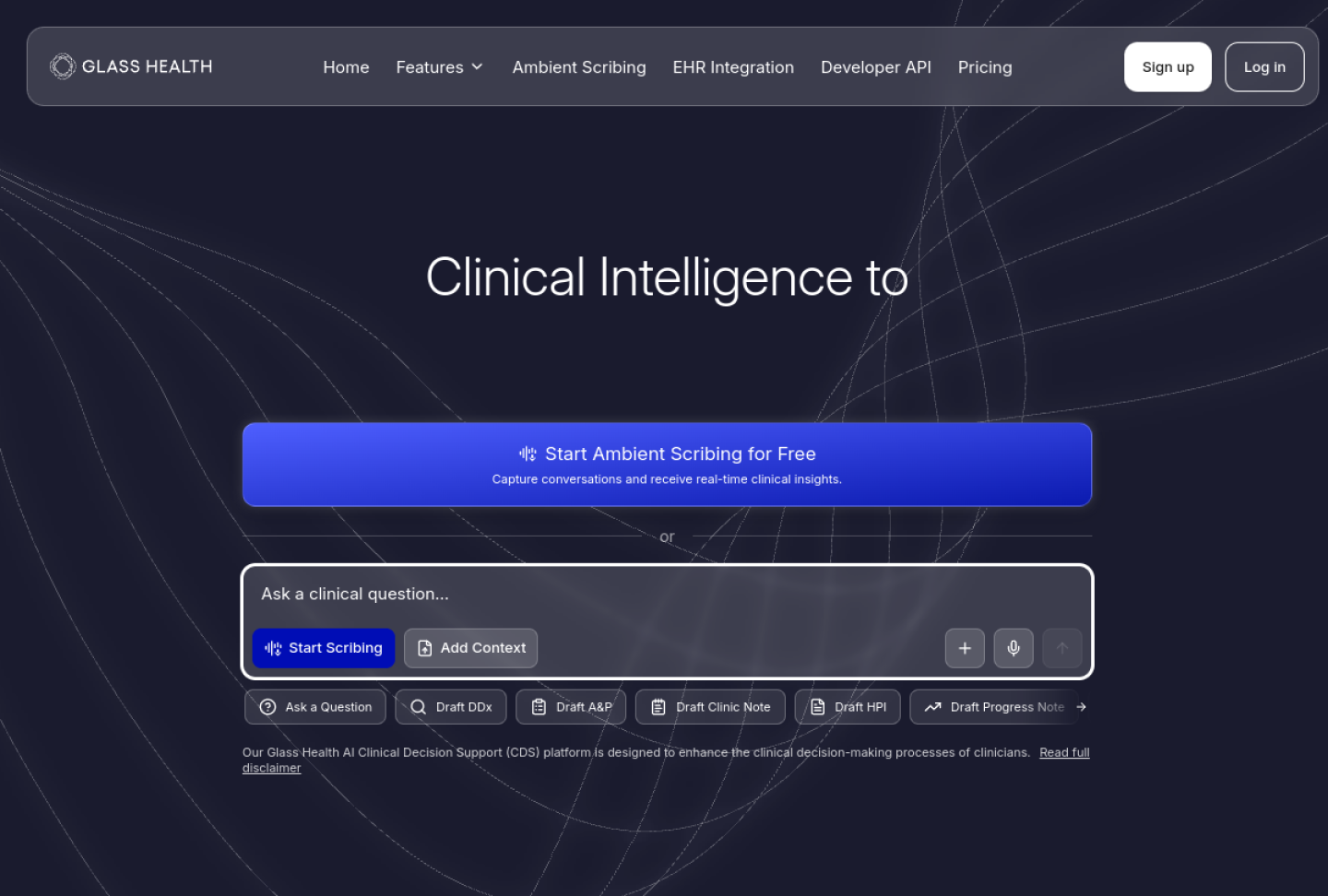
Clinicians or clinical software teams that want evidence-backed reasoning support embedded into visits, documentation, EHR context, or product workflows with explicit human review.
Compare within workflow: Clinical evidence and questions · comparison shortlist · source index
Product-specific review. These product-specific signals summarize what the cited sources imply before treating Glass Health as safe for a local clinical, operational, or research workflow.
| Regulatory / FDA | Treat differential diagnosis, treatment planning, triage, ambient insights, and encounter-specific recommendations as high-risk CDS; map every deployed function against FDA non-device CDS criteria, intended use, explainability, clinician independence, and any local medical-device obligations. |
|---|---|
| Privacy | Review individual versus clinic or enterprise terms, BAA availability, prompts and outputs, audio and transcripts, EHR context, API payloads, payment data, support access, retention, de-identified or aggregated data, and whether service-improvement or model-training rights fit the deployment. |
| Evidence | Require citation review, guideline currency checks, local chart audits, ambient transcript accuracy testing, drug-information verification, subgroup review, and clinician override tracking before using Glass outputs in patient-specific decisions. |
| Workflow | Best governed as clinician-reviewed reasoning and documentation support with clear rules for when outputs may enter notes, orders, referrals, discharge instructions, patient handouts, or software workflows. |
Glass describes an AI-powered ambient scribing and clinical decision-support platform that listens during encounters, surfaces evolving differential diagnoses, suggests history questions and next steps, generates notes and plans, answers clinical reference questions with citations, supports EHR integration, and exposes a developer API for clinical queries, triage, record summarization, diagnostic support, treatment planning, documentation, and ambient scribing; its privacy policy covers prompts and outputs, and its clinician terms should be reviewed before entering patient context or relying on generated recommendations.
Not for: Autonomous diagnosis, unsupervised triage or treatment selection, emergency advice, entering PHI without appropriate terms, or replacing local clinical protocols and professional judgment.
Use these links to confirm current claims, terms, regulatory status, pricing, and deployment requirements.
Research assistant focused on finding and summarizing scientific evidence, including medical research.
AI research assistant for literature review workflows, including systematic reviews.
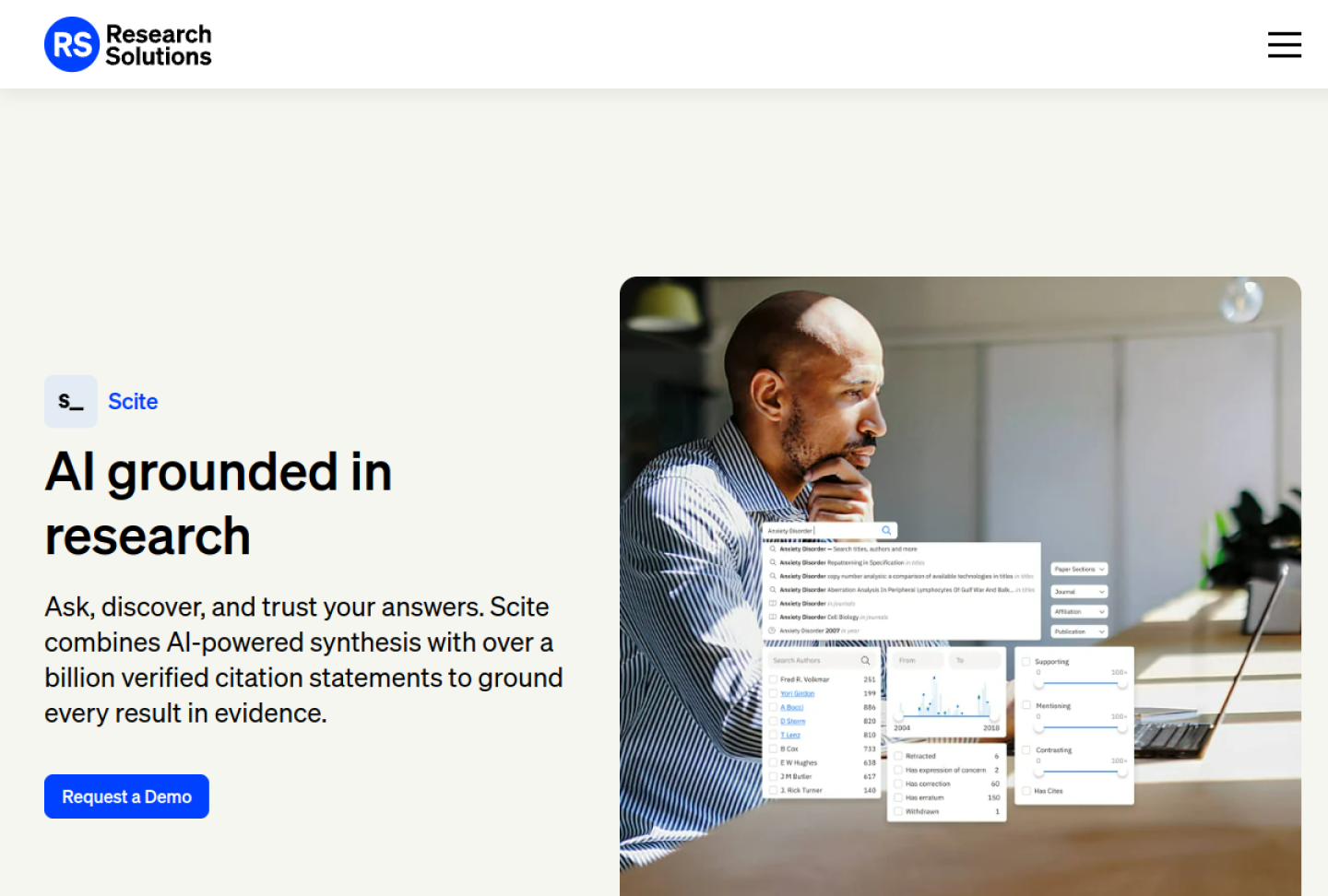
AI research assistant built around verified citation statements and citation context.
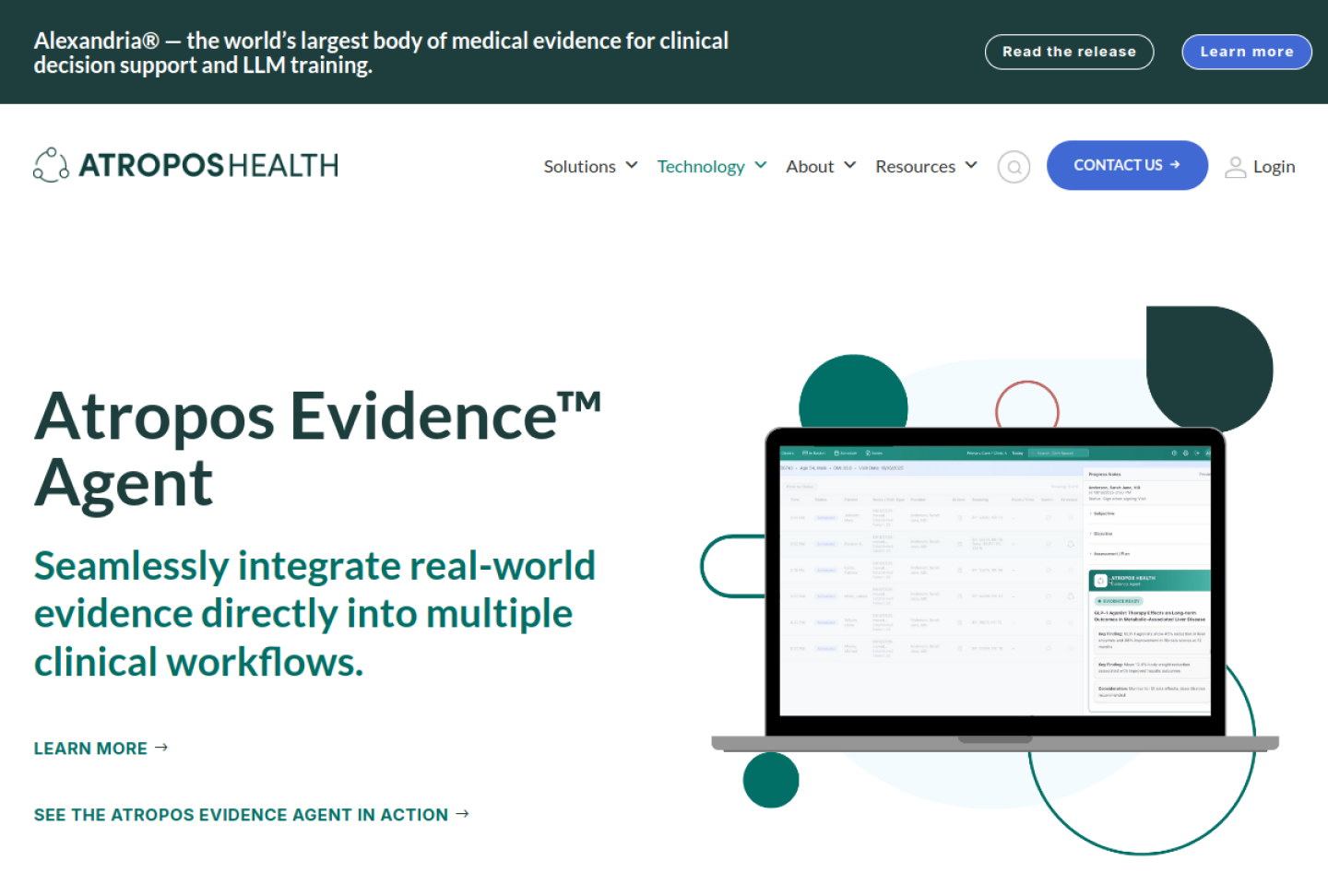
Evidence platform and agentic workflow for generating and surfacing real-world evidence in clinical settings.