| Aidoc |
Health systems deploying multiple imaging AI algorithms and governance workflows. |
FDA-cleared algorithms that match your exact modality and use case. |
6 official sources |
| AIRS Medical SwiftMR |
Imaging teams evaluating MRI throughput, image-quality, and scanner-capacity improvements without purchasing new MRI hardware or changing every modality workflow. |
Current FDA 510(k), CE, or local authorization for the exact SwiftMR version, body region, sequence, field strength, scanner vendor, and OEM deep-learning reconstruction combination in scope. |
8 official sources |
| Viz.ai |
Teams that need rapid disease detection alerts and coordinated response pathways. |
Which algorithms are FDA-cleared for your use case. |
6 official sources |
| Ferrum Health |
Organizations that need one governed integration layer for FDA-cleared, CE-marked, open-source, homegrown, or vendor AI models rather than one-off radiology deployments. |
Which models, service lines, PACS/RIS/EHR connections, deployment fabric, and governance modules are included in the scope. |
4 official sources |
| Blackford Platform |
Health systems that want one governed infrastructure layer for radiology AI rather than point integrations for every algorithm. |
Which Blackford Platform functions and marketplace applications are in scope. |
4 official sources |
| CARPL.ai |
Health systems that want a governed radiology AI orchestration layer with marketplace access, PACS integration, validation tooling, and model-by-model deployment oversight. |
Current FDA 510(k) status, CARPL software version, included viewer and workflow-management functions, geography, and whether the planned use matches the cleared intended use. |
6 official sources |
| deepcOS |
Hospitals and imaging networks that want a governed platform layer for radiology AI evaluation, integration, security review, and multi-vendor scaling. |
Which deepcOS modules, AI marketplace applications, and clinical indications are included in the deployment. |
3 official sources |
| Enlitic Curie / ENDEX |
Organizations with inconsistent DICOM descriptions, hanging-protocol friction, routing errors, PHI exposure risk in image archives, archive-migration work, or research-data preparation needs. |
Which Enlitic modules are in scope: Curie platform, ENDEX data standardization, ENCOG de-identification, migration services, ENSIGHT data management, GE-integrated workflow, or research data preparation. |
6 official sources |
| Brainomix 360 Stroke |
Hospitals and regional stroke networks that need AI-assisted imaging triage, ASPECTS support, LVO/collateral assessment, and transfer coordination under specialist review. |
Which Brainomix 360 Stroke modules are in scope, such as e-ASPECTS, e-CTA, Triage Stroke, core-volume, e-MRI, or mobile notifications. |
6 official sources |
| Avicenna.AI CINA-ASPECTS |
Stroke programs that need standardized ASPECTS support, region-level visualization, and radiologist or stroke-physician review within an acute stroke pathway. |
Whether CINA-ASPECTS clearance, software version, age limits, scanner manufacturers, and geography match the planned stroke workflow. |
6 official sources |
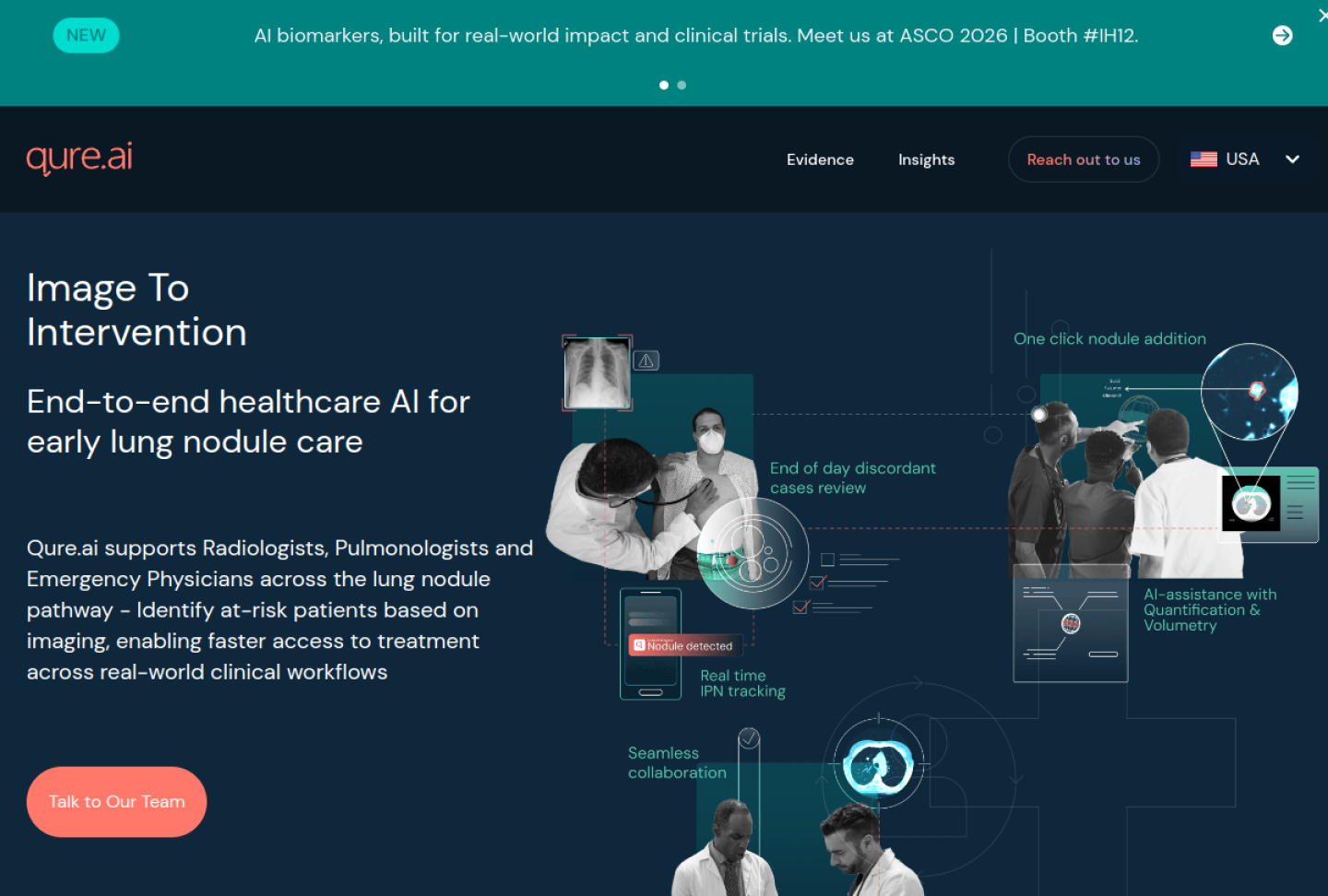
| Qure.ai |
Organizations evaluating imaging AI for public health, lung cancer, TB, and emergency workflows. |
Product-specific clearance and local regulatory status. |
4 official sources |
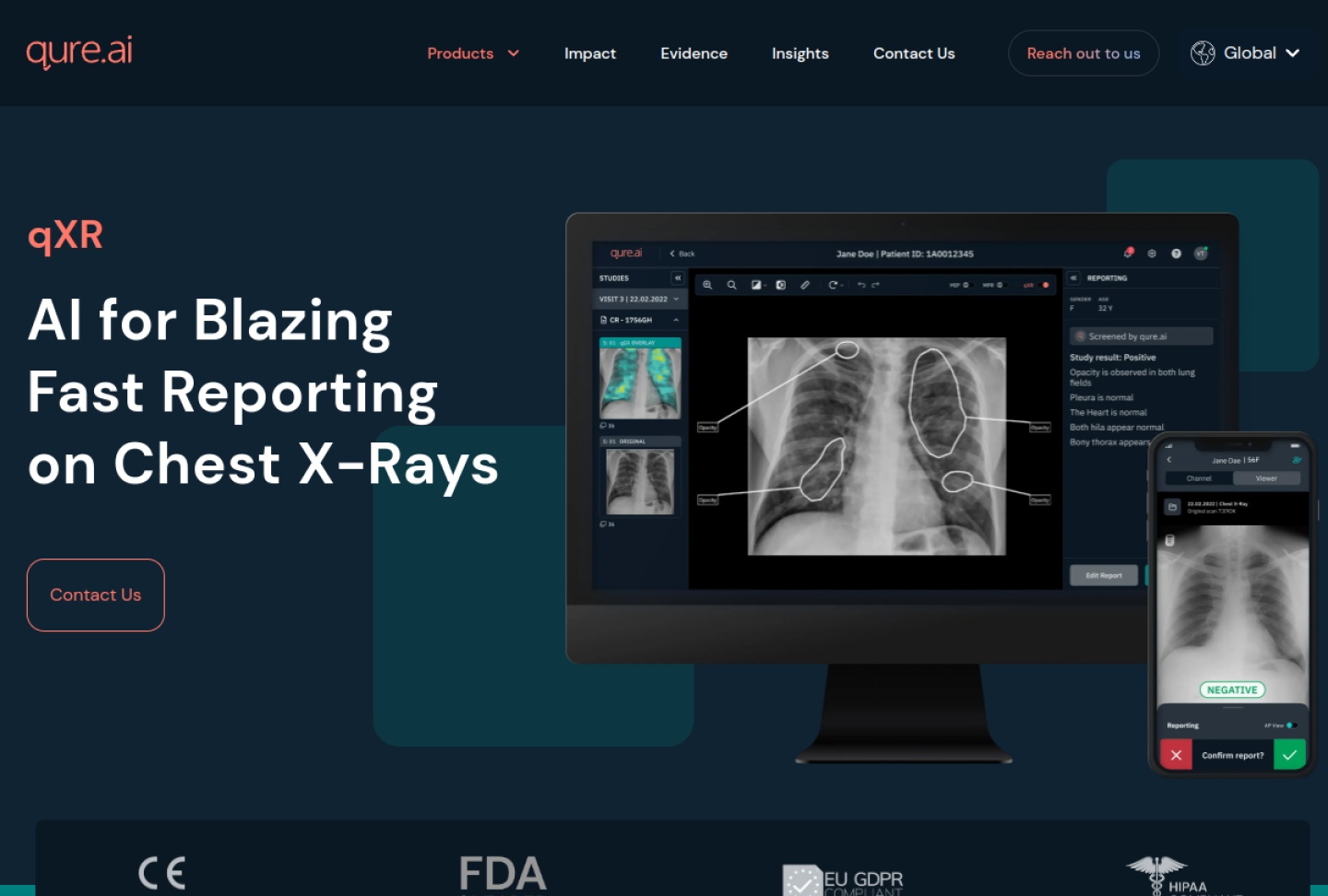
| Qure.ai qXR |
Organizations that need chest X-ray support for high-volume radiology, emergency, ICU, lung, TB, or public-health workflows with radiologist review. |
Which qXR module, finding set, software version, and geography are in scope for the planned chest X-ray workflow. |
6 official sources |
| Oxipit ChestLink |
European radiology programs studying tightly governed autonomous normal-study reporting after retrospective and supervised validation. |
Whether ChestLink is available and authorized for the intended country, institution, CXR workflow, software version, and autonomous-reporting mode. |
5 official sources |
| Rad AI |
Radiology groups that want reporting assistance, standardized language, and guideline insertion while keeping radiologists in the final-sign workflow. |
Whether Rad AI Reporting supports the modalities, templates, macros, consensus guidelines, hardware, and reporting styles used by the radiology group. |
5 official sources |
| Rad AI Continuity |
Organizations that need to close the loop on radiology follow-up recommendations with EHR/RIS integration, audit trails, and human-supervised outreach. |
Which report types, incidental-finding categories, anatomy groups, consensus guidelines, and follow-up timeframes are detected and tracked. |
3 official sources |
| Sirona RadOS |
Radiology groups replacing fragmented PACS, reporting, viewer, and worklist tooling with a unified cloud-native workflow platform. |
Which RadOS modules are contracted, including PACS archive, viewer, worklist, reporting, AI automation, business continuity, and any prospective features under regulatory review. |
4 official sources |
| Bayer Calantic Digital Solutions |
Radiology teams that want a governed platform layer for deploying multiple third-party or Bayer imaging AI applications across service lines. |
Which Calantic applications are available in the intended country, service line, modality, body region, and regulatory pathway. |
4 official sources |
| Cleerly |
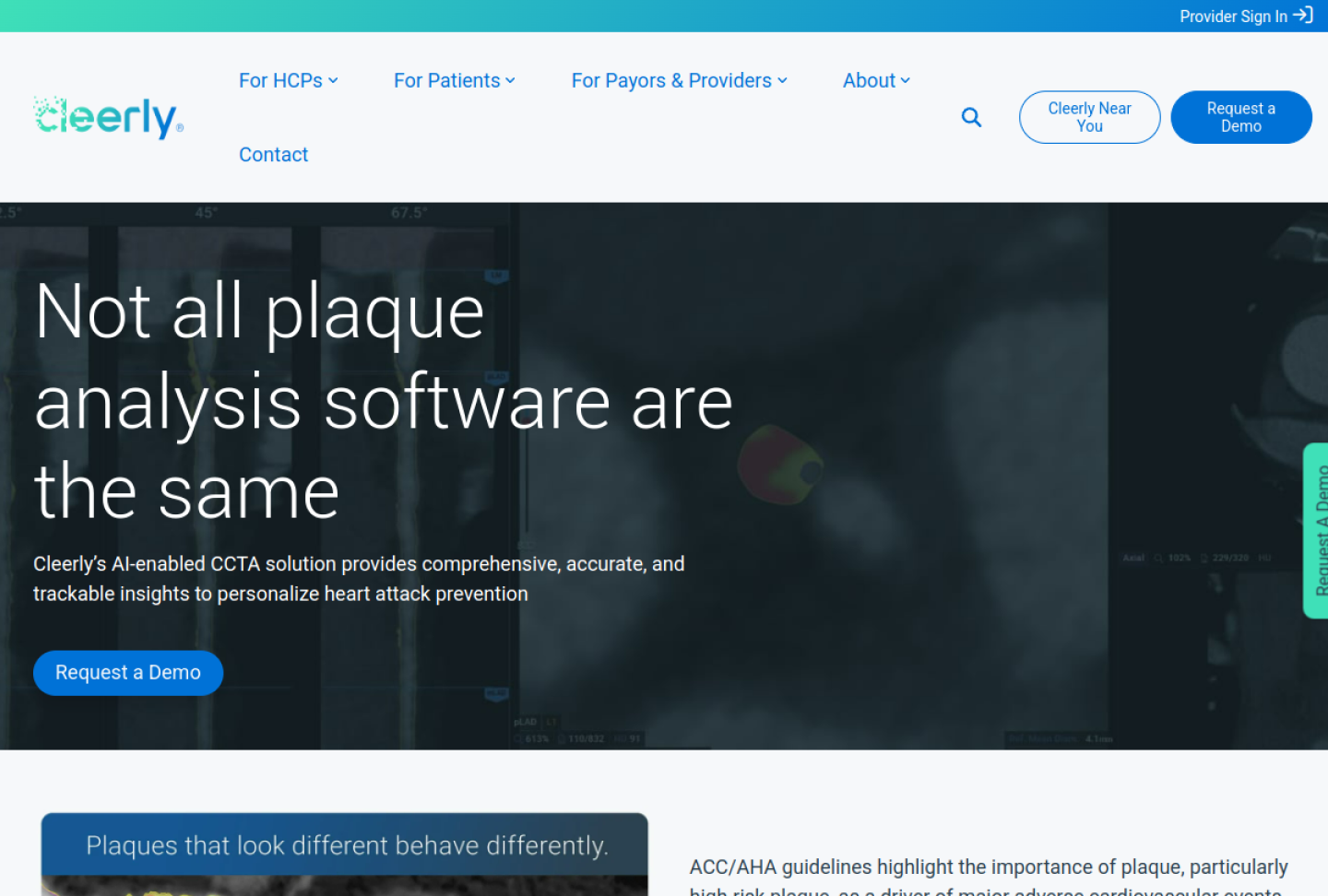
Cardiology and imaging teams using CCTA to quantify and track coronary plaque. |
Regulatory status and intended use in your country. |
7 official sources |
| Elucid PlaqueIQ |
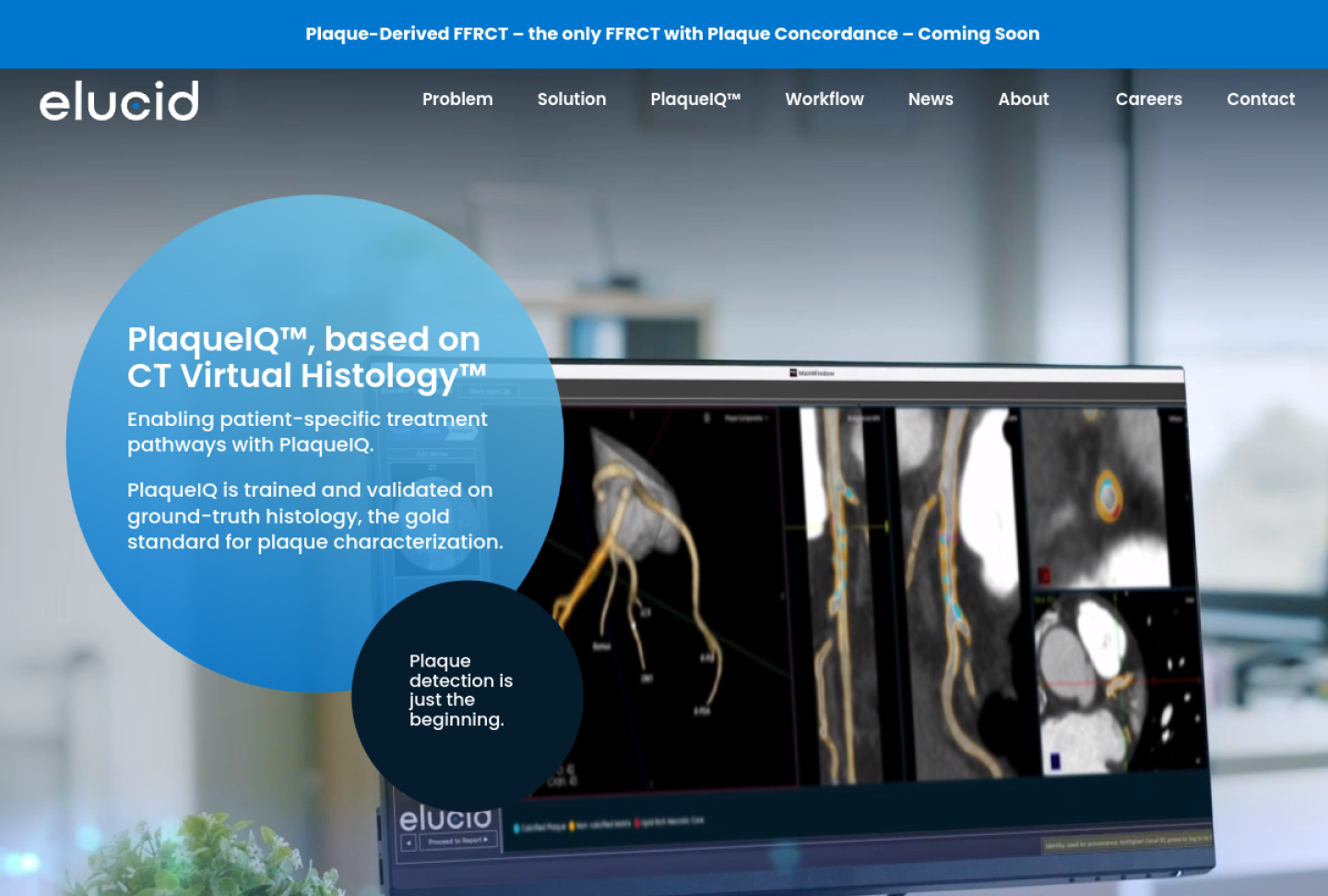
Cardiology and imaging teams evaluating quantitative CCTA plaque analysis for atherosclerosis risk assessment and treatment planning. |
FDA 510(k) indication, software version, and whether the intended coronary CTA workflow matches the clearance. |
5 official sources |
| LumineticsCore |
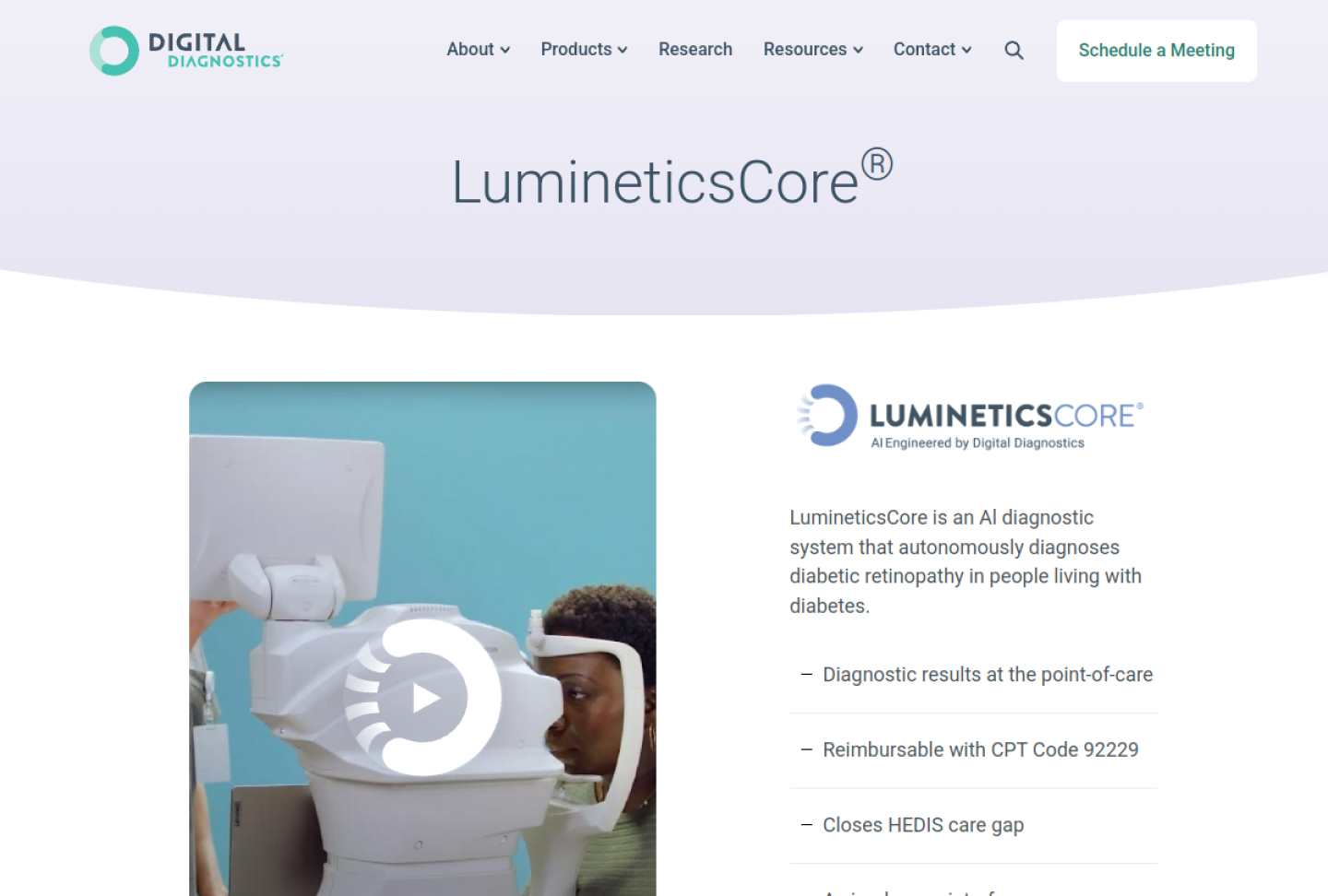
Primary-care or diabetes-care settings that need point-of-care diabetic eye exam workflows with defined referral instructions. |
FDA De Novo authorization, indications for use, contraindications, and exact eligible patient population. |
5 official sources |
| Eyenuk EyeArt |
Diabetes and primary-care workflows that need in-clinic diabetic eye screening with supported cameras, trained operators, referral rules, and clinician oversight. |
FDA 510(k) record, current EyeArt version, supported camera models, intended-use language, and eligible patient population. |
5 official sources |
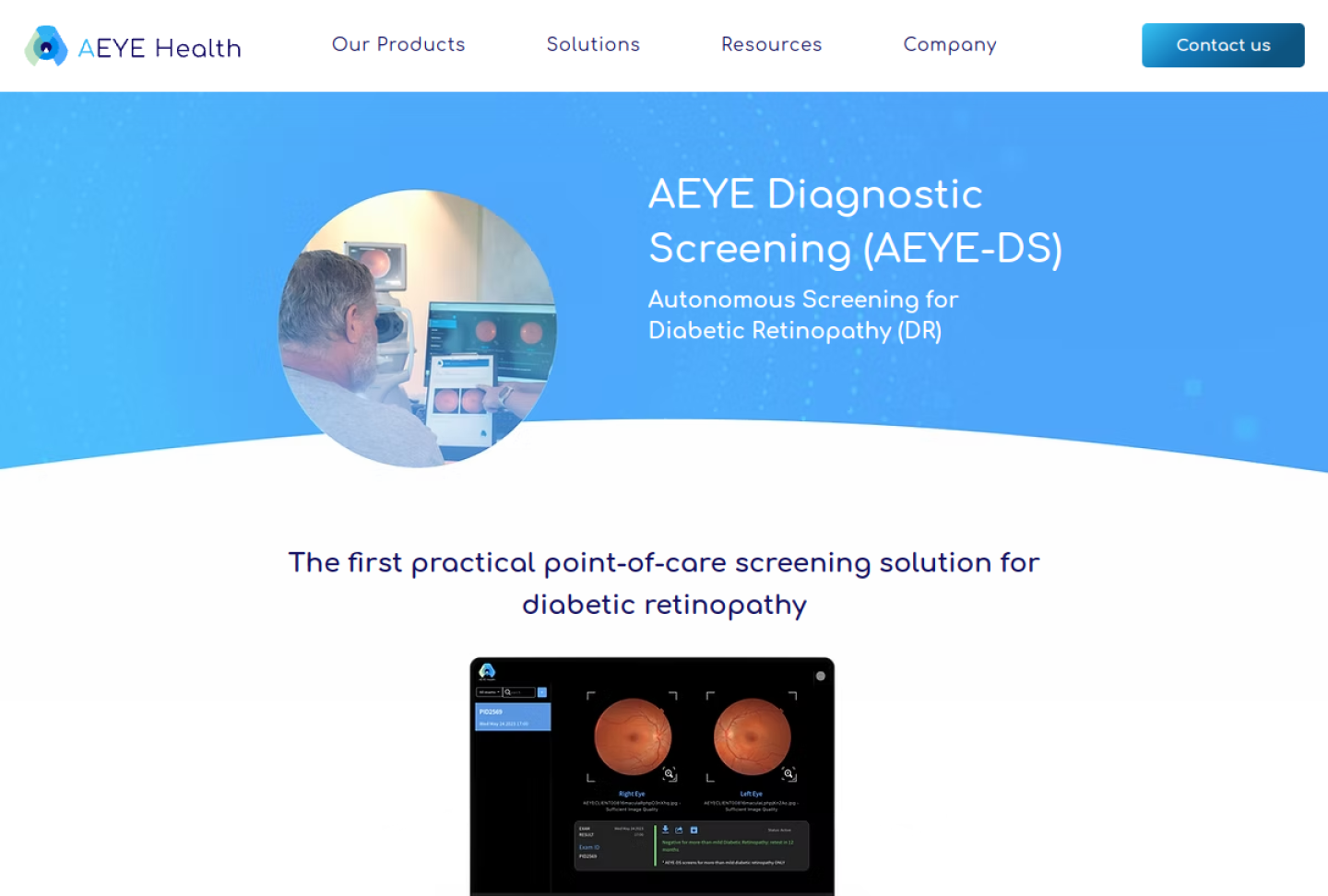
| AEYE-DS |
Clinics that want same-visit diabetic retinopathy screening with supported cameras, trained image capture, EHR reporting, and defined referral routing. |
Current FDA 510(k) record, supported camera model, software version, indication, contraindications, and adult diabetes eligibility rules. |
4 official sources |
| RETINA-AI Galaxy |
Primary-care and payer workflows that need fast same-visit diabetic retinopathy screening across supported camera options. |
FDA-cleared indication, compatible cameras, contraindications, warnings, and patient eligibility before purchase. |
3 official sources |
| RetInSight Fluid Monitor |
Retina clinics that need reproducible OCT fluid quantification and longitudinal visualization to support specialist-reviewed nAMD management. |
Current CE/MDR status, country availability, version, indication, OCT device compatibility, and whether U.S. clinical use is supported. |
3 official sources |
| RetinAI Discovery |
Teams managing multimodal retinal imaging data, clinical studies, retina RWE datasets, or clinic workflows that need secure sharing and specialist-reviewed AI enrichment. |
Which Discovery product, AI module, disease area, and region are in scope for clinical use versus research use only. |
5 official sources |
| Cercare Medical Neurosuite |
Hospitals that need regulated perfusion post-processing across stroke and neuroimaging workflows, especially teams evaluating angio-suite CBCT perfusion. |
Which module is in scope: CMN Capillary Function, Virtual Expert, CT perfusion, MRI perfusion, CBCT Perfusion, oncology, or stroke workflow support. |
5 official sources |
| RapidAI |
Hospitals evaluating stroke, vascular, aortic, hemorrhage, or other imaging workflows that need integrated alerts and care coordination. |
Which RapidAI module is in scope and whether its clearance matches the exact modality, anatomy, and intended use. |
6 official sources |
| Heartflow |
Cardiology and imaging programs using CCTA to evaluate coronary artery disease and support treatment planning. |
Which Heartflow product is being used: FFRCT, Plaque Analysis, Roadmap Analysis, or another module. |
7 official sources |
| Caristo CaRi-Plaque and CaRi-Heart |
Cardiology and imaging programs comparing AI-supported coronary CTA plaque and inflammatory-risk analysis while keeping final interpretation and management decisions with qualified clinicians. |
Which module is in scope: FDA-cleared CaRi-Plaque, CaRi-Heart FAI-Score, CaRi-Heart Risk Score, a research workflow, or a combined regional report. |
5 official sources |
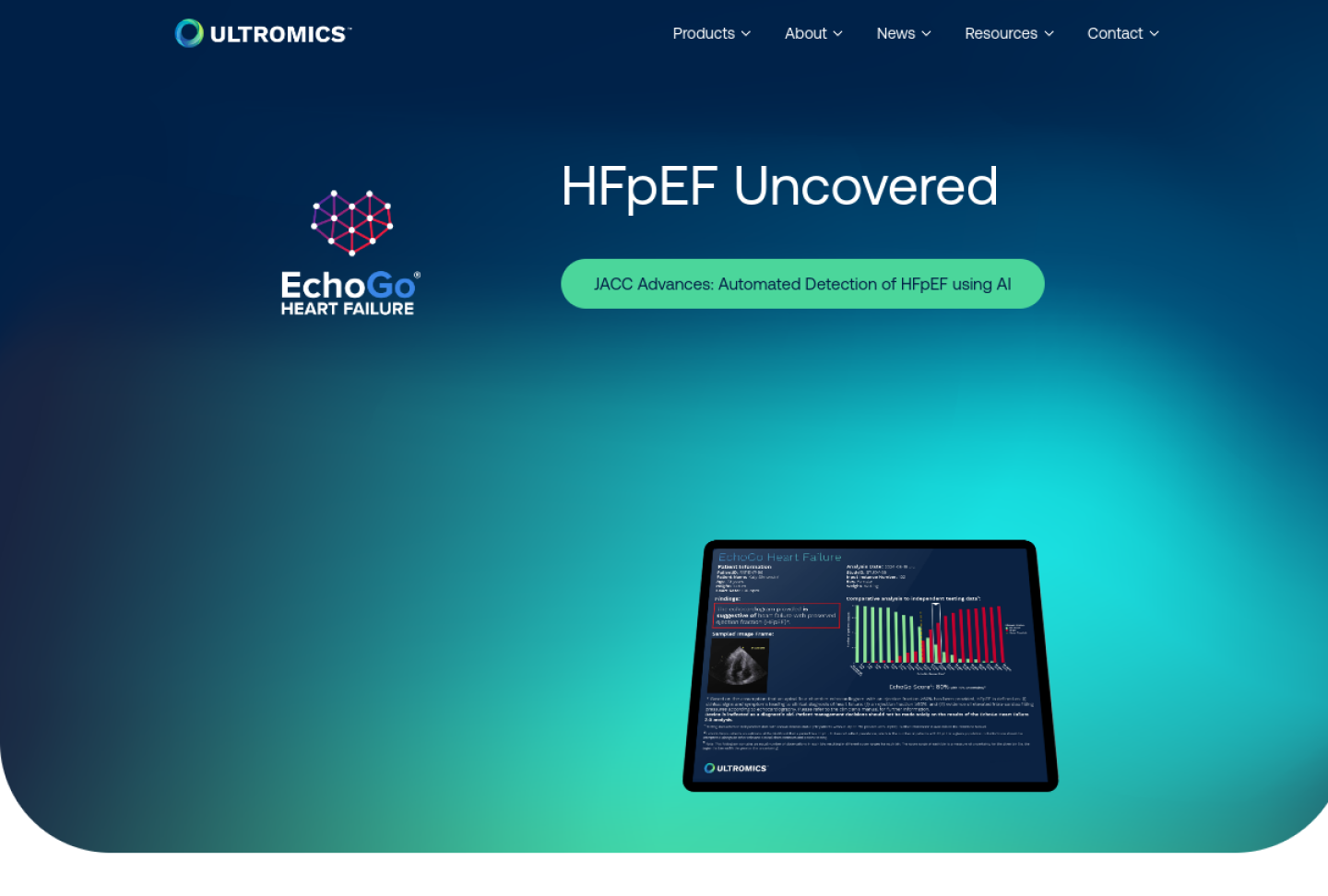
| Ultromics EchoGo |
Heart-failure and echo programs evaluating structured AI support for HFpEF workups in clinician-reviewed workflows. |
Whether the selected EchoGo Heart Failure version and 510(k) clearance match the intended echocardiography workflow. |
4 official sources |
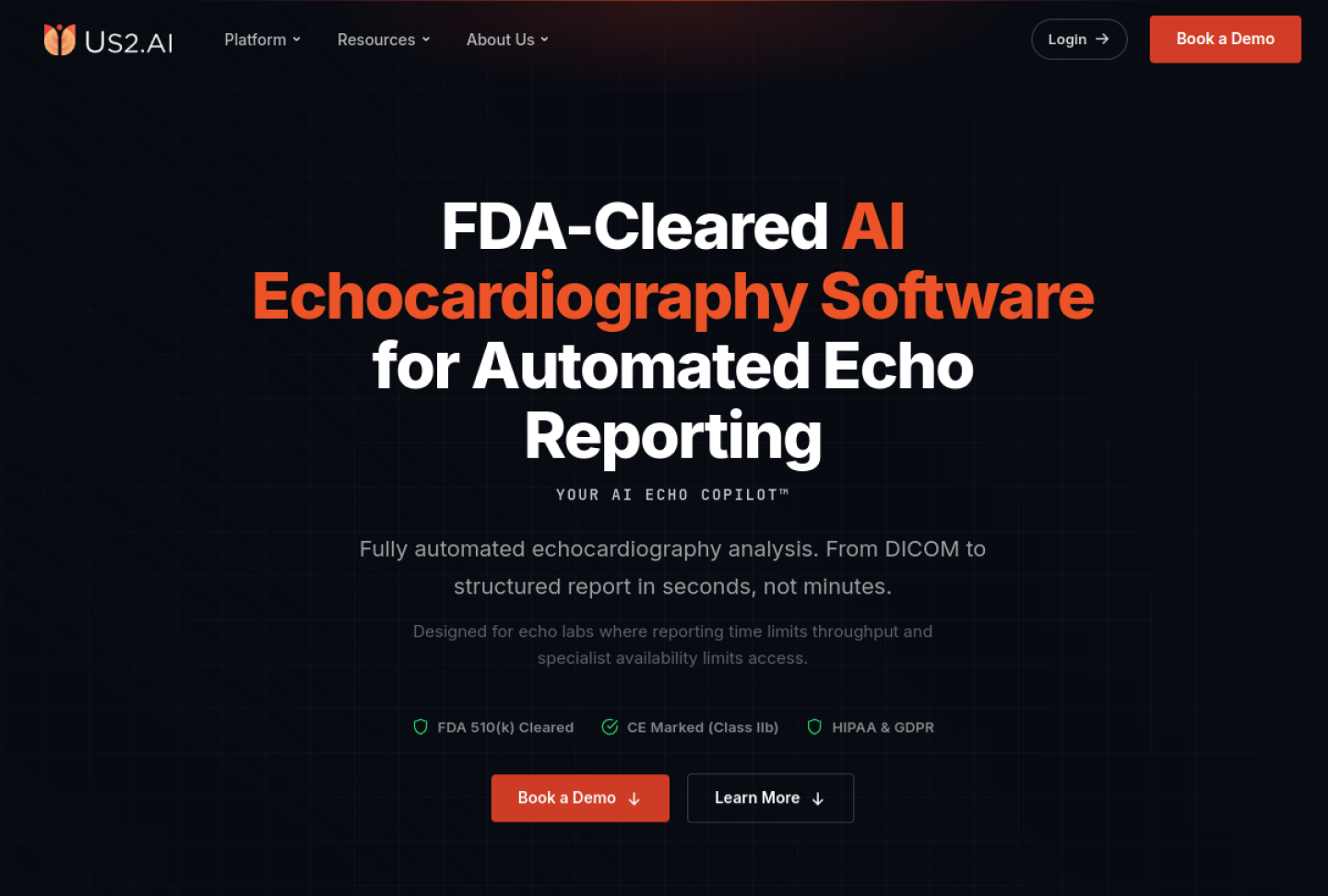
| Us2.ai |
Echo labs and cardiology programs that need reproducible measurement automation and structured reporting while preserving cardiologist interpretation. |
Which Us2.ai software version and market authorization apply to the planned echo workflow. |
6 official sources |
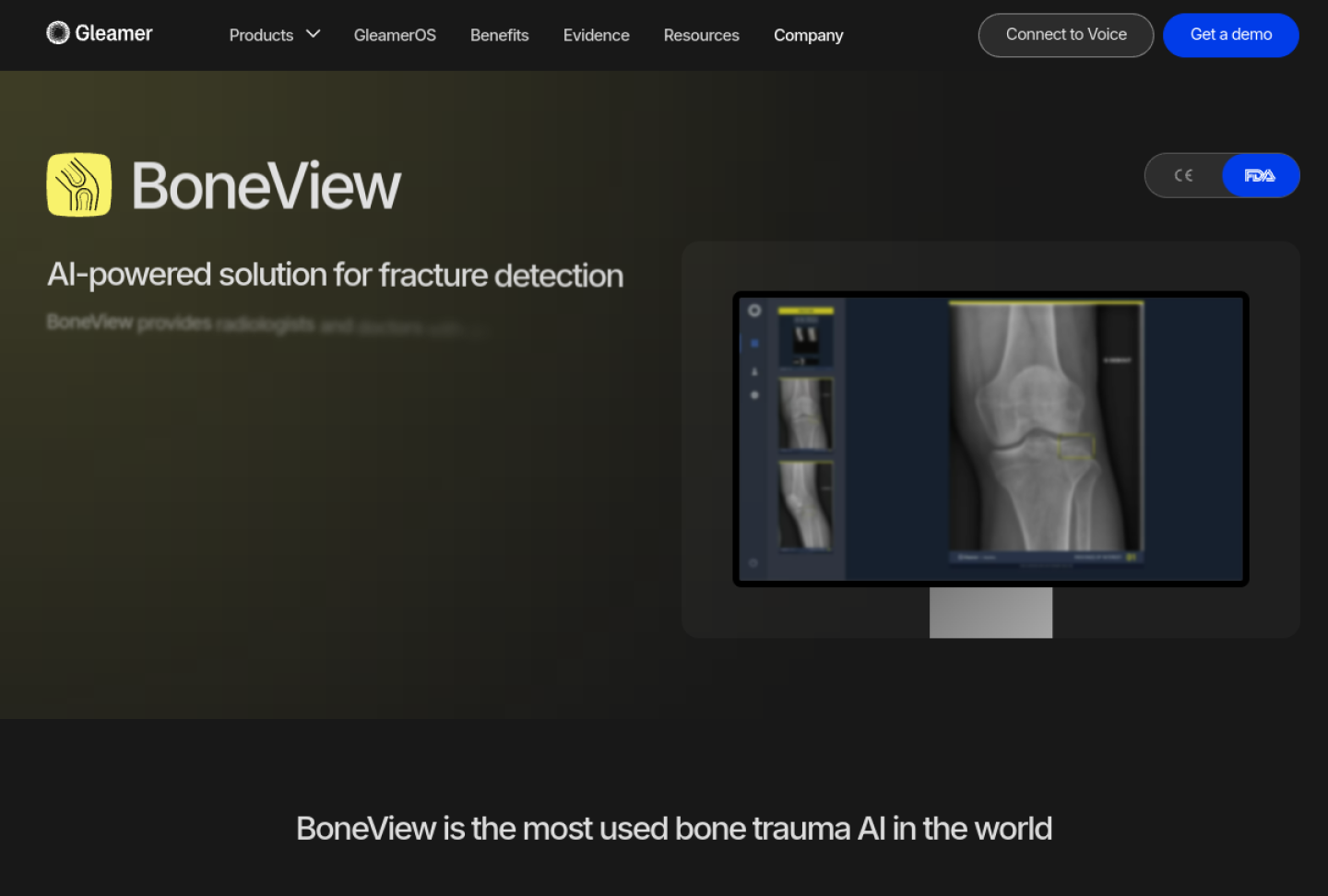
| Gleamer BoneView |
Teams that need fracture-detection support for high-volume trauma X-rays while preserving radiologist or clinician interpretation. |
FDA K222176 intended use, covered anatomy, patient age limits, warnings, and region-specific availability. |
4 official sources |
| iCAD ProFound AI |
Breast imaging programs comparing AI assistance for 2D mammography, digital breast tomosynthesis, case prioritization, and mammography workflow support. |
Which module is in scope: ProFound Detection, ProFound AI for DBT, density assessment, risk scoring, or another breast-health workflow. |
5 official sources |
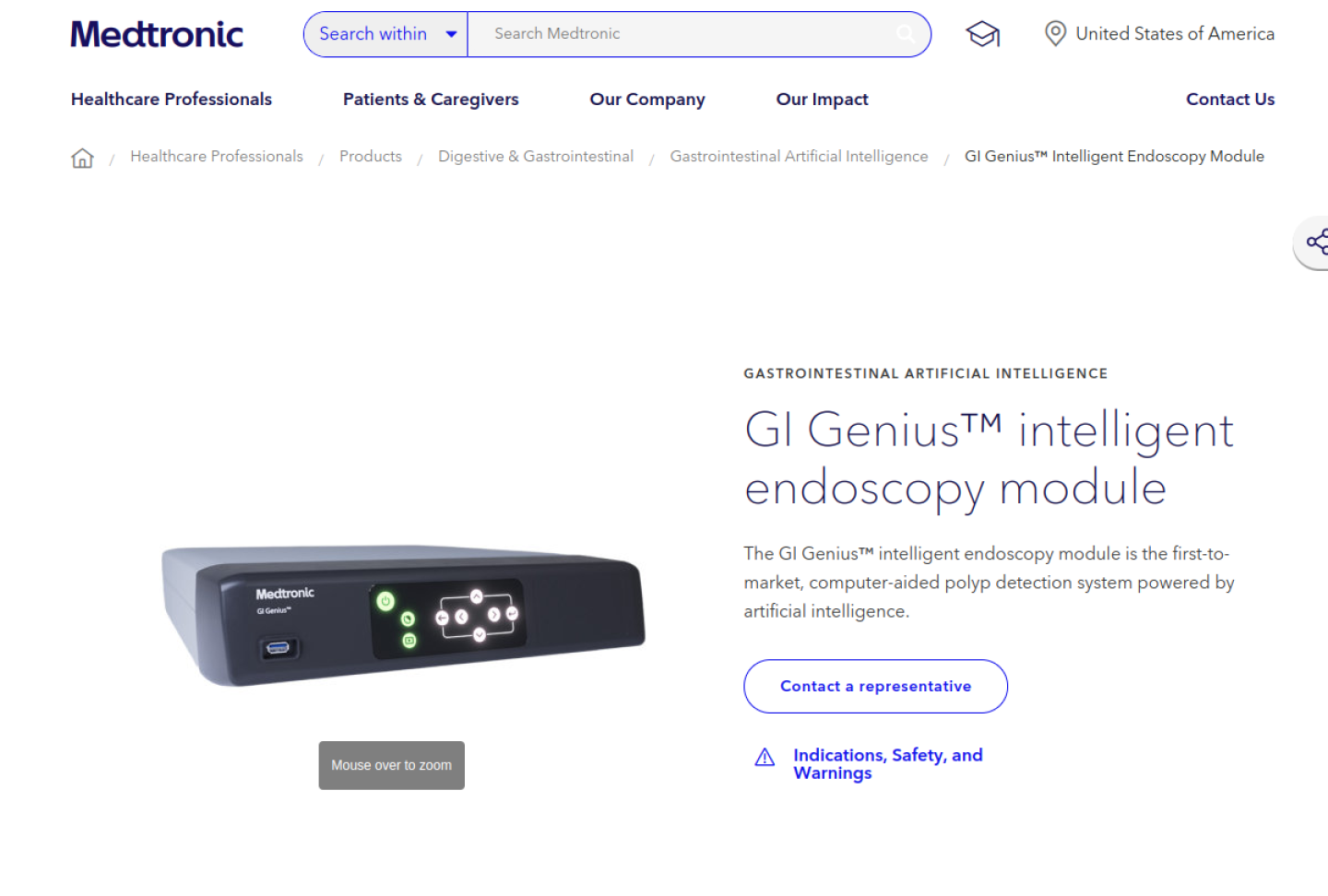
| GI Genius |
Endoscopy programs evaluating FDA-authorized AI-assisted colonoscopy for colorectal polyp detection while preserving physician interpretation and pathology workflows. |
FDA De Novo authorization, current labeling, software version, contraindications, prescription-use requirements, and geography-specific availability. |
4 official sources |
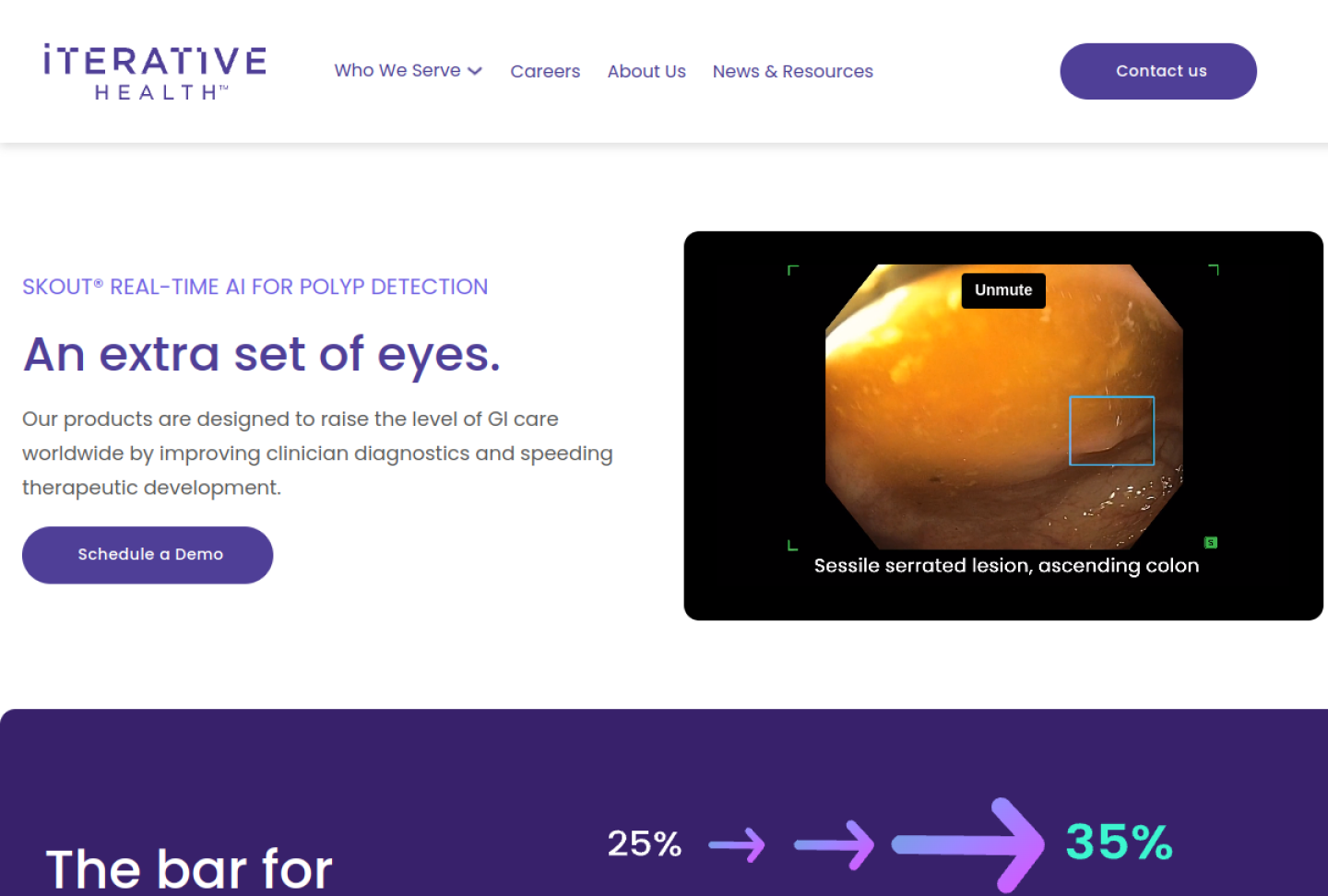
| SKOUT |
GI programs comparing FDA-cleared computer-aided polyp detection tools for screening and surveillance colonoscopy with quality-measure monitoring. |
FDA 510(k) record, current labeling, intended adult screening or surveillance population, white-light requirement, and compatible SKOUT system components. |
4 official sources |
| Fujifilm CAD EYE |
Endoscopy programs already evaluating or using Fujifilm ELUXEO infrastructure and comparing FDA-cleared AI detection support for colonoscopy. |
FDA 510(k) status for the exact CAD EYE or EW10-EC02 software version, intended use, compatible Fujifilm hardware, and current U.S. availability. |
4 official sources |
| Olympus CADDIE |
Endoscopy programs with Olympus equipment that want to compare cloud-connected FDA-cleared CADe support against room-local colonoscopy AI systems. |
FDA 510(k) records such as K240044 or K252586, current U.S. labeling, standard white-light limitation, software version, and any hardware or OLYSENSE Hub dependencies. |
6 official sources |
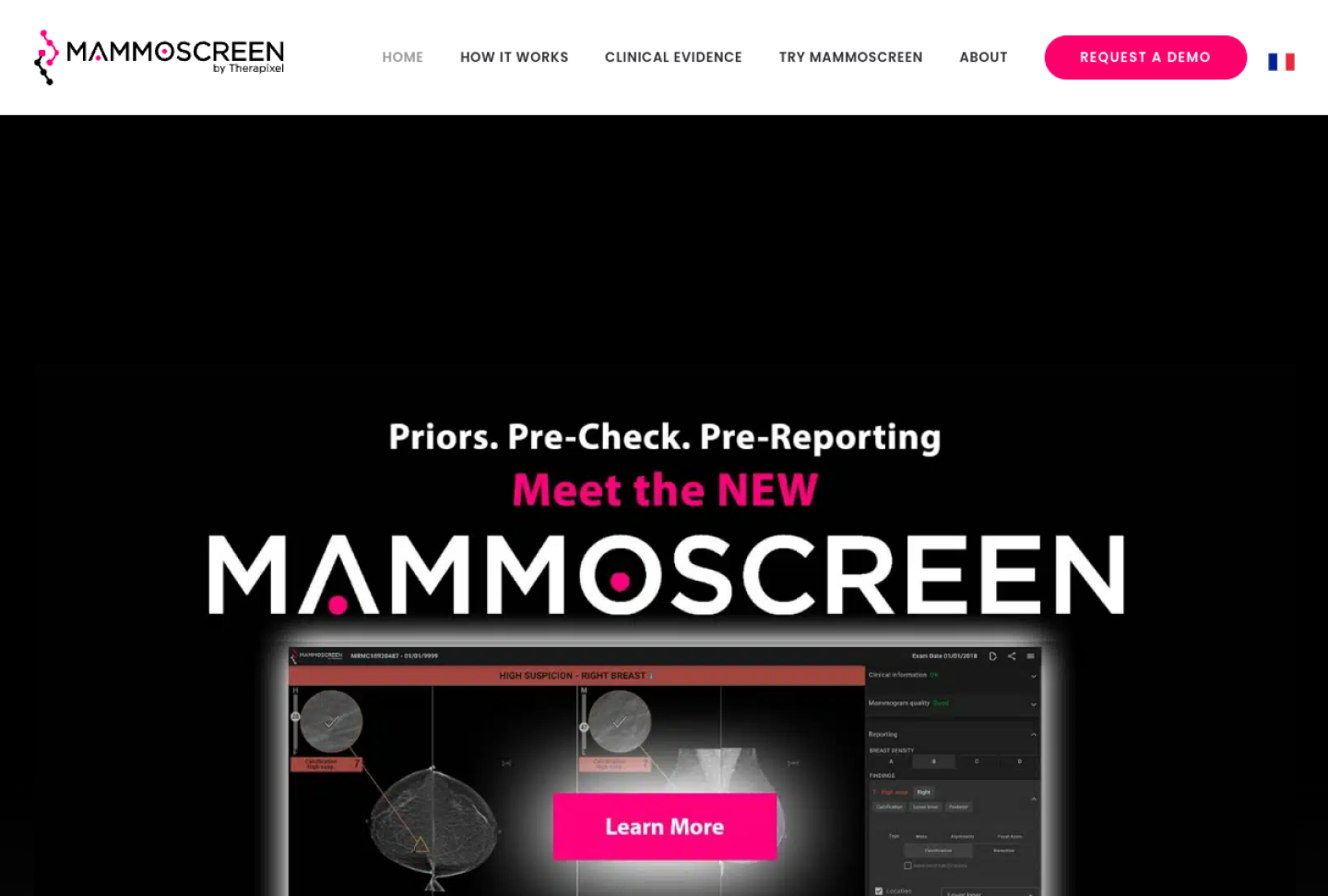
| MammoScreen |
Breast imaging programs comparing FDA-cleared and CE-marked mammography AI for detection support, priors, pre-check, and reporting workflow. |
Whether the exact MammoScreen version and module are cleared or available for the intended country, modality, and mammography system. |
5 official sources |
| Kheiron Mia |
Screening programs evaluating AI as a governed support layer for double-reading capacity, quality assurance, and pathway efficiency. |
Which Mia module is in scope: Mia Triage, Mia Reader, Mia IQ, RSViP, or another local workflow. |
5 official sources |
| ScreenPoint Transpara |
Breast screening programs comparing AI second-reader, case-scoring, density, and prior-comparison workflows for radiologist-reviewed mammography. |
Which Transpara module is in scope: Detection, Density, Temporal Comparison, or another breast AI workflow. |
4 official sources |
| Koios DS Breast |
Breast ultrasound teams evaluating adjunctive CADx support while preserving trained physician interpretation and BI-RADS workflow responsibility. |
Whether Koios DS Breast, Koios DS, or another module/version matches the intended breast ultrasound workflow. |
4 official sources |
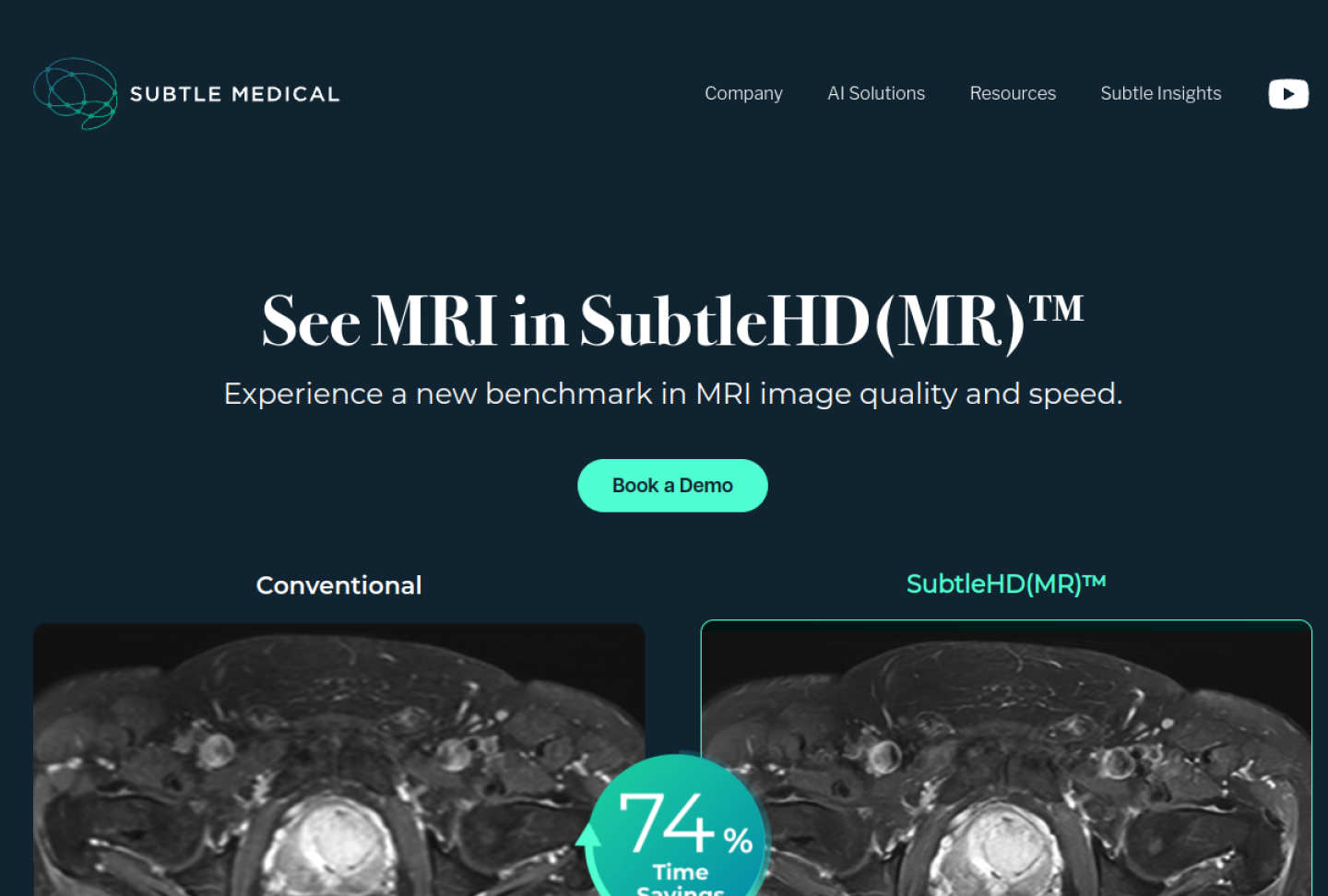
| Subtle Medical |
Imaging teams evaluating AI image-enhancement and scan-time workflows rather than diagnostic detection or triage algorithms. |
Which tool is in scope: SubtleMR, SubtlePET, SubtleHD, SubtleSYNTH, SubtleALIGN, or an integrated partner workflow. |
6 official sources |
| Lunit |
Organizations evaluating cancer-screening AI, mammography or chest X-ray support, and oncology research workflows that need product-specific regulatory review. |
Which module is in scope: INSIGHT MMG, INSIGHT DBT, INSIGHT CXR, SCOPE IO, SCOPE IHC, SCOPE GP, or a Volpara-derived workflow. |
3 official sources |
| annalise.ai |
Radiology teams that need broad CXR or head CT finding coverage with region-specific regulatory and workflow review. |
Which product is being evaluated: Annalise Enterprise CXR, Enterprise CTB, Annalise Triage, Reporting, or a regional Harrison.ai-branded workflow. |
4 official sources |
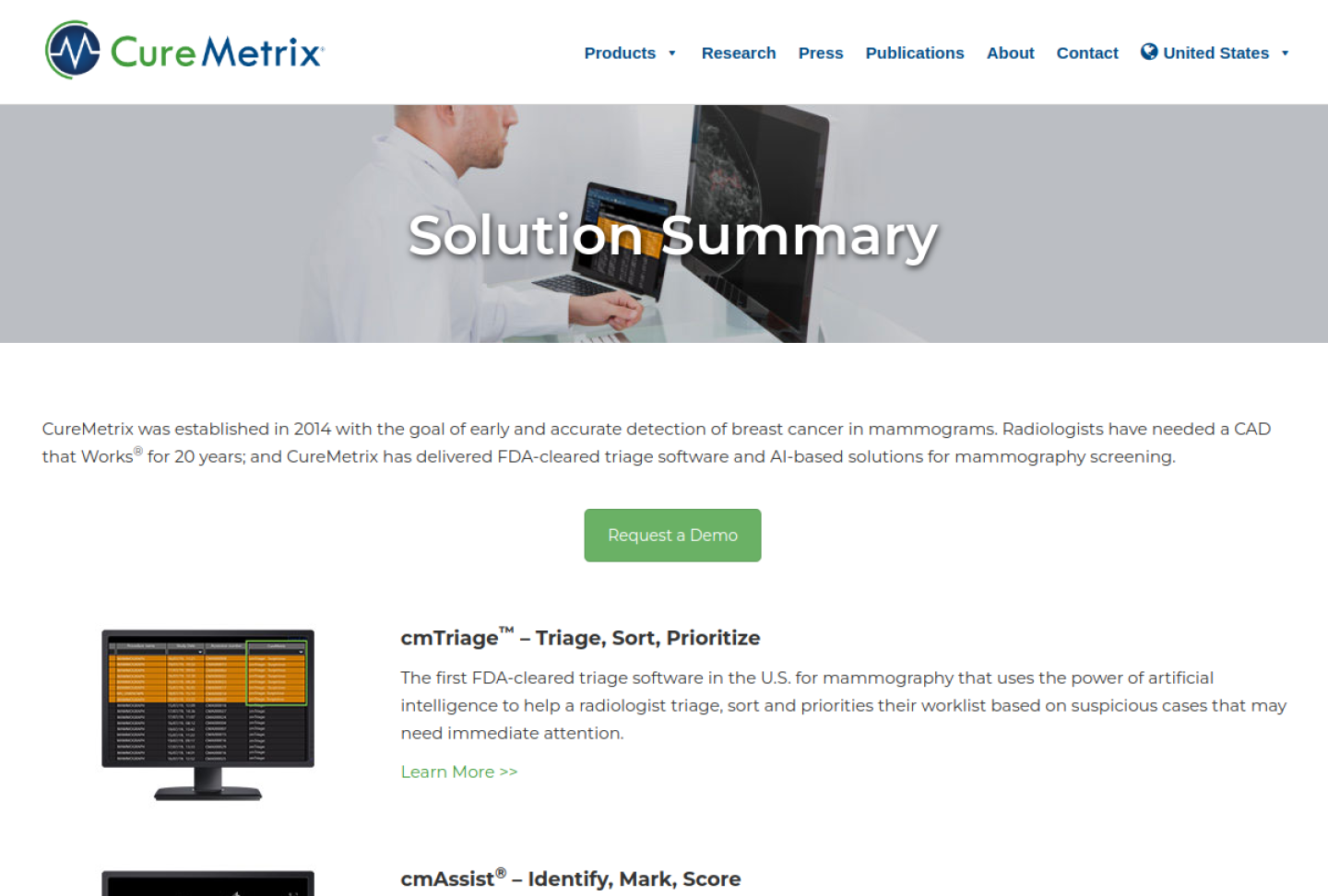
| CureMetrix |
Breast imaging programs evaluating suspicious-case prioritization for 2D screening mammography while keeping radiologists responsible for interpretation. |
Whether the exact CureMetrix module is cmTriage, cmAssist, or another breast-imaging workflow. |
3 official sources |
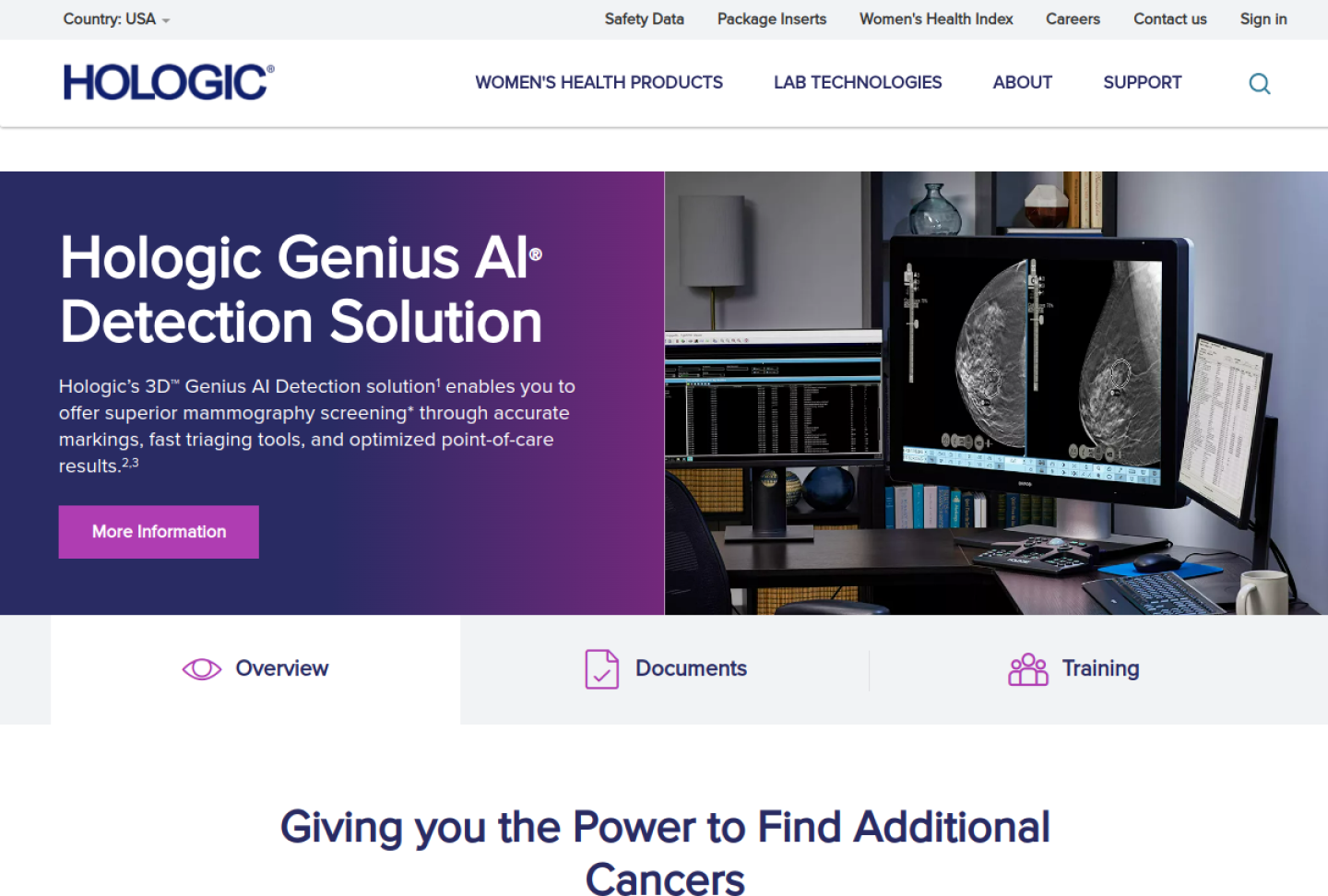
| Hologic Genius AI Detection |
Breast imaging programs already standardized on Hologic 3D mammography that need product-specific FDA and workflow review for CAD support. |
Which version is being evaluated: Genius AI Detection, Genius AI Detection 2.0, CC-MLO Correlation, or another local package. |
4 official sources |
| GE HealthCare Caption AI |
Organizations expanding point-of-care cardiac ultrasound access while keeping image acquisition, interpretation, and escalation under trained clinical oversight. |
Which GE ultrasound system, Caption Guidance feature, or Caption Interpretation AutoEF workflow is in scope. |
4 official sources |
| UltraSight Guidance |
Health systems that want to standardize focused cardiac ultrasound acquisition across supported handheld, laptop, or cart-based devices while preserving physician oversight for interpretation. |
FDA 510(k), regional authorization, software version, compatible ultrasound systems, intended users, adult 2D-TTE scope, and supported cardiac views. |
6 official sources |
| Butterfly iQ3 |
Programs that need scalable POCUS workflows with training, credentialing, exam management, and AI-assisted acquisition or measurement under clinical governance. |
Which probe generation, software plan, AI feature, and clinical workflow is being deployed. |
4 official sources |
| Sonio Detect |
Women's health teams that need real-time fetal ultrasound quality support while keeping acquisition, interpretation, reporting, and follow-up under qualified clinician governance. |
Which Sonio Detect version, Sonio Pro workflow, ultrasound manufacturer, country, and gestational-age range are in scope. |
7 official sources |
| DeepHealth Breast Suite |
Breast imaging programs evaluating FDA-cleared mammography AI alongside worklist, density, risk, and operations modules while keeping interpreting physicians accountable for final reads. |
Which Breast Suite module is in scope: Saige-Dx, density assessment, safeguard review, risk assessment, viewer, breast ultrasound, or another DeepHealth component. |
6 official sources |
| Pearl Second Opinion |
Dental teams evaluating chairside second-reader support and patient-facing visuals for radiographic findings. |
Which Pearl module is in scope: Second Opinion 2D, Second Opinion 3D, bone-level features, claims review, or another workflow. |
5 official sources |
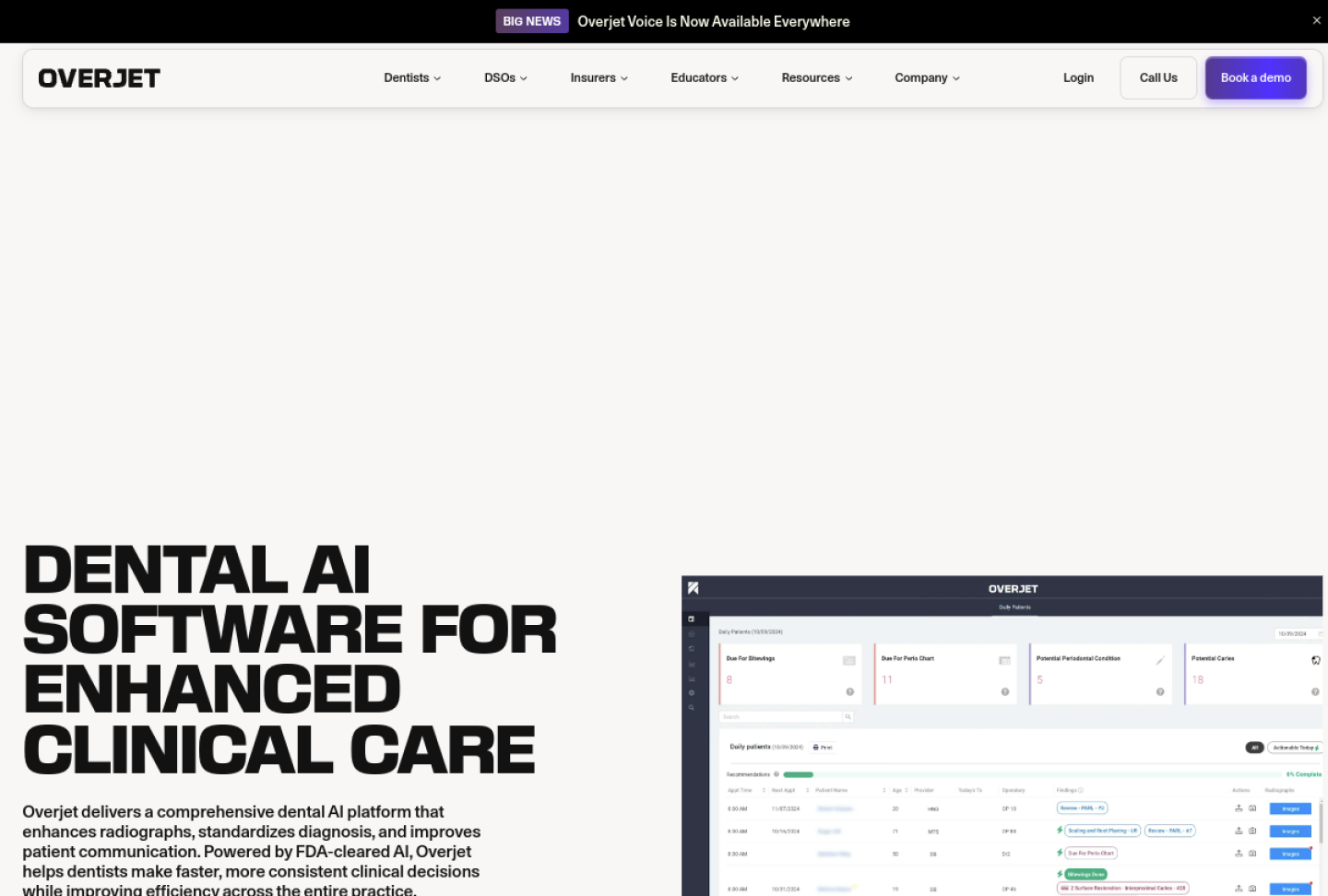
| Overjet |
Dental organizations comparing AI for caries detection, periodontal bone-level measurement, radiograph enhancement, and standardized clinical communication. |
Which product is being used: Vision AI, Dental Assist, Caries Assist, IRIS, image enhancement, payer review, voice, or insurance verification. |
6 official sources |
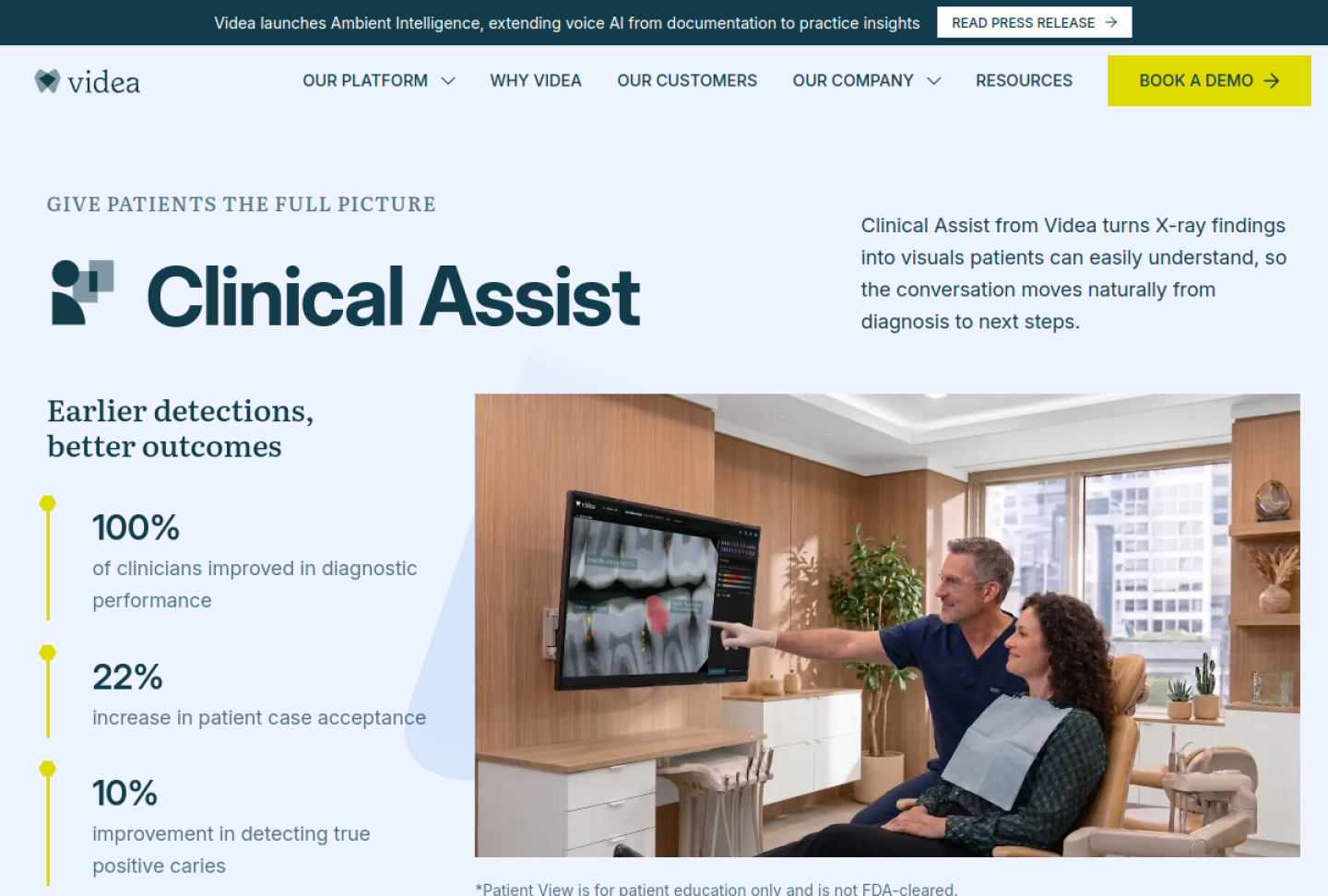
| VideaAI |
Dental organizations that want radiographic AI, patient-facing visuals, and rollout support across multiple locations. |
Which Videa product is in scope: Clinical Assist, Patient View, Daily Dashboard, Voice Notes, Clean Claims, AutoVerify, or another platform module. |
4 official sources |
| Denti.AI |
Dental organizations comparing radiograph AI and documentation automation in one workflow, especially where PMS integration and chairside patient education matter. |
Which module is in scope: Denti.AI Detect, Auto-Chart, Voice Perio, Scribe, Receptionist, Voice Assistant, or PMS integration. |
6 official sources |
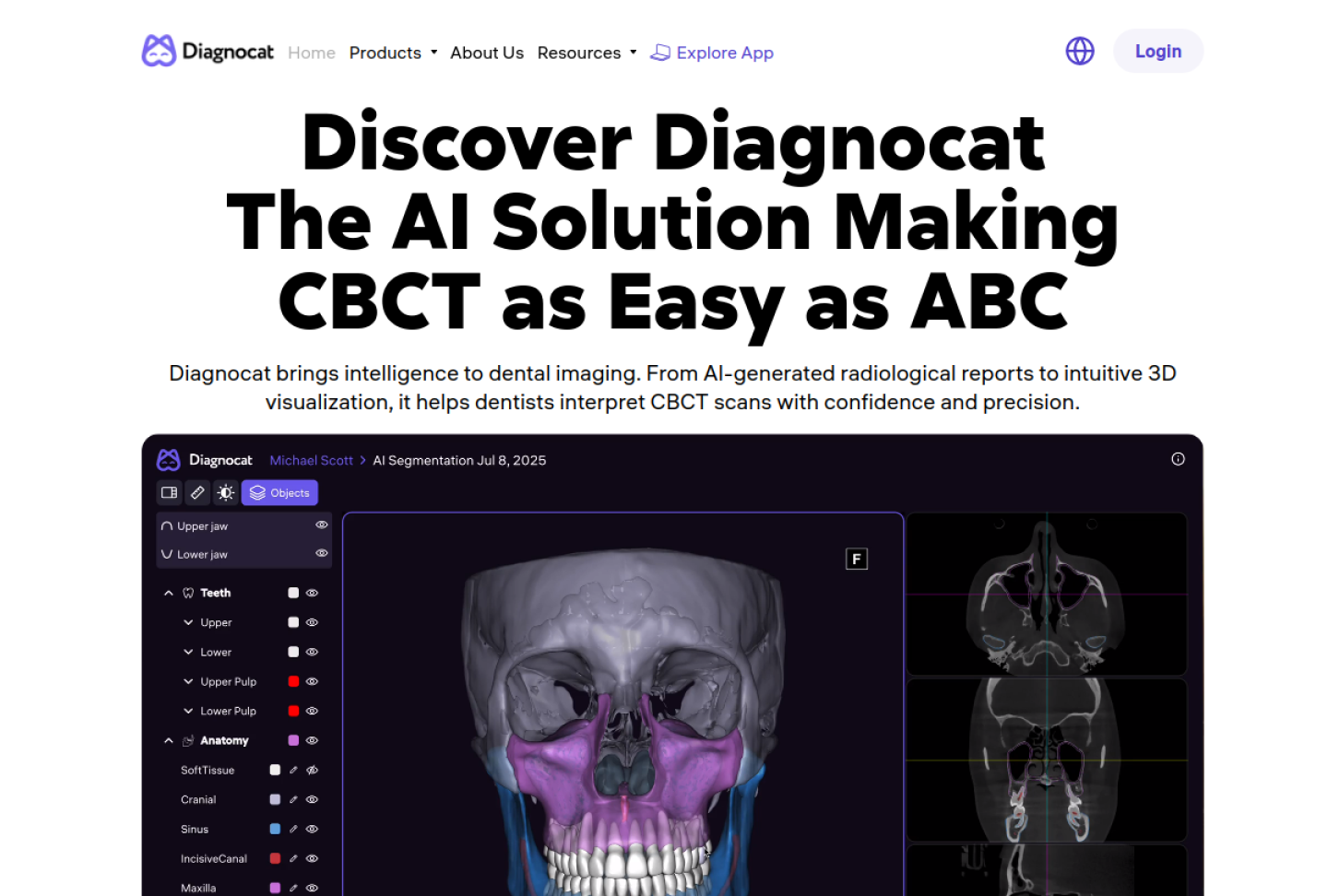
| Diagnocat |
Dental and oral-radiology teams that need CBCT-focused second-reader support and structured reports while keeping licensed clinicians accountable. |
Whether the deployment uses Diagnocat Viewer, Radiological Report, CBCT second read, 3D modeling, or another module. |
6 official sources |
| DentalMonitoring |
Orthodontic teams that need structured remote monitoring, appointment optimization, and clinician-supervised alerts across aligner or braces workflows. |
Which product and region are in scope: DentalMonitoring, DM Intelligent Platform, ScanBoxpro, ScanAssist, SmartSTL, app workflow, or analytics. |
5 official sources |
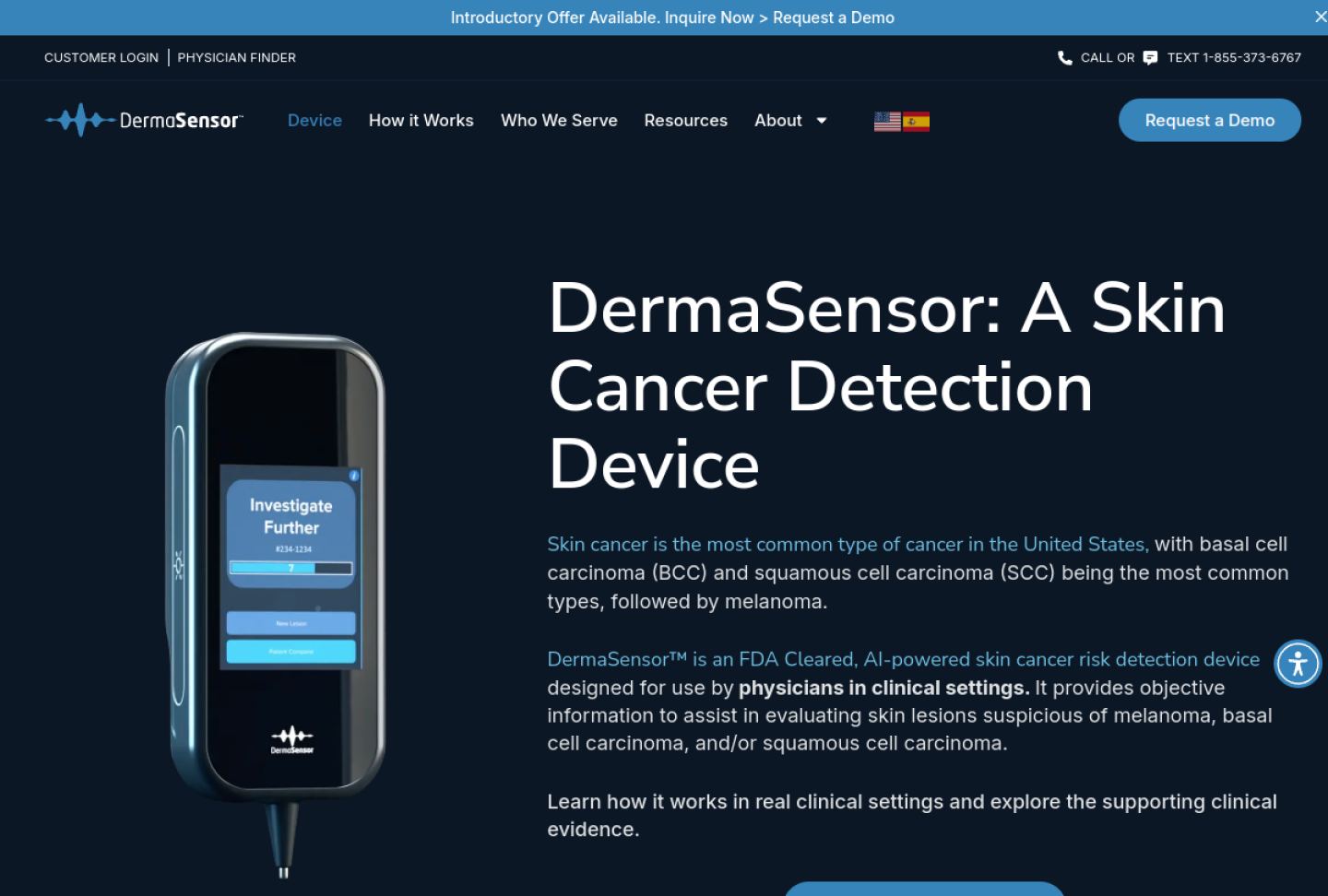
| DermaSensor |
Clinician-supervised primary-care or referral workflows that need objective support for suspicious melanoma, basal cell carcinoma, or squamous cell carcinoma lesions. |
FDA De Novo DEN230008, prescription-use limits, patient age, lesion exclusions, and whether the intended users match the cleared non-dermatologist physician workflow. |
4 official sources |
| Skin Analytics DERM |
Governed dermatology services evaluating AI-enabled teledermatology triage with post-market surveillance and clinician-reviewed pathway design. |
Class III CE mark, MHRA status, U.S. investigational status, intended pathway, imaging requirements, and whether local use is autonomous triage or clinician-reviewed support. |
4 official sources |
| FotoFinder Moleanalyzer pro |
Dermatology teams already using structured dermoscopy or FotoFinder imaging who want clinician-reviewed AI scoring and longitudinal lesion comparison. |
Which version, device, magnification, FotoFinder Hub account, online or offline AI score, heatmap, and second-opinion workflow are included. |
3 official sources |
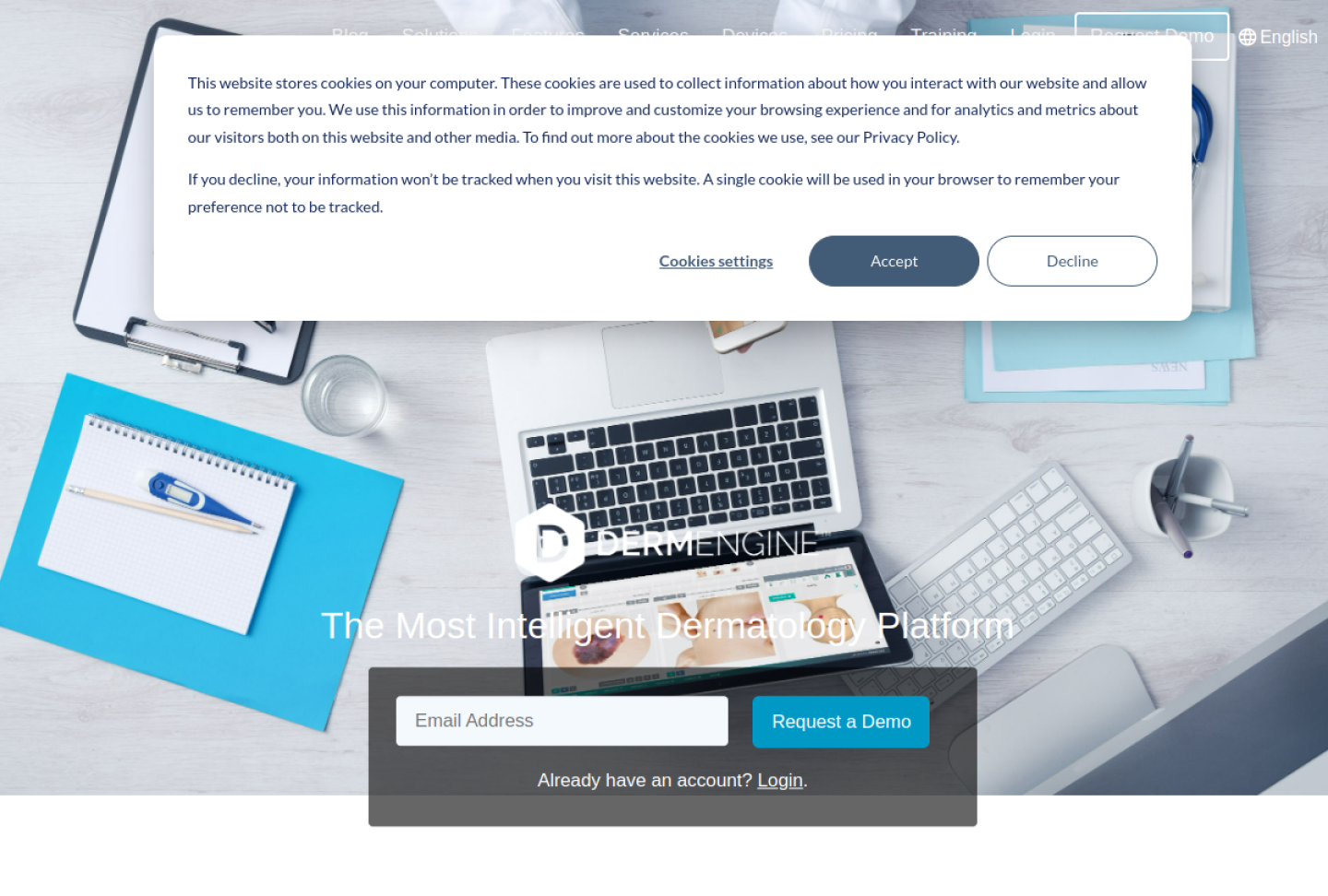
| DermEngine |
Dermatology programs that need secure image management and workflow tooling before or alongside diagnostic AI review. |
Which modules are included: DermEngine web platform, MoleScope capture, full-body imaging, visual image search, mole matching, evolution tracker, analytics, or referral network. |
4 official sources |
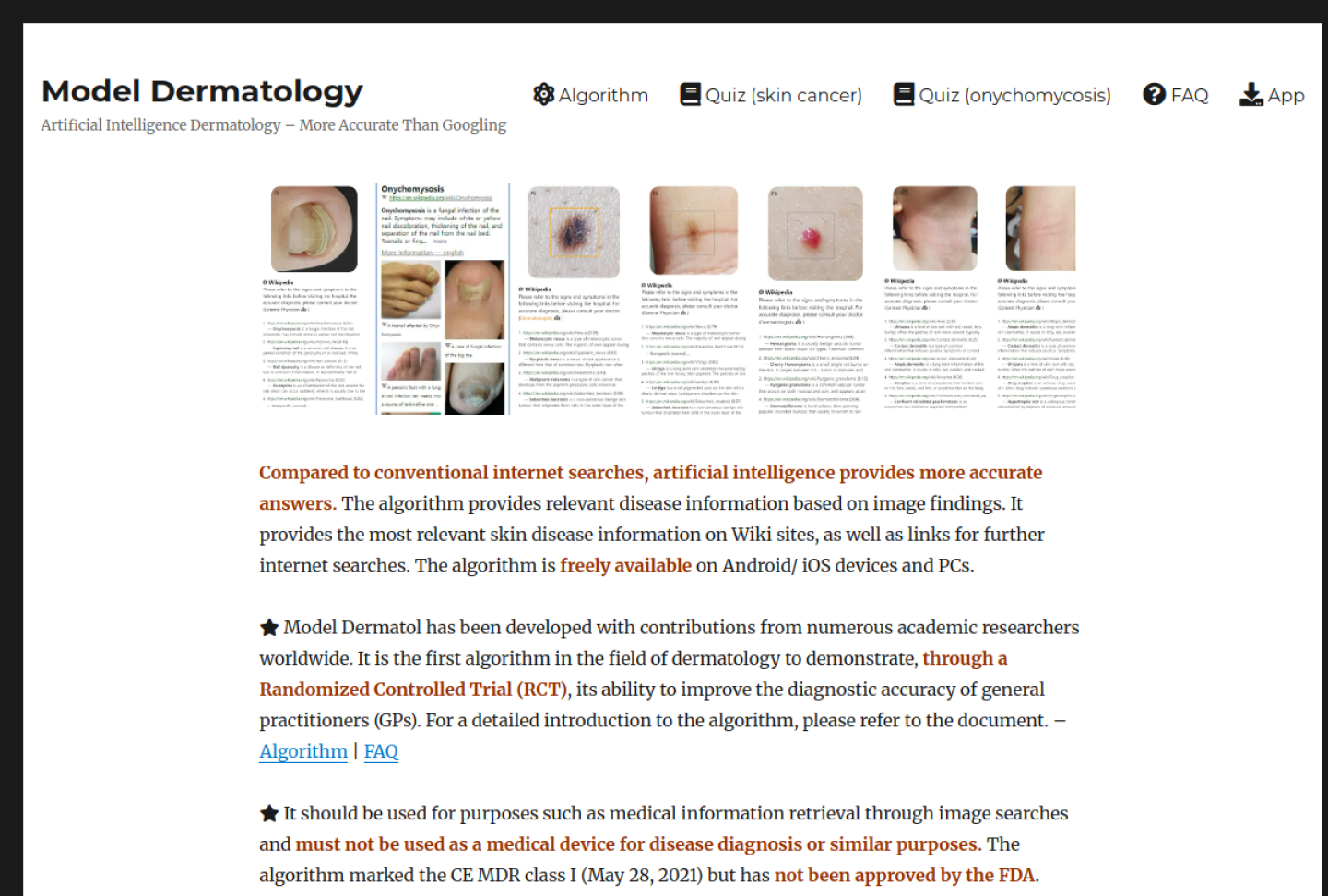
| Model Dermatol |
Educational, triage-adjacent, or clinician-reviewed image-search workflows where outputs are treated as reference material and not diagnosis. |
Whether the intended workflow is patient self-education, clinician education, medical information retrieval, or clinical decision support because the vendor states it must not be used as a diagnostic medical device. |
3 official sources |
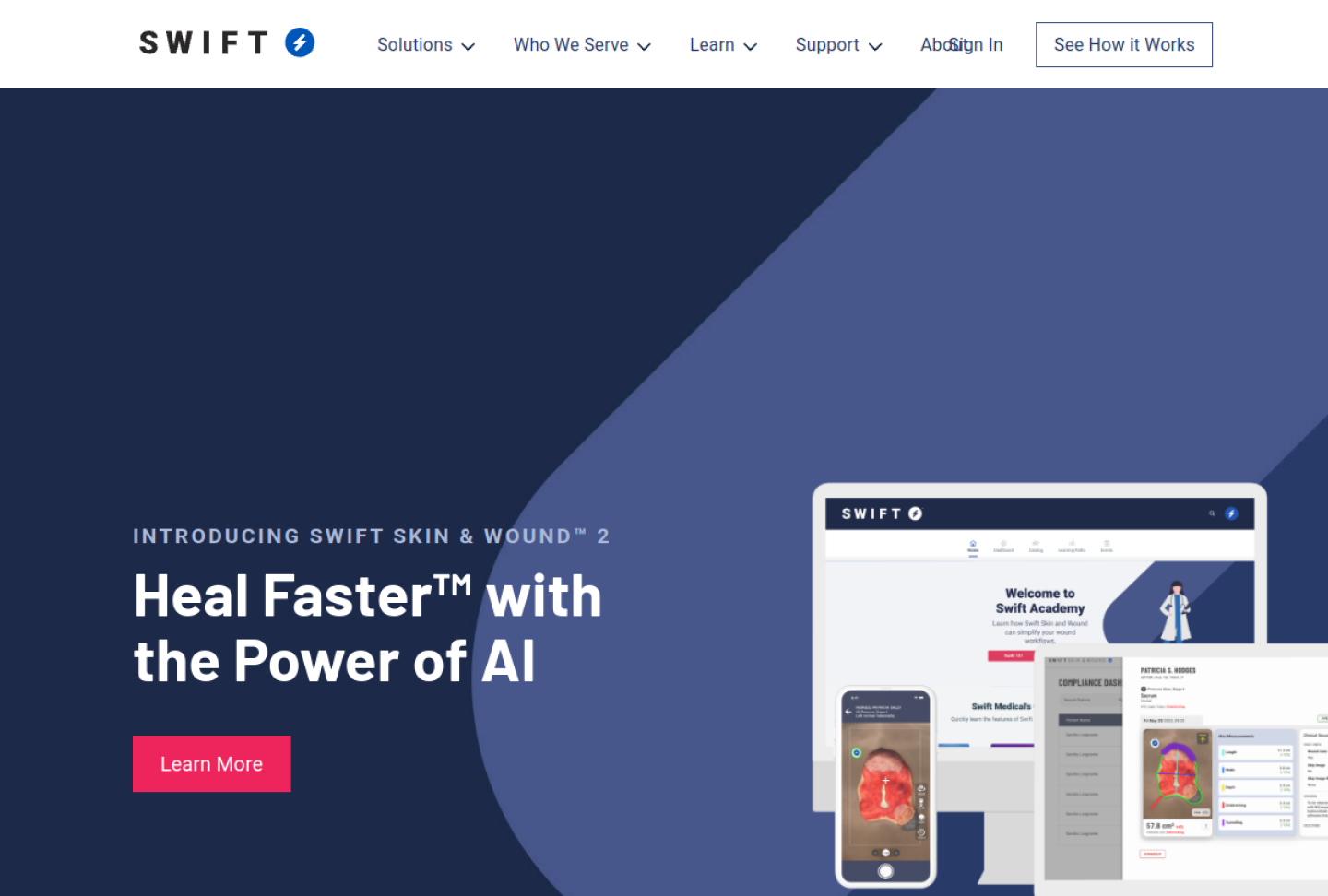
| Swift Medical |
Organizations that need consistent wound documentation, photo-based monitoring, care coordination, and analytics across distributed care teams. |
Which Swift modules are being deployed: image capture, wound measurement, documentation, analytics, reimbursement support, or remote review. |
3 official sources |
| Net Health Tissue Analytics |
Care teams that want standardized mobile wound assessments connected to wound documentation and enterprise analytics. |
Which imaging, measurement, classification, analytics, and EHR-interface capabilities are included in the contracted workflow. |
2 official sources |
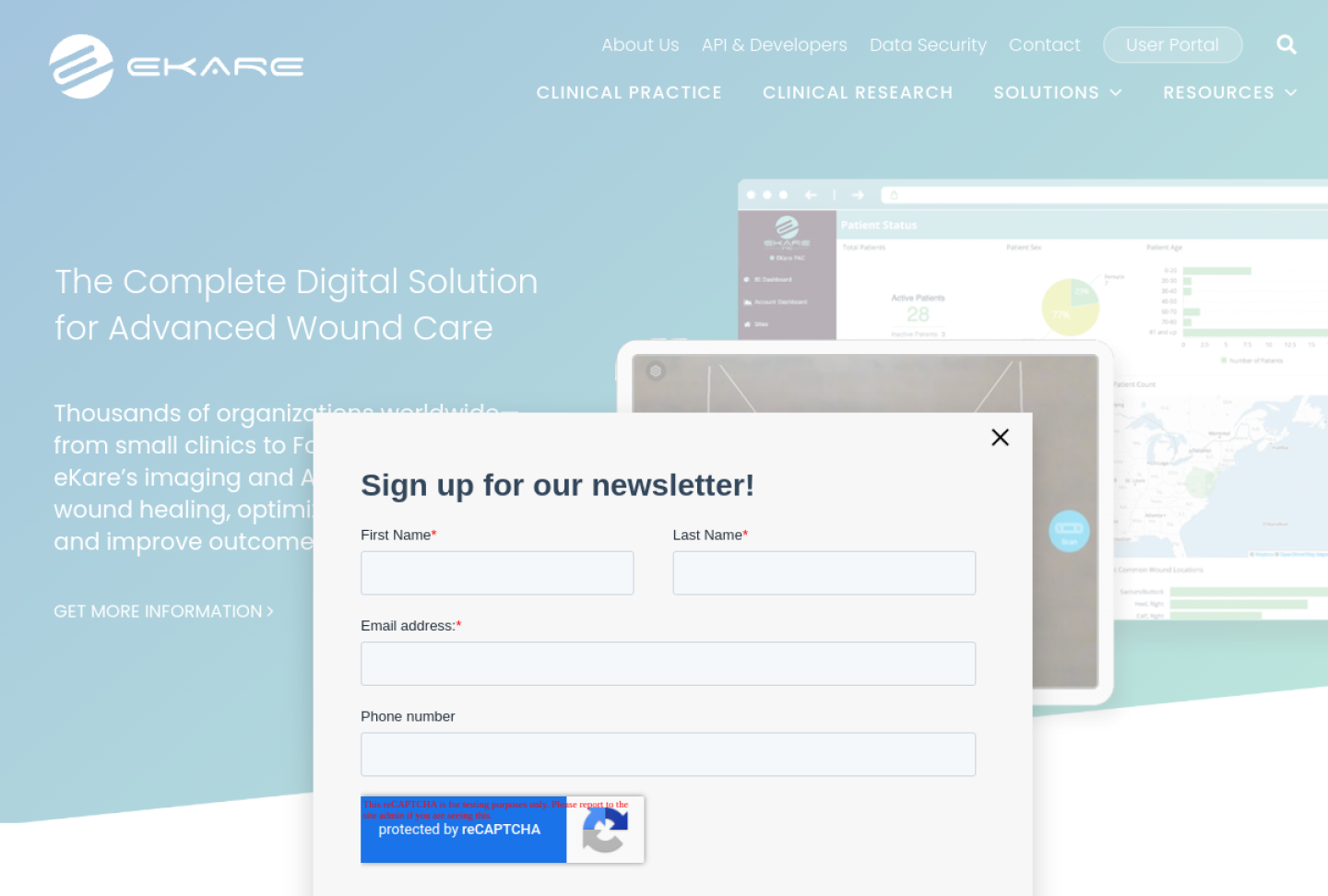
| eKare inSight |
Teams that need objective wound measurement and longitudinal photo documentation across wound clinics, post-acute care, research, or telehealth. |
Which inSight device, application, analytics, and research or clinical workflow are included. |
4 official sources |
| Healthy.io Minuteful for Wound |
Distributed care teams that need consistent wound documentation and remote expert review without dedicated imaging hardware. |
Whether the U.S., EU, or local Minuteful for Wound service and app version matches the intended care setting. |
3 official sources |
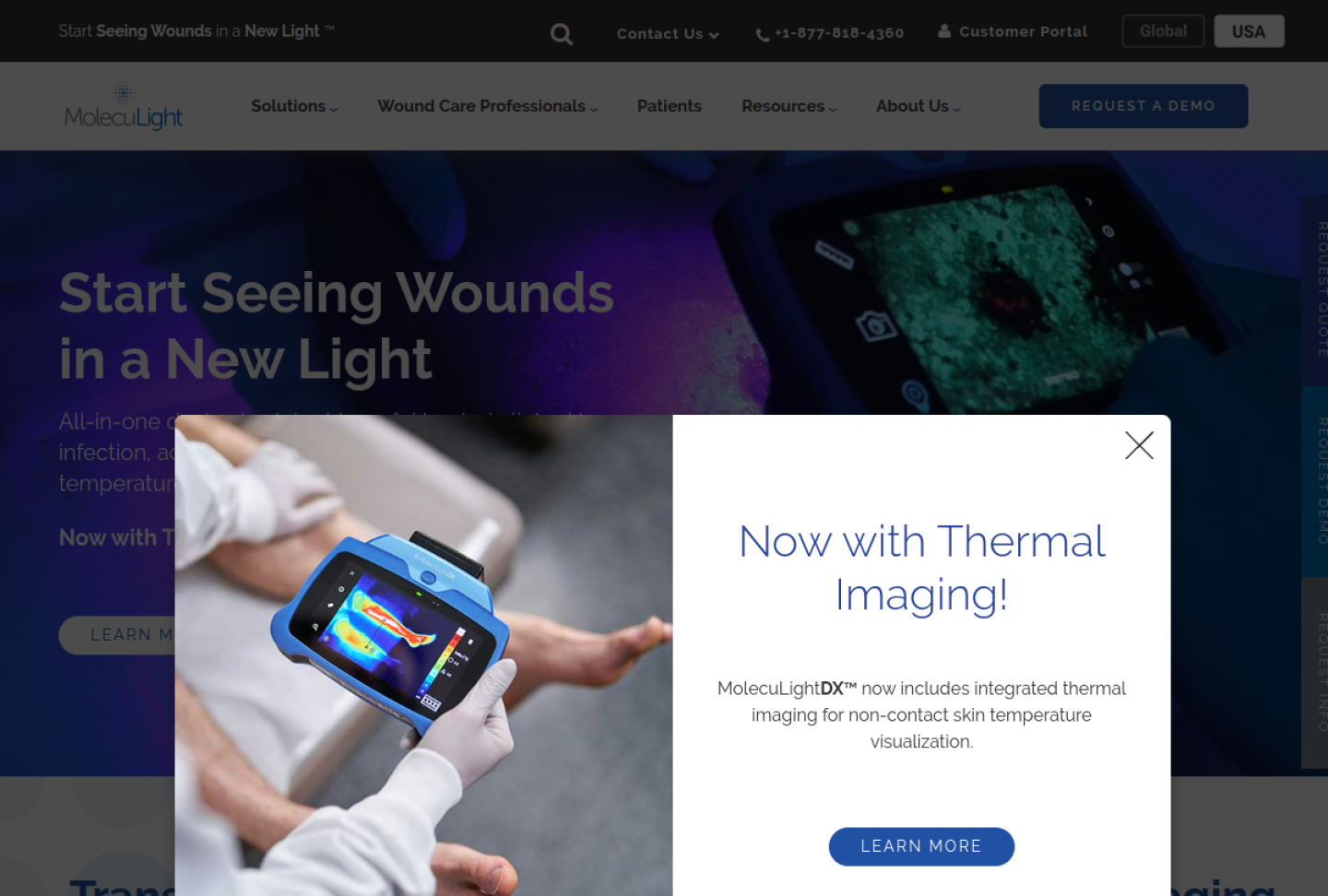
| MolecuLight |
Wound care teams that need adjunctive information about bacterial burden and wound measurements during clinician-reviewed wound assessment. |
Which device model, fluorescence, thermal, measurement, reimbursement, and EHR capabilities are included. |
3 official sources |
| Spectral AI DeepView |
Burn-care organizations evaluating regulated predictive imaging for early burn wound healing assessment with specialist review. |
FDA De Novo DEN250028, indication, labeling, contraindications, user training, and commercial availability for the intended burn-care setting. |
3 official sources |
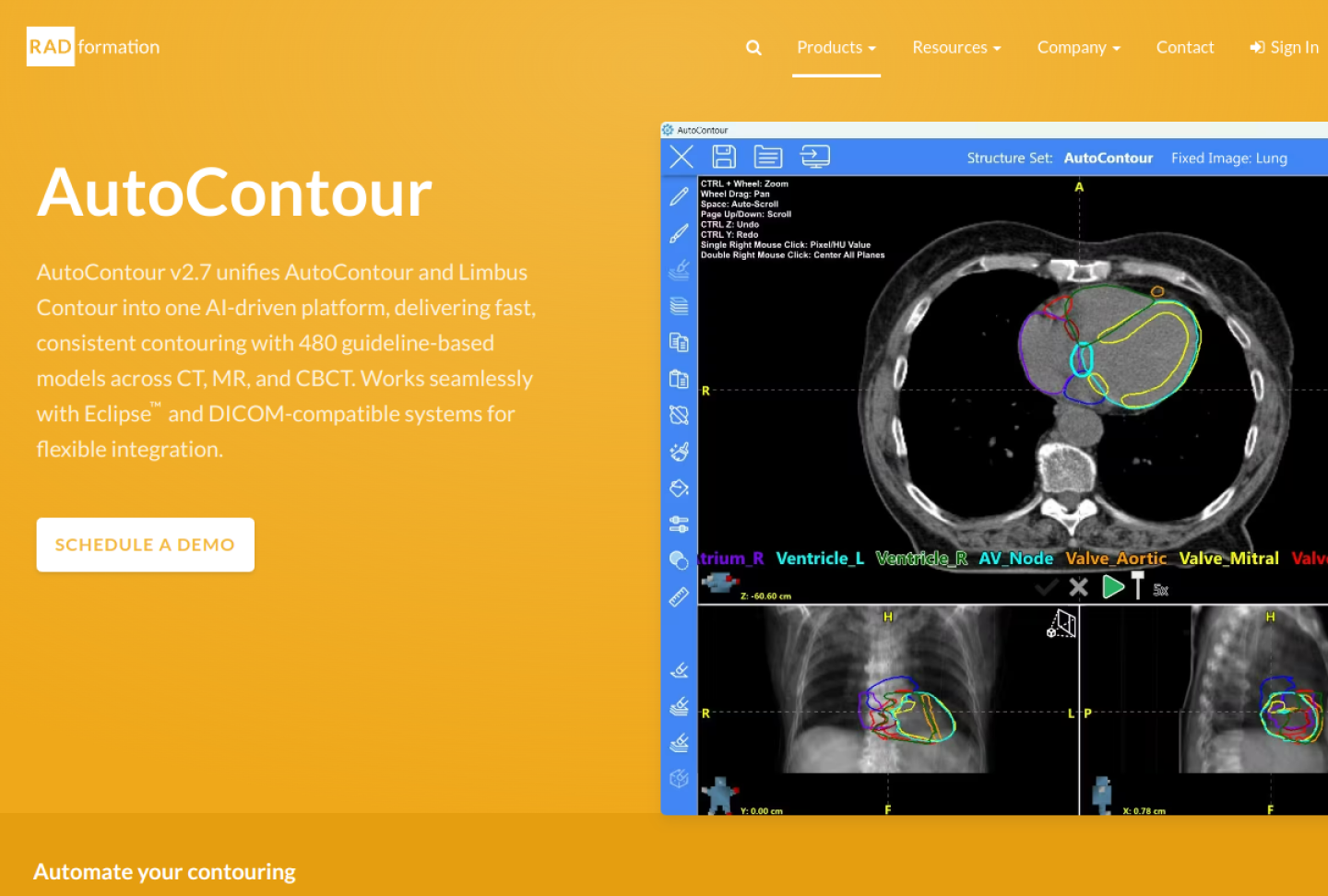
| Radformation AutoContour |
Radiation oncology programs that need faster organ-at-risk contouring and can commission, review, edit, and monitor AI-generated structures before planning. |
Current FDA 510(k), local regulatory status, AutoContour version, supported CT/MR/CBCT inputs, structure library, and whether Limbus-derived features are included. |
4 official sources |
| MIM Contour ProtegeAI |
Cancer centers already using MIM workflows or evaluating vendor-neutral auto-segmentation that can be commissioned inside radiation oncology QA processes. |
FDA clearance records, software version, supported structures, CT/MR scope, molecular radiotherapy features, and whether local deployment or cloud deployment is licensed. |
4 official sources |
| Siemens Healthineers DirectORGANS |
Radiation therapy programs using Siemens CT simulation workflows that want contouring output closer to image acquisition and treatment-planning handoff. |
Current product availability, region, regulatory status, SOMATOM go.Sim or SmartSimulator requirements, supported cancer sites, and software version. |
4 official sources |
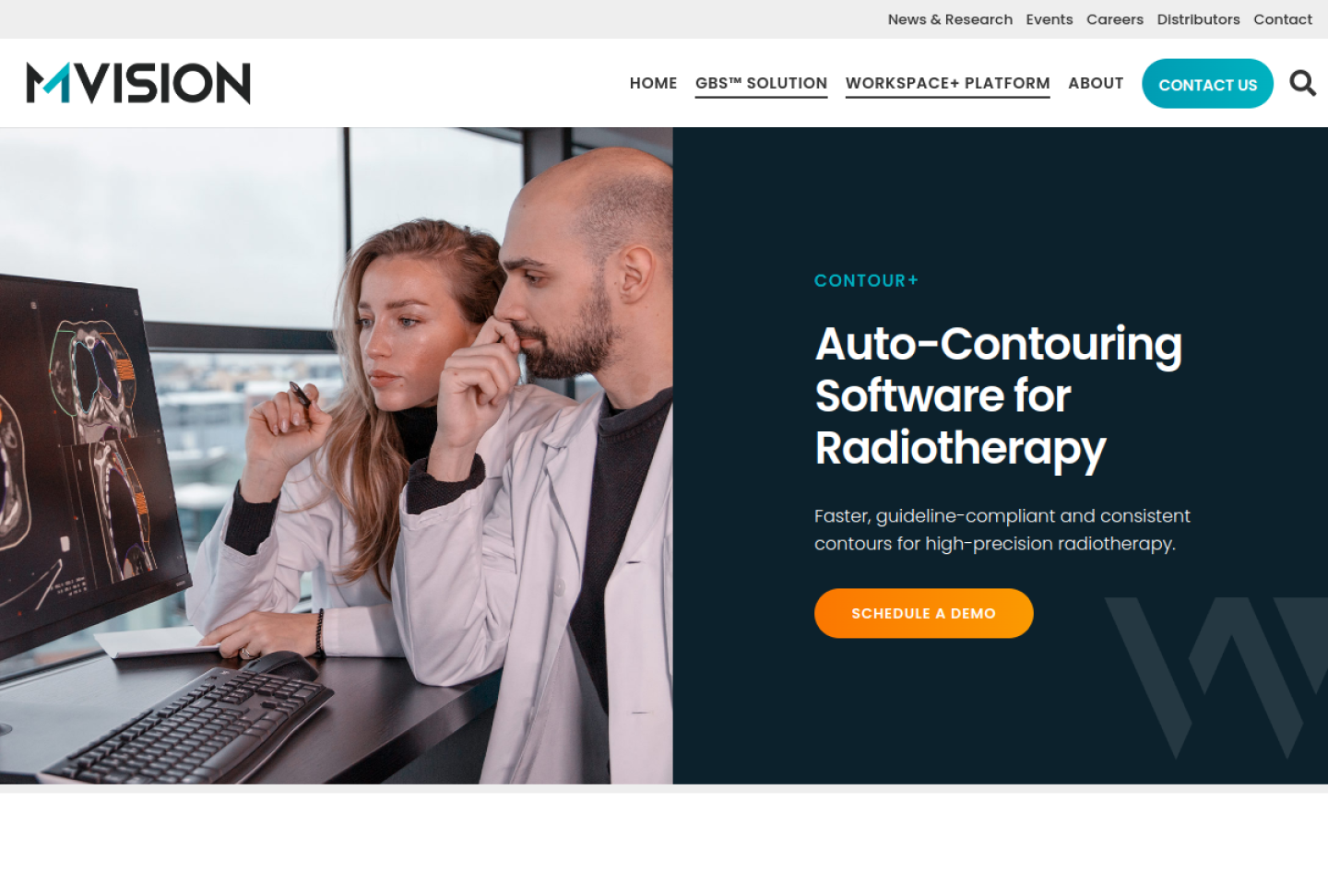
| MVision Contour+ |
Radiation oncology programs that want guideline-based segmentation coverage across major anatomical sites and can commission local clinician-review workflows. |
Current FDA 510(k), CE or local regulatory status, Contour+ version, supported CT and MR models, structure library, and geography. |
4 official sources |
| TheraPanacea Annotate |
Cancer centers evaluating broad whole-body contouring support and cloud-based radiotherapy workflow acceleration with formal clinician validation. |
Current FDA, CE, local regulatory status, ART-Plan module name, supported OAR, CTV, lymph-node, TumorBox, and modality scope. |
4 official sources |
| Mirada DLCExpert |
Radiotherapy teams that want configurable AI contouring across head and neck, thorax, breast, prostate, and other OAR workflows with formal quality review. |
Current FDA, CE, UK, or local regulatory status, DLCExpert version, Workflow Box or RTx configuration, anatomy coverage, and modality scope. |
4 official sources |
| RayStation Deep Learning Segmentation |
Cancer centers already using or evaluating RayStation that want AI segmentation tightly integrated with treatment planning and can commission site-specific review workflows. |
Current RayStation release, licensed machine-learning modules, FDA or local regulatory status, DLS model catalogue date, supported CT/MR scope, and market restrictions. |
5 official sources |
| GE HealthCare Critical Care Suite |
Hospitals using compatible GE radiography workflows that want AI-enabled chest X-ray triage and quality-support signals close to acquisition before radiologist interpretation. |
Which Critical Care Suite version, X-ray device, PACS/workstation integration, geography, and FDA-cleared intended use are in scope. |
3 official sources |
| Imbio Lung Density Analysis |
Programs that want quantitative lung-density analysis inside CT screening, COPD assessment, or pulmonology-radiology collaboration workflows with radiologist and pulmonologist review. |
Which Imbio module is in scope: inspiration-only Lung Density Analysis, functional LDA, Lung Texture Analysis, CAC, airway analysis, partner-delivered workflow, or research use. |
6 official sources |
| icometrix icobrain |
Programs that need standardized quantitative brain MRI reports for multiple sclerosis, dementia, ARIA, traumatic brain injury, epilepsy, Parkinson's disease, or brain tumor follow-up with specialist review. |
Which icobrain module is in scope: MS, dementia and Alzheimer's, ARIA, traumatic brain injury, epilepsy, Parkinson's disease, brain tumor, or another disease-specific report. |
6 official sources |
| Behold.ai red dot |
Radiology services that need a governed chest X-ray triage or high-confidence-normal workflow and can validate the exact module, indication, and radiologist review model before go-live. |
Which red dot module is in scope: FDA-cleared pneumothorax triage, lung cancer detection, high-confidence-normal chest X-ray reporting, CT head triage, or another Behold.ai service. |
6 official sources |
| Clairity Breast |
Screening programs that want image-based risk stratification for prevention and enhanced-screening discussions while keeping mammogram interpretation and care recommendations clinician-led. |
Whether the deployed product is Clairity Breast/Allix5 under De Novo DEN240047 and the exact intended-use, prescription-use, labeling, warning, and contraindication language. |
6 official sources |
| Nanox.AI HealthCCSng |
Imaging programs that want opportunistic cardiovascular risk detection from existing CT studies while preserving radiologist review, cardiology follow-up, and local preventive-care protocols. |
Whether the deployed version is HealthCCSng V2.0 or another Nanox.AI cardiac solution, with the exact FDA 510(k), CE, intended-use, age, CT protocol, output, and radiologist-workflow language. |
4 official sources |
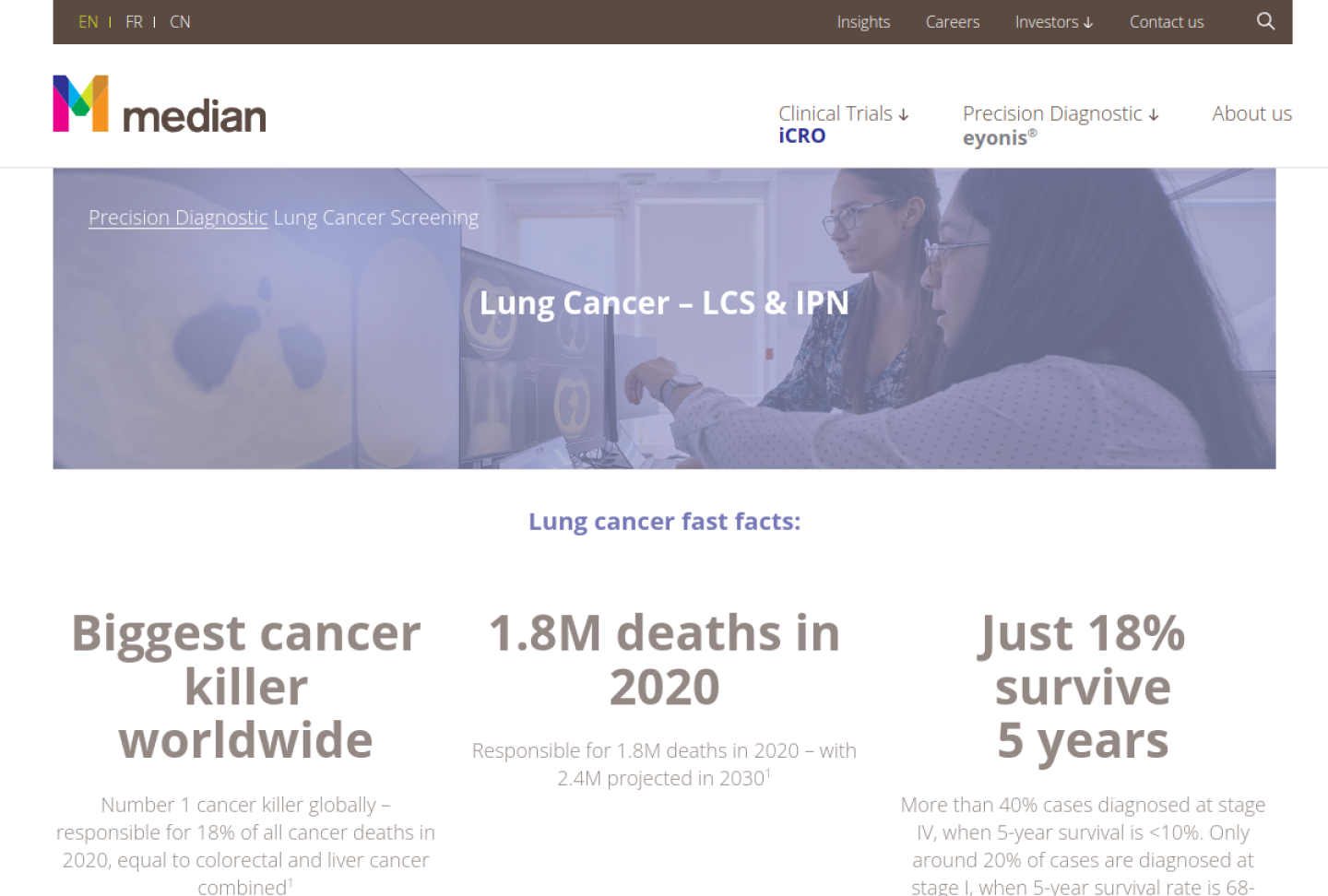
| Median eyonis LCS |
Screening programs that need radiologist-supervised support for LDCT lung nodule detection, malignancy characterization, PACS workflow integration, and follow-up governance. |
Current FDA 510(k), CE, local regulatory, version, reimbursement, and intended-use status for eyonis LCS before clinical use. |
5 official sources |
| Covera Health |
Organizations evaluating radiology quality improvement, network engagement, imaging-center variation, diagnostic pathway improvement, and value-based imaging initiatives. |
Whether the workflow is provider peer learning, health-plan quality management, employer benefit design, imaging network steering, diagnostic pathway feedback, or value-based care analytics. |
4 official sources |
| Bunkerhill Carebricks |
Health systems that want to convert routine CT findings into supervised preventive-care, referral, counseling, DEXA, echocardiography, cardiology, or surveillance workflows. |
Which Bunkerhill algorithm is in scope, such as iCAC, BMD, AVC, Contrast AVC, AAQ, MAC, or another Carebricks workflow, and which FDA 510(k) and intended-use statement applies. |
7 official sources |
| Riverain ClearRead CT |
Chest CT and lung-screening programs that need radiologist-supervised nodule analysis, prior comparison, structured reporting, and opportunistic cardiovascular-risk signal workflows. |
Which ClearRead CT module is enabled, including vessel suppression, nodule detection, compare, CAC scoring, reporting integration, or any research-use lung tissue analysis. |
5 official sources |