
Medical imaging and radiology
iCAD ProFound AI
Breast health AI suite for mammography detection, scoring, density assessment, and risk-related workflows.
Last updated: June 14, 2026
Back to directoryRadiology AI product for detecting and highlighting fractures on trauma X-rays inside clinician-reviewed reading workflows.
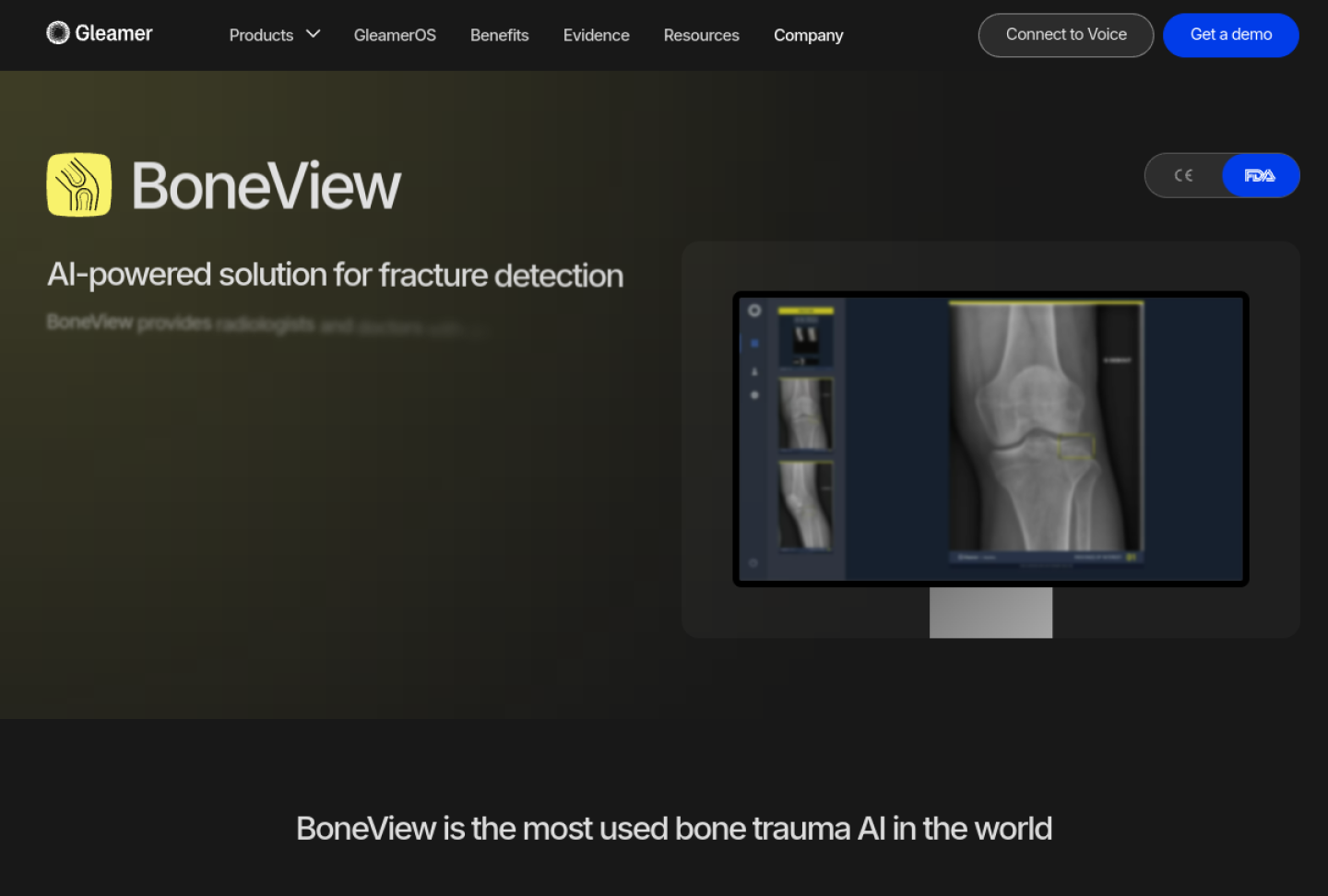
Teams that need fracture-detection support for high-volume trauma X-rays while preserving radiologist or clinician interpretation.
Compare within workflow: Medical imaging and radiology · comparison shortlist · source index
| Status | FDA-cleared Class II radiological computer-assisted detection/diagnosis software for fracture under BoneView 1.1-US. |
|---|---|
| Review route | 510(k) K222176, with K212365 listed as the predicate BoneView clearance. |
| Intended use | Analyzes trauma radiographs with machine-learning techniques to identify and highlight suspected fractures during clinician review; the 510(k) summary describes prescription use as a concurrent reading aid. |
| Verification note | Confirm the deployed version, country-specific label, adult and pediatric age limits, covered anatomy, compatible views, warnings, PACS workflow, and clinician final-interpretation responsibilities before use. |
| Source | www.accessdata.fda.gov / cdrh_docs / pdf22 |
Product-specific review. These product-specific signals summarize what the cited sources imply before treating Gleamer BoneView as safe for a local clinical, operational, or research workflow.
| Regulatory / FDA | Verify BoneView US K222176 and any local CE, Health Canada, or other authorization for the exact module, anatomy, patient age, and clinical site. |
|---|---|
| Privacy | Review imaging-data flow, DICOM metadata, pseudonymized patient data, processor/controller roles, subcontractors, security controls, and retention in the deployment contract. |
| Evidence | Validate performance on local trauma X-rays, pediatric and adult case mix, fracture type, body region, scanner workflow, false positives, false negatives, and report turnaround. |
| Workflow | Best used as a second-reader and prioritization aid inside existing radiology or emergency workflows, with explicit responsibility for accepting, rejecting, and documenting AI marks. |
Gleamer describes BoneView as an AI second-reader for trauma bone X-rays, with workflow integrations, worklist support, and clinical-study references; its regulatory page states that BoneView US is FDA-cleared under K222176 and explains personal-data processing for imaging users.
Not for: Autonomous fracture diagnosis, unsupported body regions or age groups, or applying non-U.S. Gleamer modules as though they share BoneView's U.S. clearance.
Use these links to confirm current claims, terms, regulatory status, pricing, and deployment requirements.
Breast health AI suite for mammography detection, scoring, density assessment, and risk-related workflows.
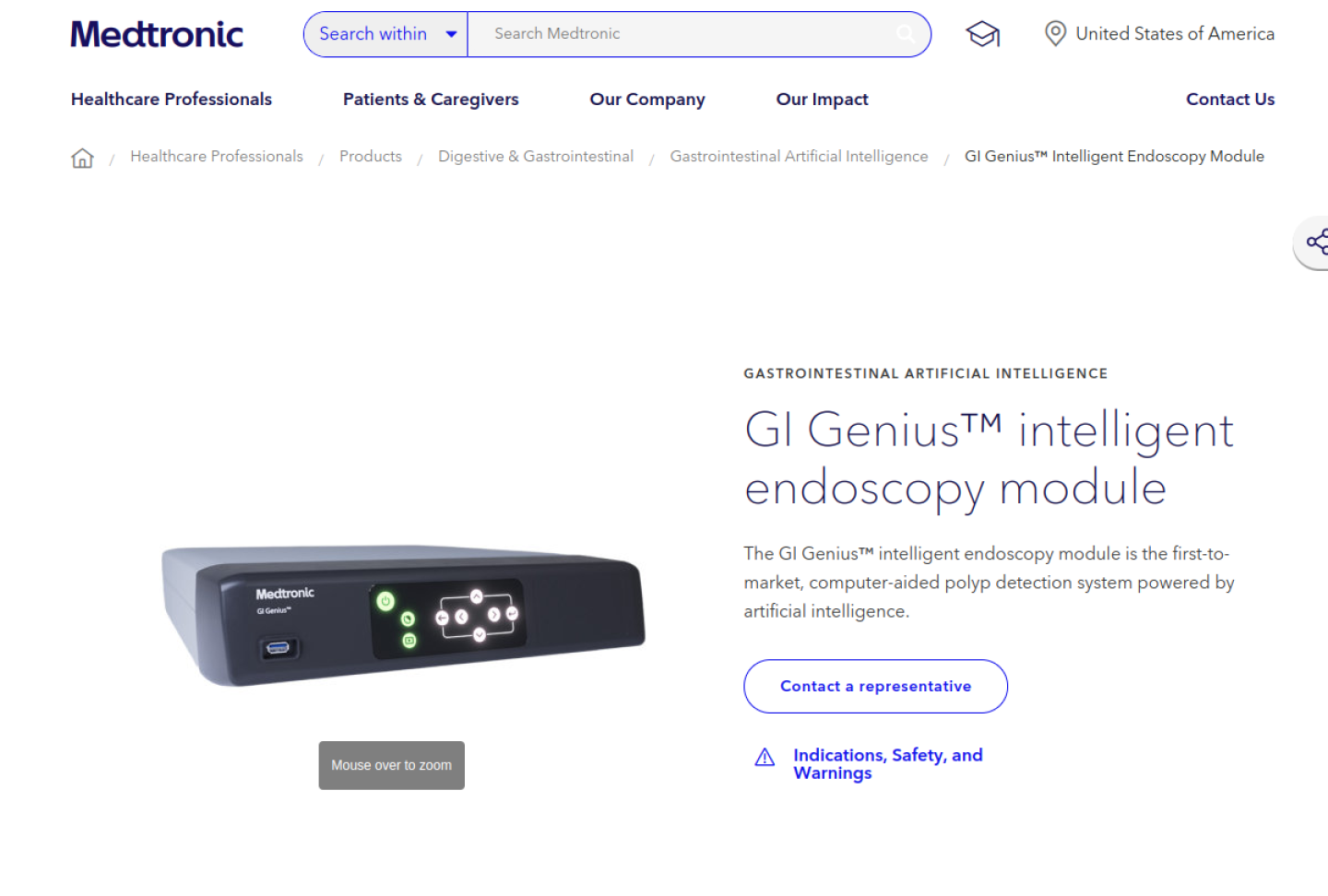
Medtronic endoscopy AI module that overlays real-time markers to help endoscopists detect colonic mucosal lesions during colonoscopy.
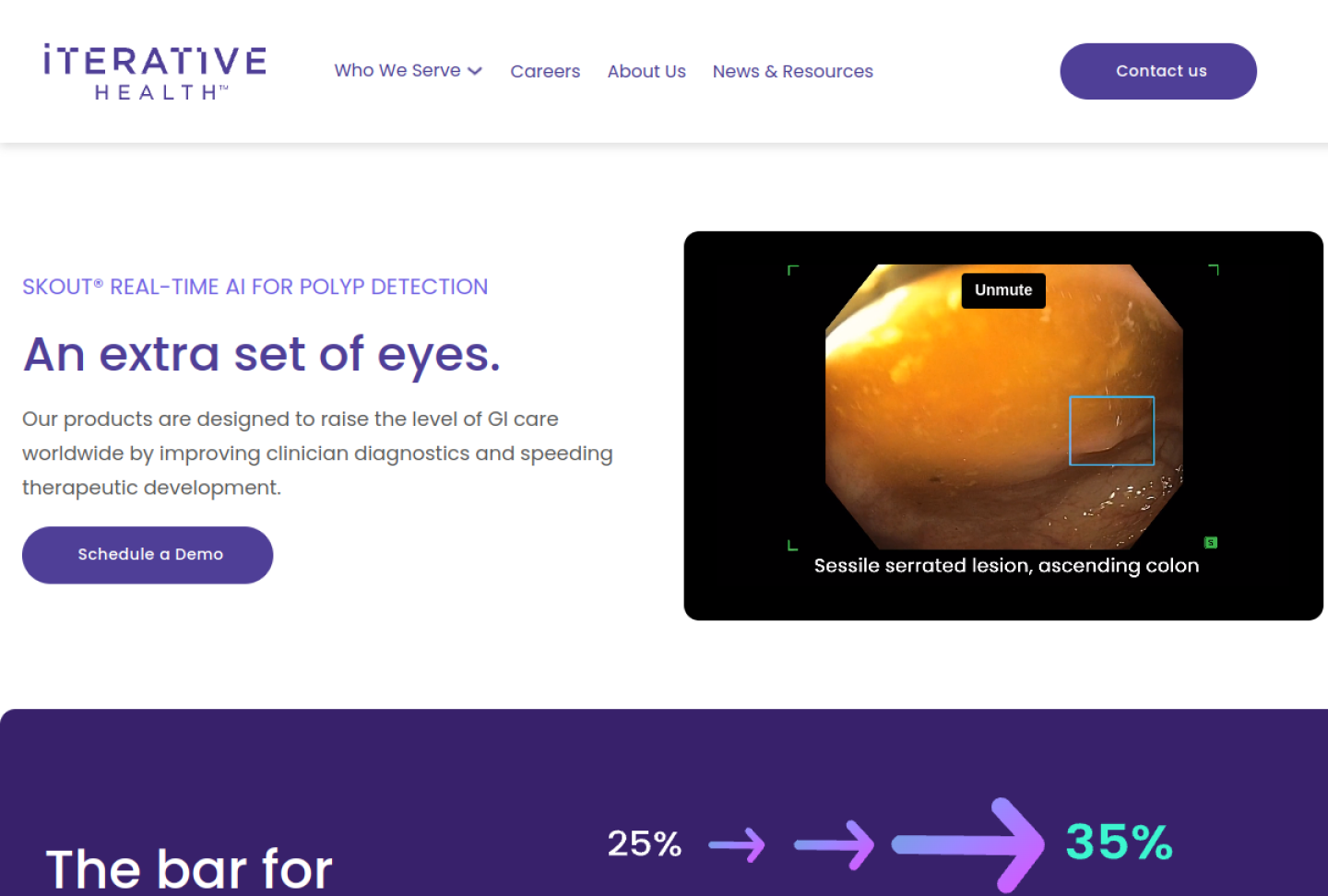
Iterative Health real-time polyp detection system that gives gastroenterologists computer-aided location information during colonoscopy.

Fujifilm AI-powered endoscopic imaging technology that supports real-time colonic polyp detection in compatible endoscopy workflows.