Patient access, triage, and agents
Corti
Healthcare AI platform for building governed clinical and administrative agents, speech workflows, coding, and documentation support.
Last updated: June 14, 2026
Back to directoryAI-powered care access platform combining conversational AI, clinical logic, triage, routing, and virtual care workflows.
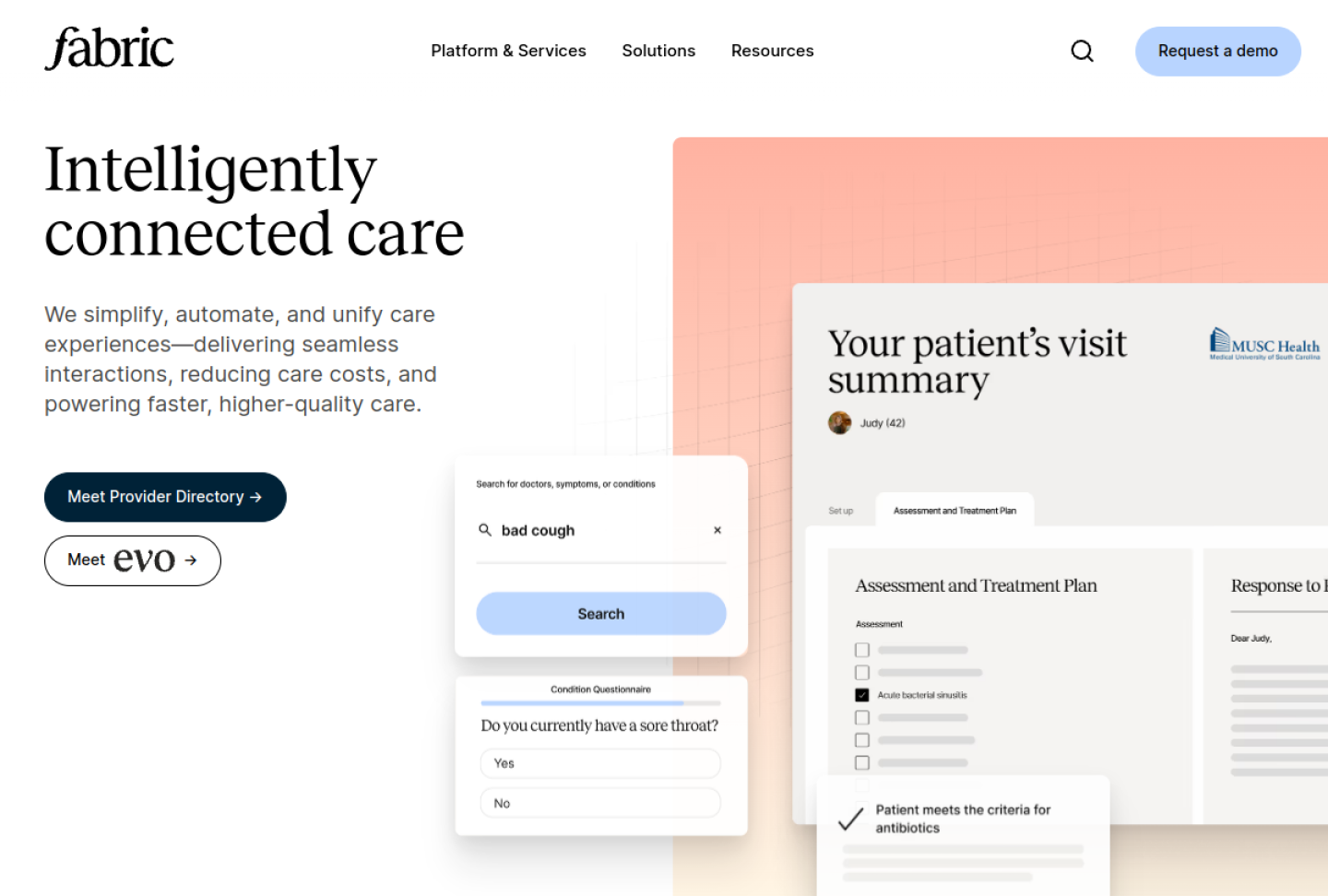
Organizations building a digital front door that connects symptom collection, routing, scheduling, and virtual care.
Compare within workflow: Patient access, triage, and agents · comparison shortlist · source index
Product-specific review. These product-specific signals summarize what the cited sources imply before treating Fabric as safe for a local clinical, operational, or research workflow.
| Regulatory / FDA | Separate administrative access workflows from symptom gathering, triage, and virtual care, because physician-built clinical logic and routing can carry a different clinical-governance and device-review burden than scheduling alone. |
|---|---|
| Privacy | Fabric publishes HIPAA and SOC 2 Type 2 positioning, but you still need the customer contract, access-control design, retention terms, integration boundaries, and patient-consent model for the exact deployment. |
| Evidence | Use case studies as a starting point only; validate routing accuracy, symptom-intake safety, scheduling completion, handoff quality, and downstream clinical or access outcomes in your own setting. |
| Workflow | Map where symptom collection ends, where routing or virtual care begins, and when a human clinician or access team member must review or take over. |
Fabric describes a hybrid care enablement platform with conversational AI, physician-built clinical logic, digital front door workflows, triage, routing, and virtual care, plus security and compliance materials for healthcare deployments.
Not for: Autonomous diagnosis or treatment decisions without clinical protocols, licensed review, and escalation design.
Use these links to confirm current claims, terms, regulatory status, pricing, and deployment requirements.
Healthcare AI platform for building governed clinical and administrative agents, speech workflows, coding, and documentation support.

AI cancer-detection and clinical decision-support platform that helps clinicians and patients identify cancer risk, choose referral pathways, and surface high-risk patients from records.

Healthcare AI-agent platform and documentation API that describes agents for scribing, reception, triage, coding, nursing, interpretation, research, and EHR-connected workflows.
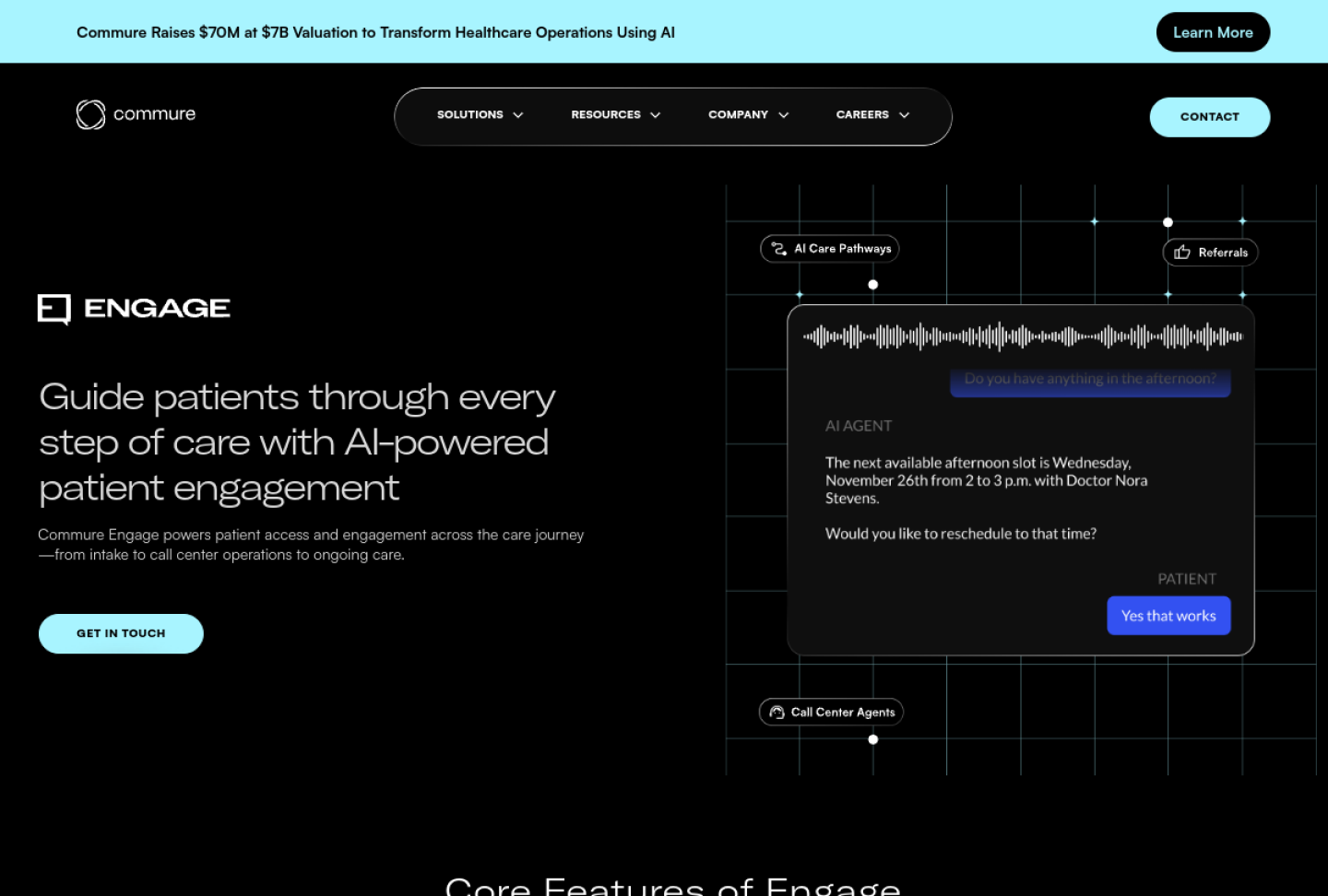
Intelligent care enablement platform for automating patient touchpoints and supporting care teams across longitudinal care journeys.