Evaluate ambient hospital monitoring AI by smart-room sensors, cameras, microphones, virtual nursing, patient safety, privacy, and escalation workflow.
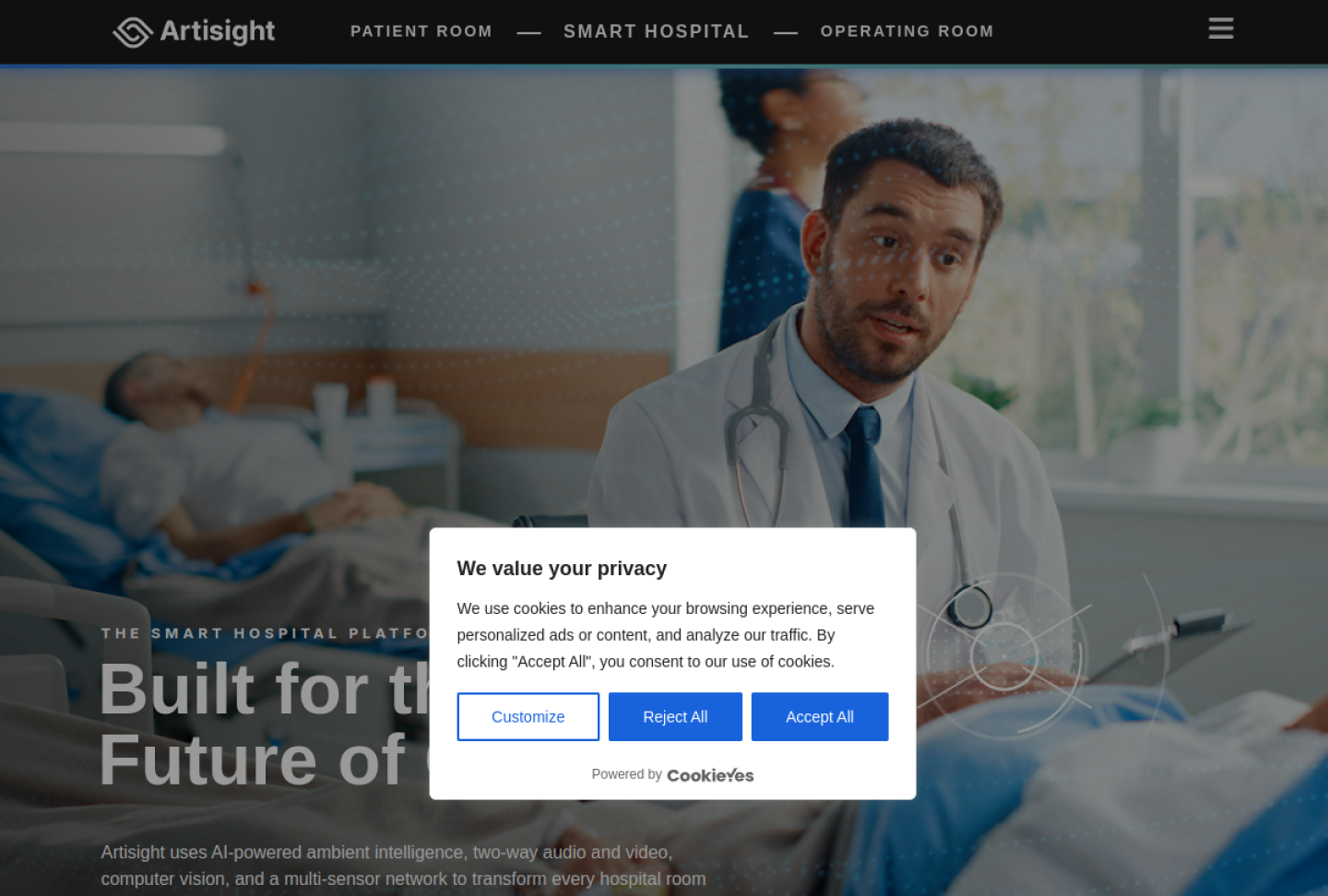
Representative source image: official Artisight product page.
Quick answer: Ambient hospital monitoring AI can support virtual nursing, smart patient rooms, fall-risk workflows, protocol monitoring, command centers, and operational awareness. Treat it as high-accountability infrastructure: map data capture, patient notice, privacy terms, alert routing, staff response, and local validation before deployment.
Who this guide is for
Hospital operations, nursing, virtual care, patient-safety, privacy, security, and smart-room leaders evaluating ambient monitoring or virtual nursing platforms.
What makes this workflow different
Ambient monitoring changes the care environment itself, so camera, microphone, sensor, consent, escalation, and safety-event governance matter as much as model performance.
What to verify before using it
List every sensor, camera, microphone, EHR feed, nurse-call integration, and command-center view involved in the workflow.
Define patient notice, consent, recording, retention, staff access, support access, and BAA or customer privacy terms before activation.
Separate observation, documentation, prediction, protocol monitoring, and clinical alerting because each has different safety and regulatory implications.
Pilot with measured escalation time, false alerts, missed events, staff workload, patient experience, equity, and incident-review outcomes.
Document downtime procedures and who owns response when ambient AI conflicts with bedside assessment or existing alarms.
Risk level and safe use
Medical risk
High
Best first step
Write the workflow in one sentence, decide who reviews the AI output, and test with a small controlled pilot before expanding.
Recommended posture
Use AI as supervised workflow support. Verify sources, privacy, human review, and regulatory fit before relying on outputs.
Source-backed products for this workflow
These profiles are not rankings. They are starting points for checking vendor claims, privacy terms, FDA or regulatory posture, evidence, and workflow fit.
Artisight describes a smart hospital platform using edge computing, AI-powered automation, ambient intelligence, cameras, microphones, RTLS tags, EHR integration, virtual nursing, patient safety, predictive analytics, and smart-room workflows.
Best for
Health systems building virtual nursing, patient observation, smart-room, OR, or command-center programs with explicit privacy, safety, and workflow governance.
First check
Which Artisight modules are in scope: virtual nursing, remote observation, patient room, operating room, command center, voice workflow, or smart hospital platform.
AvaSure describes an intelligent virtual care platform for virtual nursing, continuous observation, virtual sitting, AI-enabled applications, computer-vision and machine-learning workflows, in-room devices, real-time analytics, EHR and nurse-call integrations, privacy controls, and secure deployment options.
Best for
Health systems that want to expand virtual nursing, patient observation, fall-risk monitoring, admission/discharge support, and command-center coverage with explicit nursing and privacy governance.
First check
Which AvaSure modules are in scope: virtual nursing, continuous observation, virtual sitting, episodic care, environmental sensing, virtual care assistant, analytics, or device deployment.
Caregility describes Connected Care as a virtual care platform with clinical applications, smart-room devices, integrations, security controls, virtual nursing workflows, iObserver one-to-many observation, and optional AI capabilities such as augmented observation, voice commands, and radar-based vitals trending.
Best for
Health systems building virtual nursing, virtual sitter, inpatient telehealth, and smart-room programs that need governed bedside devices plus command-center workflows.
First check
Which Caregility capabilities are in scope: virtual nursing, iObserver continuous observation, iConsult, iNotify, inpatient engagement, smart-room devices, AI capabilities, or analytics.
Oxehealth training materials describe Oxevision as a contact-free, camera-based system for ward safety that provides alerts, readings, reports, and limited live video views; FDA records list Oxevision Sleep Device K233618 as a substantially equivalent neurology device, while Oxehealth IFU materials separate regulated Vital Signs software from Activity Tracker CDSS features.
Best for
Behavioral health and inpatient safety teams that need supervised room-level monitoring with explicit privacy, dignity, training, and escalation controls.
First check
Which Oxevision module is in scope: Vital Signs, Activity Tracker, Sleep, Seclusion, alerts, reports, or local digital-observation workflow.
Sources
5 official sources
Official source trail for this workflow
Open these vendor, documentation, privacy, or regulatory sources before relying on product claims, especially for FDA status, PHI handling, deployment model, and intended use.
Find the best AI for medical workflows by matching the tool to documentation, questions, diagnosis support, research, coding, billing, imaging, or practice operations.
Understand AI for medical diagnosis, including validation evidence, FDA status, clinical supervision, and why patient-specific diagnosis should not rely on general chatbots.