AI for Medical Data Analysis: Model and Software Selection
Select AI for medical data analysis by data type, governance, privacy, validation, interpretability, and clinician-facing outputs.
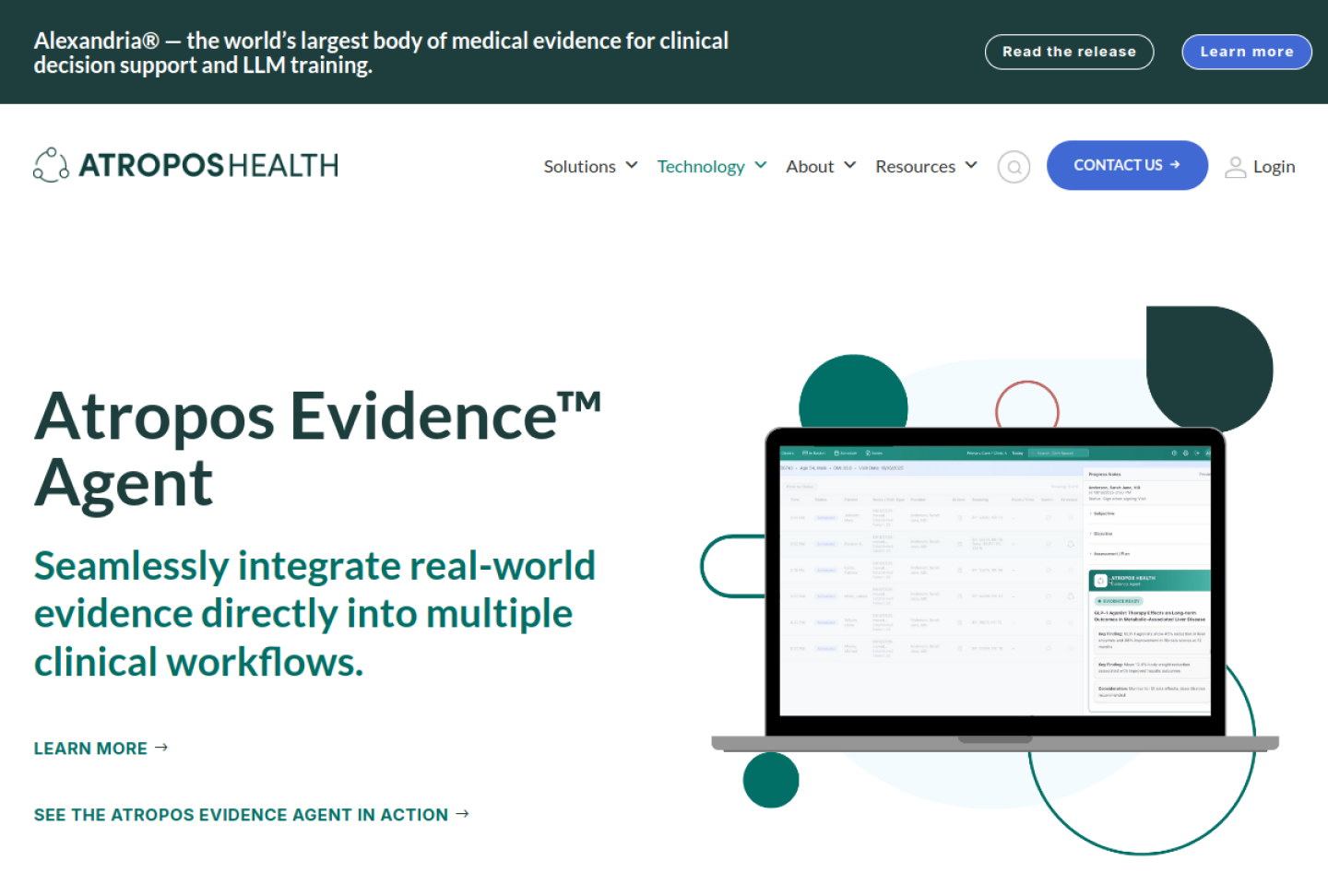
Representative source image: official Atropos Health product page.
Quick answer: The best AI model for medical data analysis depends on the data, task, and risk. Structured claims data, EHR notes, images, lab values, and genomics all require different modeling choices, privacy controls, validation methods, and explainability expectations.
Who this guide is for
Medical data teams, clinicians, researchers, and analytics leaders.
What makes this workflow different
Medical data analysis depends on the data type, population, validation method, and clinical consequence.
What to verify before using it
Define the prediction, extraction, or summarization task.
Separate de-identified research data from operational PHI.
Validate on local or representative data.
Measure bias across patient groups.
Document model monitoring and retraining policy.
Risk level and safe use
Medical risk
Medium to high
Best first step
Write the workflow in one sentence, decide who reviews the AI output, and test with a small controlled pilot before expanding.
Recommended posture
Use AI as supervised workflow support. Verify sources, privacy, human review, and regulatory fit before relying on outputs.
Source-backed products for this workflow
These profiles are not rankings. They are starting points for checking vendor claims, privacy terms, FDA or regulatory posture, evidence, and workflow fit.
Tempus describes Tempus One as a generative AI-enabled assistant for healthcare providers and researchers that can surface patient insights from clinical and molecular data, support EHR workflows, summarize histories and biomarkers, search trials, and process unstructured multimodal data; Tempus announcements also describe EHR integration, guideline access, documentation support, and custom agent-building capabilities.
Best for
Oncology and precision-medicine teams that need governed access to Tempus patient insights, test status, guideline context, trial matching, and multimodal data summaries.
First check
Whether Tempus One is being used in Hub, an EHR integration, Lens, a provider workflow, or a life-sciences research workflow.
Caris describes itself as a molecular science and AI company focused on precision medicine, and has announced Caris AI Insights signatures used in molecular tumor board reporting.
Best for
Oncology teams evaluating molecular profiling and AI-assisted insight workflows for cancer care and research.
First check
Which test, report, or AI insight is being used and its exact clinical role.
Truveta describes a health data, intelligence, and evidence platform with Truveta Studio, Truveta Intelligence, Tru natural-language research assistance, Truveta Language Model data cleaning, provenance, code-set visibility, and a trusted research environment for audit-ready studies.
Best for
Research and evidence teams that need daily updated EHR, claims, mortality, imaging, multiomics, and other linked data with reproducibility controls.
First check
Which Truveta product is in scope: Data, Studio, Intelligence, Evidence, Tru, or Truveta Language Model-supported workflows.
Validic describes Impact as turnkey remote care that lives inside the EHR, writes patient-generated health data to Epic, Cerner or other EHR workflows, supports device logistics and patient onboarding, and adds generative AI summaries for RPM trend review; Validic materials also describe HIPAA, HITRUST, ISO 27001, supported-device breadth, and processor/client data responsibilities that buyers should verify contractually.
Best for
Organizations standardizing remote patient monitoring or connected-device data across chronic-care, hospital-at-home, cardiology, diabetes, COPD, CHF, and value-based care programs.
First check
Which Validic workflow is in scope: Impact remote care, Inform API data infrastructure, HealthBridge patient experience, device logistics, value-based care, or EHR-embedded AI summaries.
Sources
7 official sources
Official source trail for this workflow
Open these vendor, documentation, privacy, or regulatory sources before relying on product claims, especially for FDA status, PHI handling, deployment model, and intended use.
Find the best AI for medical workflows by matching the tool to documentation, questions, diagnosis support, research, coding, billing, imaging, or practice operations.
Understand AI for medical diagnosis, including validation evidence, FDA status, clinical supervision, and why patient-specific diagnosis should not rely on general chatbots.