Last updated: June 10, 2026
Back to directory
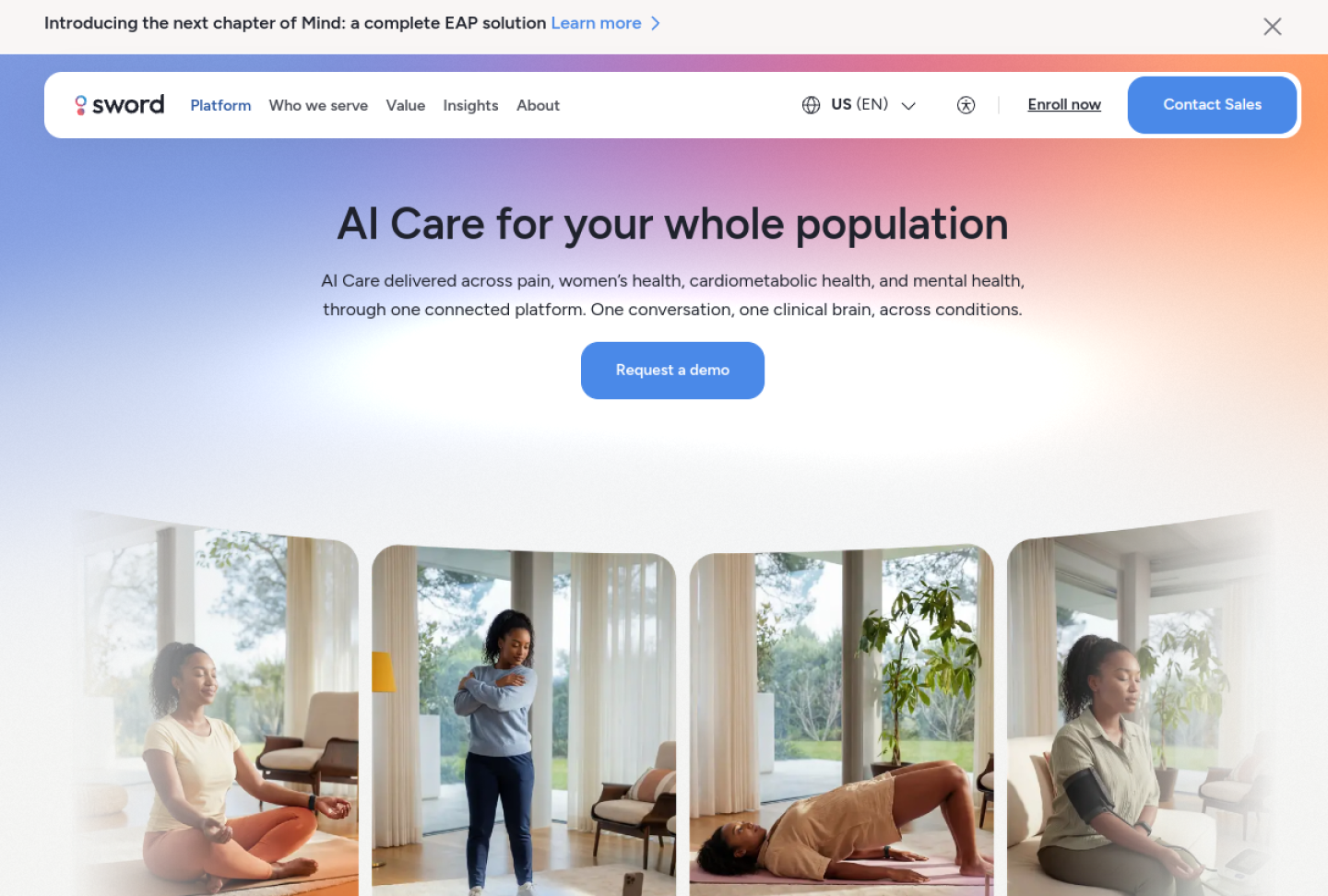
Sword Health AI Care medical AI product profile
AI Care platform that combines Phoenix and other AI care capabilities with human clinical specialists across pain, women's health, cardiometabolic, and mental-health programs.
Patient access, triage, and agents
Best fit
Benefits and payer teams that want a clinician-supervised digital care platform with AI personalization, navigation, engagement, and published clinical-study links.
- Primary use case
- AI-supported care platform for musculoskeletal pain, women's health, cardiometabolic health, mental health, care navigation, and clinician-supervised member engagement
- Audience
- Employers, health plans, unions, benefits consultants, population-health teams, and virtual-care leaders evaluating AI-supported care programs
- Risk level
- Medium to high
- Pricing signal
- Public pages emphasize outcome pricing and ROI claims but do not publish full contract rates; verify current program, eligibility, claims-data, device, telehealth, privacy, and service terms.
- Official sources
- 6 official sources
Compare within workflow: Patient access, triage, and agents · comparison shortlist · source index
Regulatory, privacy, evidence, and workflow lens
Product-specific review. These product-specific signals summarize what the cited sources imply before treating Sword Health AI Care as safe for a local clinical, operational, or research workflow.
| Regulatory / FDA | Separate wellness navigation, telehealth services, digital therapy, device-supported biofeedback, surgery-risk prediction, and mental-health support because each workflow can carry different clinical, device, and state telehealth obligations. |
|---|
| Privacy | Review the signed plan or employer agreement plus public privacy and HIPAA notices for PHI, claims data, wearable/calendar signals, mental-health data, support access, retention, subprocessors, member rights, and whether data are used to improve shared AI systems. |
|---|
| Evidence | Treat vendor outcome claims as diligence inputs, then validate published studies, actuarial analyses, engagement, pain, surgery intent, mental-health, cardiometabolic, and savings metrics against the enrolled population and benefit design. |
|---|
| Workflow | Best governed as clinician-supervised virtual care with explicit escalation, crisis, complaint, program-change approval, device-support, and handoff rules before using AI outputs in care navigation or member-facing coaching. |
|---|
Where Sword Health AI Care fits
Sword Health describes an AI Care platform spanning pain, women's health, cardiometabolic health, and mental health, with Phoenix supporting continuous member conversations, clinical memory, navigation, real-time therapy feedback, and clinician oversight; its AI page states that AI supports biofeedback and accessibility rather than making clinical decisions, and public legal pages provide privacy, telehealth, and HIPAA notices.
Not for: Emergency triage, autonomous diagnosis, clinician-free care decisions, unsupervised mental-health crisis support, or deployments where eligibility, HIPAA, telehealth consent, device status, clinical oversight, and outcome claims have not been verified.
What to verify before using Sword Health AI Care
- Which Sword programs are in scope: Thrive, Bloom, Pulse, Mind, Predict, Phoenix, care navigation, wearable or calendar signals, and external-provider booking.
- How Phoenix and related AI features personalize care, provide real-time feedback, route escalation, and ensure clinicians approve clinical decisions or program adjustments.
- Current HIPAA notice, privacy statement, BAA or plan-sponsor terms, telehealth consent, covered-entity or business-associate roles, claims-data use, wearable data use, retention, subprocessors, and model-improvement limits.
- Regulatory and device posture for the selected program, including FDA-listed claims for legacy MSK device workflows, instructions for use, mental-health guardrails, and country-specific availability.
- Local pilot evidence for engagement, safety events, emergency or crisis escalation, equity across languages and populations, clinician override rates, surgery-intent impact, claims savings, and member complaints.
Source links
Use these links to confirm current claims, terms, regulatory status, pricing, and deployment requirements.
Related medical AI products