AI Receptionist for Medical Offices: Patient Access Guide
Evaluate AI receptionists, answering services, call handling, and patient scheduling tools for medical practices.
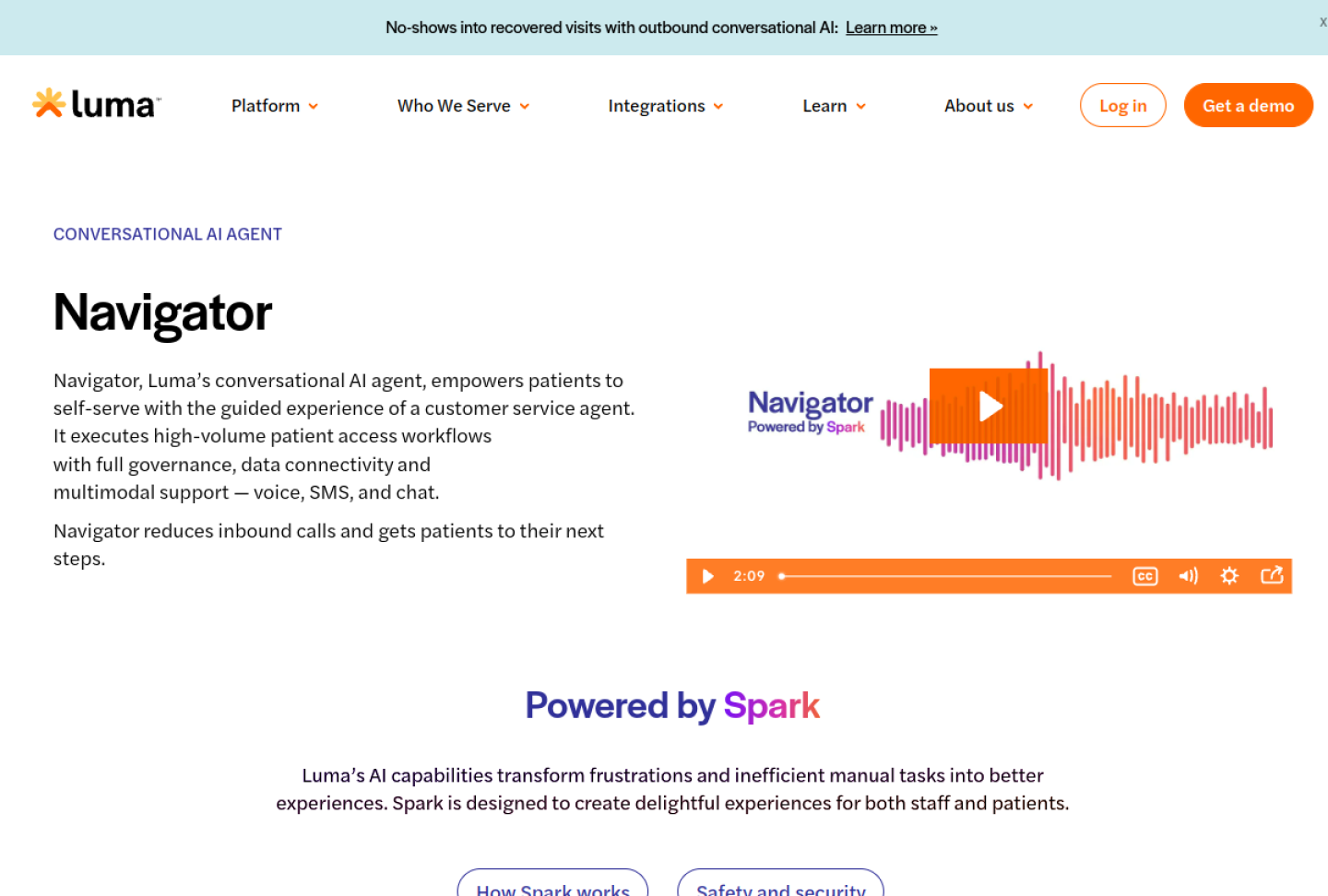
Representative source image: official Luma Health Navigator product page.
Quick answer: An AI receptionist for a medical office can answer routine calls, route messages, schedule appointments, and collect intake information. It needs HIPAA-aware data handling, escalation rules, emergency language, and integration with scheduling workflows.
Who this guide is for
Medical office managers, family physicians, clinics, and patient access teams.
What makes this workflow different
Patient-access AI is only safe when emergency, symptom, refill, and complaint scenarios escalate reliably.
What to verify before using it
Define which calls can be automated and which must escalate.
Verify PHI handling and call recording retention.
Test emergency, medication, refill, and symptom scenarios.
Check appointment scheduling integrations.
Measure abandonment rate, booking accuracy, and patient complaints.
Risk level and safe use
Medical risk
Medium
Best first step
Write the workflow in one sentence, decide who reviews the AI output, and test with a small controlled pilot before expanding.
Recommended posture
Use AI as supervised workflow support. Verify sources, privacy, human review, and regulatory fit before relying on outputs.
Source-backed products for this workflow
These profiles are not rankings. They are starting points for checking vendor claims, privacy terms, FDA or regulatory posture, evidence, and workflow fit.
Assort Health describes AI voice agents for healthcare patient access across scheduling, referrals, intake, routing, proactive outreach, care gaps, and payments, with specialty-specific workflows, EHR/PMS integrations, patient journey memory, automated QA, and privacy materials addressing HIPAA-governed patient information.
Best for
Specialty practices that need 24/7 phone coverage, scheduling accuracy, proactive outreach, referral conversion, and EHR/PMS-connected patient access automation.
First check
Which workflow is in scope: inbound concierge, Activate outbound outreach, referral scheduling, patient reactivation, no-show recovery, eligibility, intake, payment collection, or specialty routing.
Anima describes an integrated primary-care platform that combines online consultation, contextual triage questionnaires, appointments, document processing, analytics, messaging, collaboration, AI receptionist, EMIS/SystmOne/GP Connect/PDS integrations, and an Annie scribe product; its security and compliance materials describe NHS supplier status, IM1, DSPT, DCB0129/DCB0160 support, DTAC alignment, Cyber Essentials Plus, UK GDPR, UK AWS hosting, and data-processing details.
Best for
UK primary-care organizations that need a governed digital front door connected to EMIS, SystmOne, GP Connect, PDS, patient messaging, appointments, and team worklists.
First check
Which modules are in scope: Anima Triage, Appointments, Documents, Analytics, Messaging, AI Receptionist, Collaboration, or Annie ambient scribe.
Luma describes Navigator as an AI-powered patient self-service solution and Spark as an operational AI core for patient access and staff workflows; public security and policy materials describe healthcare privacy, security controls, AI data boundaries, and policy documentation that still need customer-contract review.
Best for
Healthcare organizations that need governed patient-access automation connected to existing scheduling, communications, and EHR workflows.
First check
Which Luma workflow is in scope: Navigator AI concierge, Spark, Fax Transform, scheduling, waitlist, referrals, intake, payments, eligibility, reminders, or operational AI orchestration.
Syllable describes a platform for production AI agents, healthcare receptionist examples, voice/SMS/chat/web channels, Epic EHR scheduling and patient-workflow integration, observability, and security controls including healthcare-oriented compliance claims.
Best for
Organizations building governed access-center or scheduling agents that need observability, channel control, and direct integration with healthcare systems.
First check
Which agent is in scope: healthcare receptionist, appointment scheduling, Epic scheduling, patient verification, waitlist, referral processing, outbound reminder, call routing, or medical-records outreach.
Sources
5 official sources
Official source trail for this workflow
Open these vendor, documentation, privacy, or regulatory sources before relying on product claims, especially for FDA status, PHI handling, deployment model, and intended use.
Find the best AI for medical workflows by matching the tool to documentation, questions, diagnosis support, research, coding, billing, imaging, or practice operations.
Understand AI for medical diagnosis, including validation evidence, FDA status, clinical supervision, and why patient-specific diagnosis should not rely on general chatbots.