Evaluate dermatology AI tools by intended use, FDA or CE status, image workflow, privacy, skin tone evidence, clinician review, and escalation.
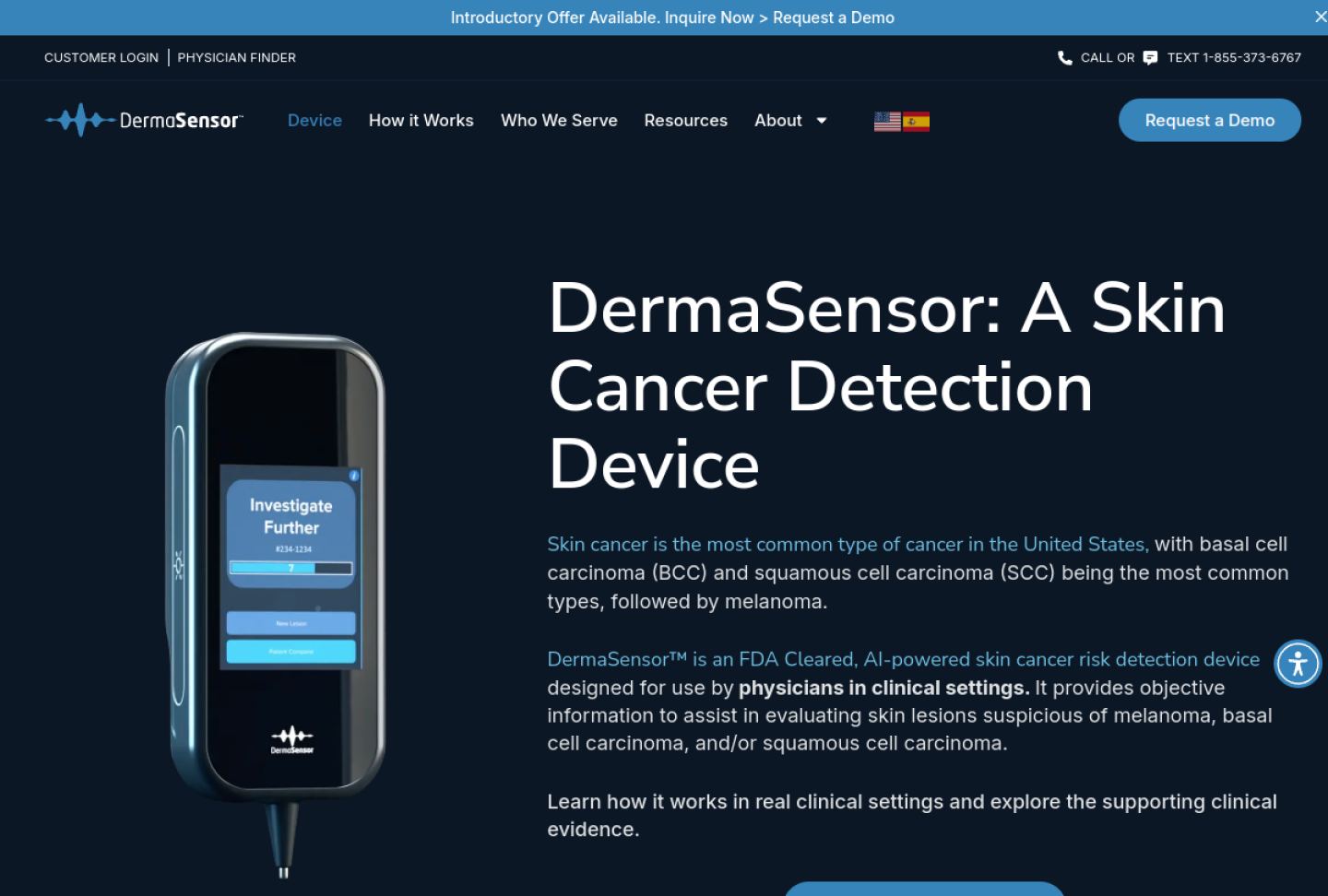
Representative source image: official DermaSensor product page.
Quick answer: Dermatology AI tools can support skin lesion imaging, skin cancer risk assessment, dermoscopy review, teledermatology triage, patient access, and image workflow management. Buyers should verify the exact intended use, regulatory status, image-quality requirements, privacy controls, skin tone evidence, clinician oversight, and escalation paths before relying on outputs.
Who this guide is for
Dermatologists, primary care groups, teledermatology services, payers, health systems, and AI governance teams evaluating skin imaging or triage tools.
What makes this workflow different
Dermatology AI spans consumer skin checks, clinician spectroscopy devices, dermoscopy scoring, teledermatology triage, and image management, so intended use matters before product comparison.
What to verify before using it
Separate consumer self-check, clinician adjunctive assessment, dermoscopy support, teledermatology triage, documentation, and image management because the safety and regulatory obligations differ.
Verify FDA De Novo, 510(k), CE, UKCA, investigational, or local status for the exact product, version, country, user type, and lesion workflow.
Map photo, dermoscopy, spectroscopy, full-body image, patient identifier, cloud, EHR, referral, and support-access data flows before launch.
Review validation for skin tone, lesion type, melanoma and non-melanoma skin cancer, image quality, false reassurance, false referral, and local prevalence.
Define clinician review, biopsy or referral thresholds, patient safety-net instructions, audit, incident review, and fallback pathways for unassessable images.
Risk level and safe use
Medical risk
High
Best first step
Write the workflow in one sentence, decide who reviews the AI output, and test with a small controlled pilot before expanding.
Recommended posture
Use AI as supervised workflow support. Verify sources, privacy, human review, and regulatory fit before relying on outputs.
Source-backed products for this workflow
These profiles are not rankings. They are starting points for checking vendor claims, privacy terms, FDA or regulatory posture, evidence, and workflow fit.
DermaSensor describes an FDA-cleared AI-powered skin cancer risk detection device for physicians that uses elastic scattering spectroscopy and returns Monitor or Investigate Further outputs; FDA's De Novo summary for DEN230008 states the device is an adjunctive second-read tool for suspicious lesions and is not standalone diagnosis, screening, biopsy replacement, or clinical-decision replacement.
Best for
Clinician-supervised primary-care or referral workflows that need objective support for suspicious melanoma, basal cell carcinoma, or squamous cell carcinoma lesions.
First check
FDA De Novo DEN230008, prescription-use limits, patient age, lesion exclusions, and whether the intended users match the cleared non-dermatologist physician workflow.
Skin Analytics states that DERM is a Class III CE-marked AI as a Medical Device for skin cancer, has been deployed across NHS pathways, and publishes post-market performance, certifications, clinical evidence, and information-security materials; its site also notes U.S. investigational-device limitations.
Best for
Governed dermatology services evaluating AI-enabled teledermatology triage with post-market surveillance and clinician-reviewed pathway design.
First check
Class III CE mark, MHRA status, U.S. investigational status, intended pathway, imaging requirements, and whether local use is autonomous triage or clinician-reviewed support.
FotoFinder describes Moleanalyzer pro as dermoscopy software for analysis, comparison, second opinion, and AI support; its instructions for use describe a CNN-based AI Score, online and offline scoring options, image-transfer requirements, and warnings that the AI Score is statistical support for doctors and not guaranteed.
Best for
Dermatology teams already using structured dermoscopy or FotoFinder imaging who want clinician-reviewed AI scoring and longitudinal lesion comparison.
First check
Which version, device, magnification, FotoFinder Hub account, online or offline AI score, heatmap, and second-opinion workflow are included.
Model Dermatology describes Model Dermatol as an AI dermatology image-search tool for finding relevant skin disease information, states that it is freely available on Android, iOS, and PCs, and says it should not be used as a medical device for diagnosis. Its privacy policy says submitted cropped images and metadata are transferred for analysis but not stored, and the site states the algorithm has CE MDR Class I marking but no FDA approval.
Best for
Educational, triage-adjacent, or clinician-reviewed image-search workflows where outputs are treated as reference material and not diagnosis.
First check
Whether the intended workflow is patient self-education, clinician education, medical information retrieval, or clinical decision support because the vendor states it must not be used as a diagnostic medical device.
Sources
3 official sources
Official source trail for this workflow
Open these vendor, documentation, privacy, or regulatory sources before relying on product claims, especially for FDA status, PHI handling, deployment model, and intended use.
Find the best AI for medical workflows by matching the tool to documentation, questions, diagnosis support, research, coding, billing, imaging, or practice operations.
Understand AI for medical diagnosis, including validation evidence, FDA status, clinical supervision, and why patient-specific diagnosis should not rely on general chatbots.