AI for Medical Malpractice Lawyers: Record Review and Chronology
Use AI for medical malpractice workflows including record review, chronology generation, medical summaries, and expert preparation.
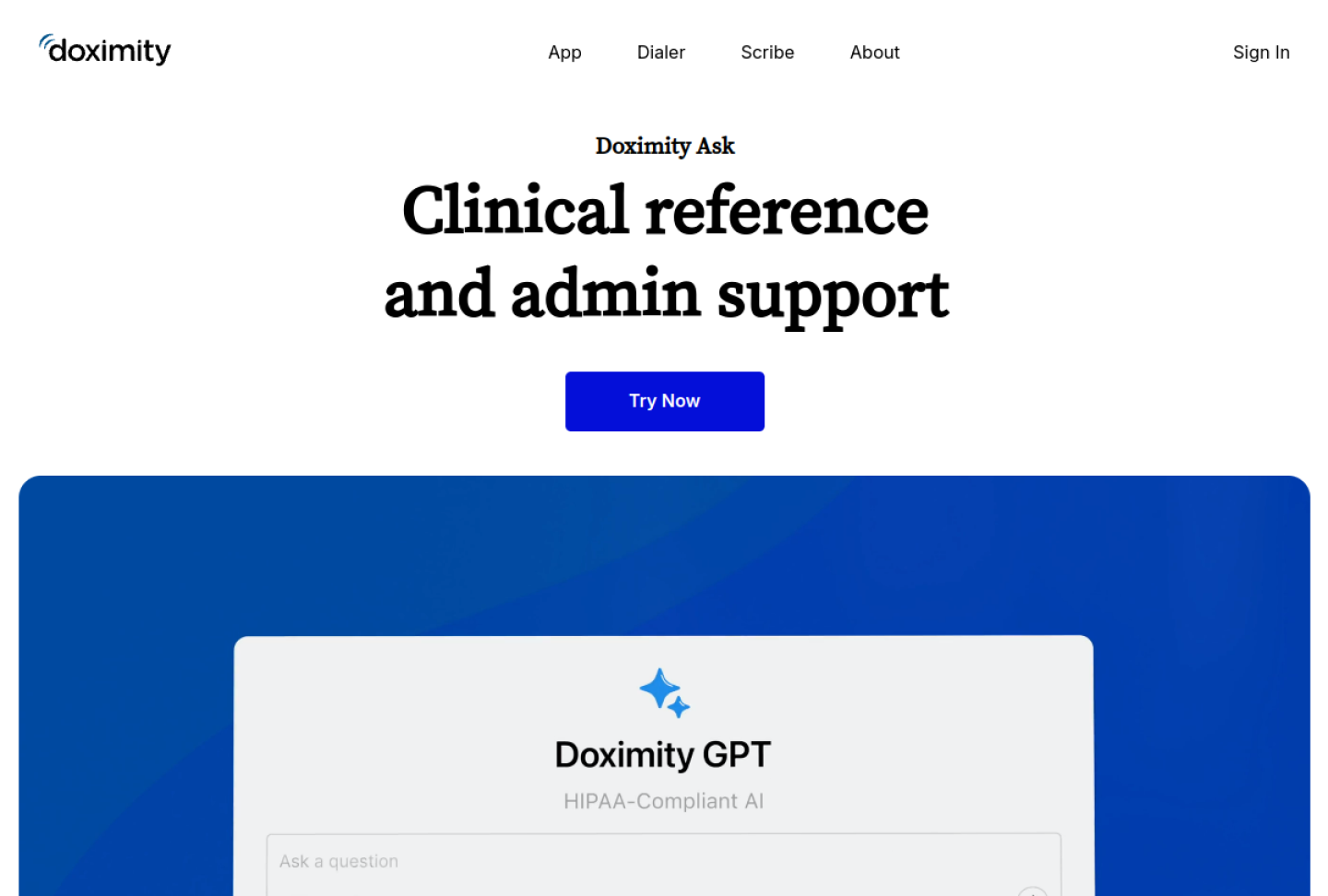
Representative source image: official Doximity Ask product page.
Quick answer: AI for medical malpractice lawyers is most useful for organizing records, building chronologies, summarizing treatment timelines, and preparing expert review packets. It should cite source pages and remain subject to attorney and expert review.
Who this guide is for
Medical malpractice attorneys, litigation support teams, and expert-review coordinators.
What makes this workflow different
Combines malpractice, chronology, and legal-summary intent into a practical medical-legal cluster.
What to verify before using it
Preserve source-page citations for every event.
Separate facts from legal or medical conclusions.
Track missing records and timeline gaps.
Review AI outputs before sharing with experts or clients.
Protect privileged and medical information.
Risk level and safe use
Medical risk
Medium
Best first step
Write the workflow in one sentence, decide who reviews the AI output, and test with a small controlled pilot before expanding.
Recommended posture
Use AI as supervised workflow support. Verify sources, privacy, human review, and regulatory fit before relying on outputs.
Source-backed products for this workflow
These profiles are not rankings. They are starting points for checking vendor claims, privacy terms, FDA or regulatory posture, evidence, and workflow fit.
Doximity's support page describes Doximity Ask as a HIPAA-compliant AI assistant for clinicians that can answer clinical questions with referenced responses, generate note templates, create patient education materials, translate content, and securely include PHI.
Best for
Clinicians already using Doximity who want a PHI-capable assistant for first-draft clinical reference, correspondence, education, and workflow writing.
First check
Whether your clinician role, country, and Doximity verification status are eligible.
Regard describes an AI-powered platform that generates documentation and surfaces critical insights in patient history, and its mobile privacy policy frames the Scribe App as a HIPAA business-associate workflow for recording encounters, transcripts, and note merging.
Best for
Hospitals seeking deeper chart review, documentation support, and quality/revenue capture.
Tennr describes an agentic patient orchestration platform for policy-grade patient flow, including document extraction, service-to-criteria mapping, intelligent triage, workflow orchestration, communications coordination, and quality-controlled autopilot; its privacy policy says health data is processed for provider customers under customer agreements and HIPAA privacy and security standards.
Best for
Provider organizations that need to reduce referral backlogs, missing-document loops, eligibility friction, and prior-authorization delays while keeping staff in control of exceptions.
First check
Which workflow is in scope: referral intake, order processing, eligibility, prior authorization, intelligent triage, communications coordination, or autopilot completion.
OpenEvidence describes itself as a medical information platform with JAMA and NEJM content agreements and clinician-focused evidence synthesis; its privacy materials describe HIPAA-aligned processing and state that AI models are not trained on PHI.
Best for
Clinicians who need fast answers grounded in medical literature and source partnerships.
First check
Whether your user type and region are eligible.
Sources
3 official sources
Official source trail for this workflow
Open these vendor, documentation, privacy, or regulatory sources before relying on product claims, especially for FDA status, PHI handling, deployment model, and intended use.
Find the best AI for medical workflows by matching the tool to documentation, questions, diagnosis support, research, coding, billing, imaging, or practice operations.
Understand AI for medical diagnosis, including validation evidence, FDA status, clinical supervision, and why patient-specific diagnosis should not rely on general chatbots.