Evaluate ophthalmology AI tools by intended use, FDA or CE status, camera and OCT workflow, privacy, validation evidence, and clinician review.
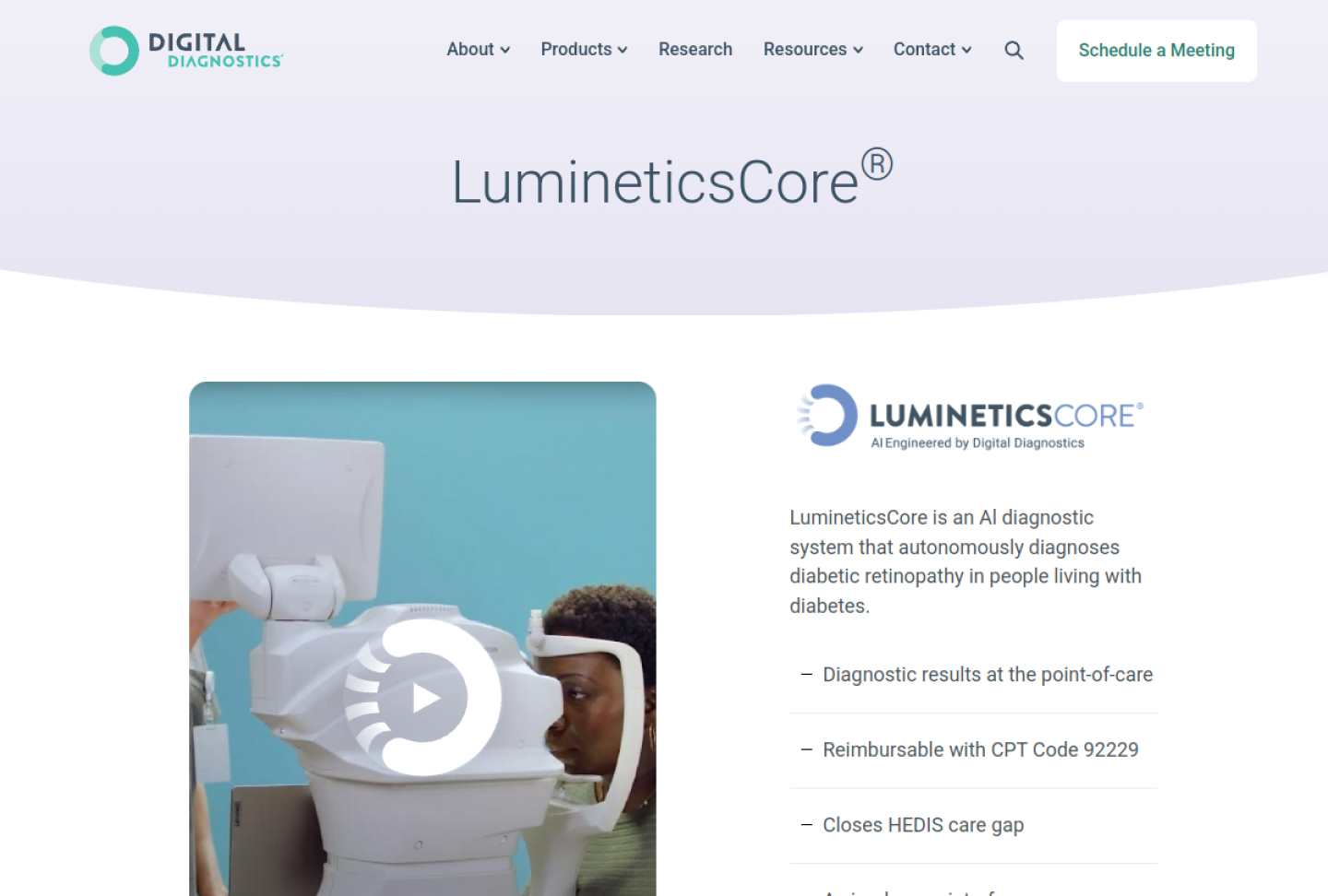
Representative source image: official LumineticsCore product page.
Quick answer: Ophthalmology AI tools can support diabetic retinopathy screening, retinal fundus-image analysis, OCT fluid quantification, image management, and clinical-study workflows. Evaluate the exact indication, camera or OCT compatibility, FDA or CE status, image privacy, validation population, clinician review, and referral workflow before relying on outputs.
Who this guide is for
Ophthalmologists, retina specialists, optometry groups, diabetes programs, primary care networks, payers, and health-system AI governance teams.
What makes this workflow different
Ophthalmology AI includes autonomous diabetic-retinopathy screening, OCT quantification, retinal-data platforms, and research modules, so buyers must separate regulated diagnostic use from specialist-reviewed support.
What to verify before using it
Separate autonomous screening, OCT measurement, image management, clinical-study analytics, and research-only AI modules because each carries different safety and regulatory obligations.
Verify FDA 510(k), De Novo, CE/MDR, research-use-only, or local status for the exact product, version, disease, camera, OCT device, user type, and geography.
Map retinal images, OCT scans, patient identifiers, EHR orders, reports, cloud processing, retention, support access, BAA or DPA terms, and secondary data use.
Review validation for image quality, disease prevalence, camera or OCT model, skin tone and pigmentation where relevant, false positives, false negatives, unreadable exams, and referral capacity.
Define who reviews outputs, how patients are referred or retested, how non-target eye disease is handled, and how post-deployment performance is monitored.
Risk level and safe use
Medical risk
High
Best first step
Write the workflow in one sentence, decide who reviews the AI output, and test with a small controlled pilot before expanding.
Recommended posture
Use AI as supervised workflow support. Verify sources, privacy, human review, and regulatory fit before relying on outputs.
Source-backed products for this workflow
These profiles are not rankings. They are starting points for checking vendor claims, privacy terms, FDA or regulatory posture, evidence, and workflow fit.
Digital Diagnostics describes LumineticsCore as an autonomous AI diagnostic system for more-than-mild diabetic retinopathy in adults with diabetes, with FDA De Novo clearance, device-specific indications, contraindications, warnings, camera requirements, and point-of-care workflow controls.
Best for
Primary-care or diabetes-care settings that need point-of-care diabetic eye exam workflows with defined referral instructions.
First check
FDA De Novo authorization, indications for use, contraindications, and exact eligible patient population.
AEYE Health describes AEYE-DS as an FDA-cleared autonomous diabetic-retinopathy screening system for one non-mydriatic image per eye using supported Topcon NW400 and Optomed Aurora cameras; FDA records list AEYE-DS K221183 and K240058, and AEYE privacy materials describe retinal-image, exam-identifier, MRN, and diagnostic-result processing.
Best for
Clinics that want same-visit diabetic retinopathy screening with supported cameras, trained image capture, EHR reporting, and defined referral routing.
First check
Current FDA 510(k) record, supported camera model, software version, indication, contraindications, and adult diabetes eligibility rules.
RETINA-AI states that Galaxy is FDA-cleared for autonomous detection of moderate-or-worse diabetic retinopathy and lists indications, supported CenterVue DRSPlus, Crystalvue NFC-700, and Topcon NW400 cameras, contraindications, warnings, and HIPAA compliance claims.
Best for
Primary-care and payer workflows that need fast same-visit diabetic retinopathy screening across supported camera options.
First check
FDA-cleared indication, compatible cameras, contraindications, warnings, and patient eligibility before purchase.
Eyenuk describes EyeArt as an FDA-cleared autonomous AI eye-screening system for more-than-mild and vision-threatening diabetic retinopathy; FDA records list EyeArt K200667 and EyeArt v2.2.0 K223357 as diabetic-retinopathy detection devices, while Eyenuk materials describe supported cameras, cloud workflow, security, and privacy contacts.
Best for
Diabetes and primary-care workflows that need in-clinic diabetic eye screening with supported cameras, trained operators, referral rules, and clinician oversight.
First check
FDA 510(k) record, current EyeArt version, supported camera models, intended-use language, and eligible patient population.
Sources
5 official sources
Official source trail for this workflow
Open these vendor, documentation, privacy, or regulatory sources before relying on product claims, especially for FDA status, PHI handling, deployment model, and intended use.
Find the best AI for medical workflows by matching the tool to documentation, questions, diagnosis support, research, coding, billing, imaging, or practice operations.
Understand AI for medical diagnosis, including validation evidence, FDA status, clinical supervision, and why patient-specific diagnosis should not rely on general chatbots.