Evaluate clinical decision support AI by intended use, source transparency, workflow fit, privacy, regulatory posture, evidence, and clinician oversight.
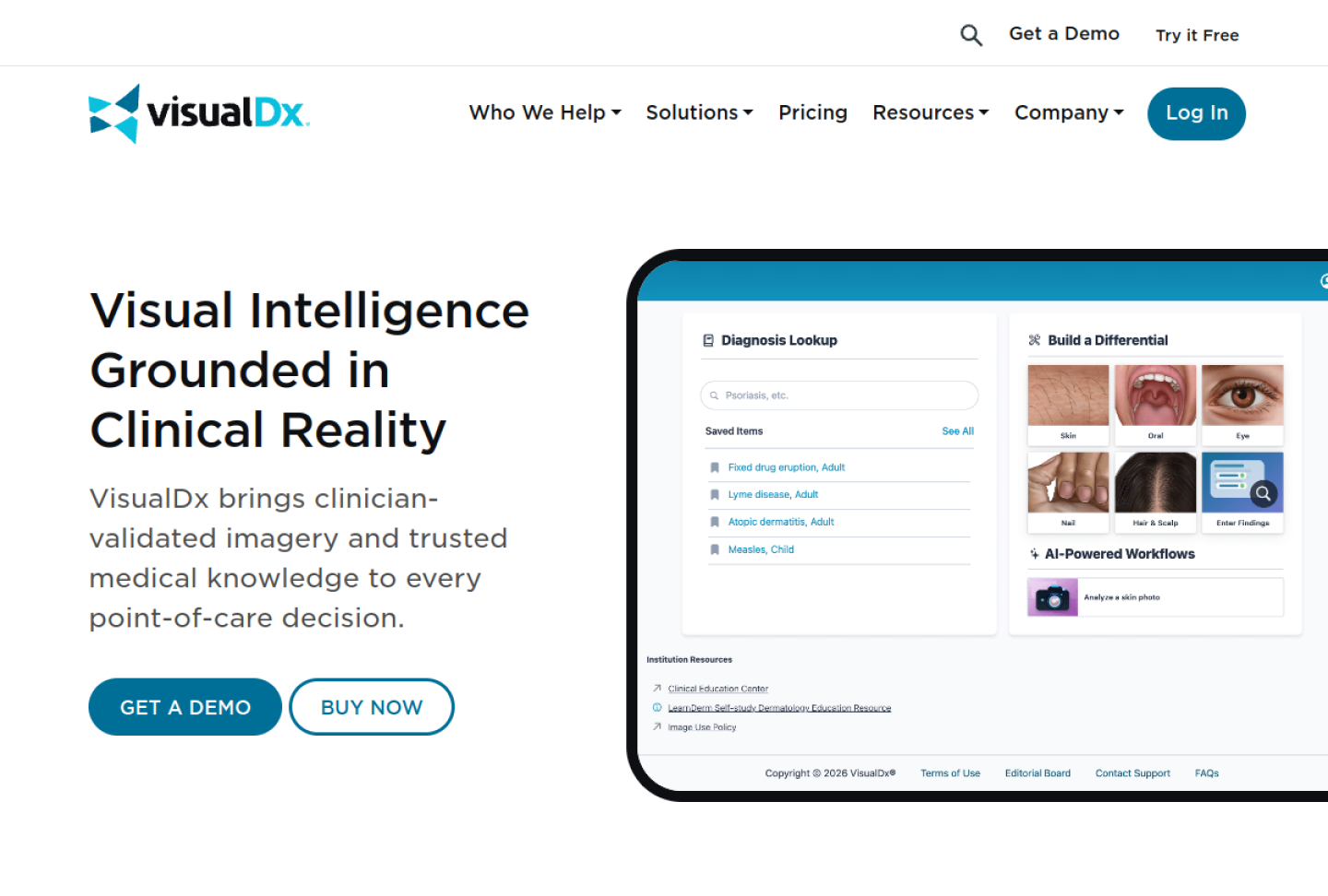
Representative source image: official VisualDx product page.
Quick answer: Clinical decision support AI should be evaluated by the exact workflow it supports: reference lookup, differential diagnosis, pathway navigation, image analysis, risk prediction, or treatment planning. Require source visibility, clinician review, privacy controls, local validation, and regulatory review before using outputs in patient care.
Who this guide is for
CMIOs, clinical informatics teams, medical directors, quality leaders, specialty chairs, and health systems evaluating clinician-facing AI decision support.
What makes this workflow different
Clinical decision support AI can look like a reference tool, pathway tool, image aid, or regulated device, so buyers need intended-use review before product comparison.
What to verify before using it
Define the intended use and whether the tool only informs clinicians or makes patient-specific recommendations.
Verify source transparency, guideline versioning, uncertainty handling, and how clinicians can inspect the reasoning or evidence.
Review PHI flow, EHR integration, photo or image uploads, retention, audit logs, user permissions, and BAA or enterprise privacy terms.
Check FDA, SaMD, non-device CDS, CE, UKCA, or local regulatory posture for the exact function being deployed.
Pilot with representative cases and monitor overrides, unsafe suggestions, missed diagnoses, alert fatigue, equity, and documentation burden.
Risk level and safe use
Medical risk
High
Best first step
Write the workflow in one sentence, decide who reviews the AI output, and test with a small controlled pilot before expanding.
Recommended posture
Use AI as supervised workflow support. Verify sources, privacy, human review, and regulatory fit before relying on outputs.
Source-backed products for this workflow
These profiles are not rankings. They are starting points for checking vendor claims, privacy terms, FDA or regulatory posture, evidence, and workflow fit.
VisualDx describes a visual clinical decision support system for diagnosis search, differential diagnosis, medical images, patient-centered explanations, API use, and DermExpert AI support; public pricing and legal materials describe subscription access, mobile requirements, image-analysis availability, and privacy terms.
Best for
Clinicians and educators who need image-rich differential diagnosis support, skin-of-color representation, patient education visuals, and supervised dermatology decision support.
First check
Which workflow is in scope: diagnosis search, differential builder, image library, DermExpert, API integration, medical education, or patient education.
Isabel describes DDx Companion as a machine-learning differential diagnosis generator covering more than 10,000 conditions, all ages, and specialties; its Active Intelligence materials describe NLP extraction of clinical features from EMR documentation, and product pages describe evidence-based reference links plus Cerner and Epic workflow options.
Best for
Clinicians and educators who need a second-check differential diagnosis list, red-flag prompts, and evidence-linked next-step references inside or alongside the EMR.
First check
Which Isabel workflow is in scope: DDx Companion, Self-Triage, Clinical Educator, Active Intelligence, API, Cerner App Gallery, or Epic info-button access.
Trip Database describes AskTrip as an AI-powered tool for clinicians to explore high-quality evidence in response to clinical questions. Trip's main site says the database gives access to clinical articles, systematic reviews, and medical guidelines. Buyers should treat AskTrip as evidence navigation, not autonomous clinical advice, and verify source coverage, answer traceability, privacy, and current Pro limits before relying on it in workflow.
Best for
Clinicians and education teams that want a quick evidence-search companion with source links before reading full guidelines, reviews, or primary studies.
First check
Whether AskTrip is being used for background evidence lookup, point-of-care reference, teaching, guideline surveillance, or patient-specific decision support.
Wellsheet describes Care Team Copilot as an AI platform that unites chart summarization, documentation, and clinical pathways; product pages describe machine-learning prioritization, EHR/payer-system integration, handoff, smart alerts, discharge planning, and automated risk calculators, while company materials describe LLM-generated handoff summaries and Smart EHR UI workflows.
Best for
Health systems trying to reduce inpatient chart review, handoff, discharge planning, and pathway-navigation burden while preserving clinician review and EHR context.
First check
Which capability is in scope: chart summarization, AI Chat, AI Pathways, documentation, handoff, smart alerts, discharge planning, mobile chart review, or EHR-embedded views.
Sources
4 official sources
Official source trail for this workflow
Open these vendor, documentation, privacy, or regulatory sources before relying on product claims, especially for FDA status, PHI handling, deployment model, and intended use.
Find the best AI for medical workflows by matching the tool to documentation, questions, diagnosis support, research, coding, billing, imaging, or practice operations.
Understand AI for medical diagnosis, including validation evidence, FDA status, clinical supervision, and why patient-specific diagnosis should not rely on general chatbots.